


In the fast-paced world of project delivery, the difference between a successful outcome and a missed opportunity often lies in how a team learns from what happened. Project management reviews, commonly known as retrospectives, are not merely administrative checkboxes. They are the engine of continuous improvement. When executed with intention, these sessions transform experience into actionable insight, allowing teams to refine their workflows, enhance communication, and deliver higher quality results over time.
This guide explores the mechanics of effective project reviews. It moves beyond the basic definition to examine the psychological safety required, the structural elements of a productive session, and the methods for tracking improvement across multiple project cycles. Whether your team operates under agile frameworks or traditional waterfall models, the principles of structured reflection remain constant.
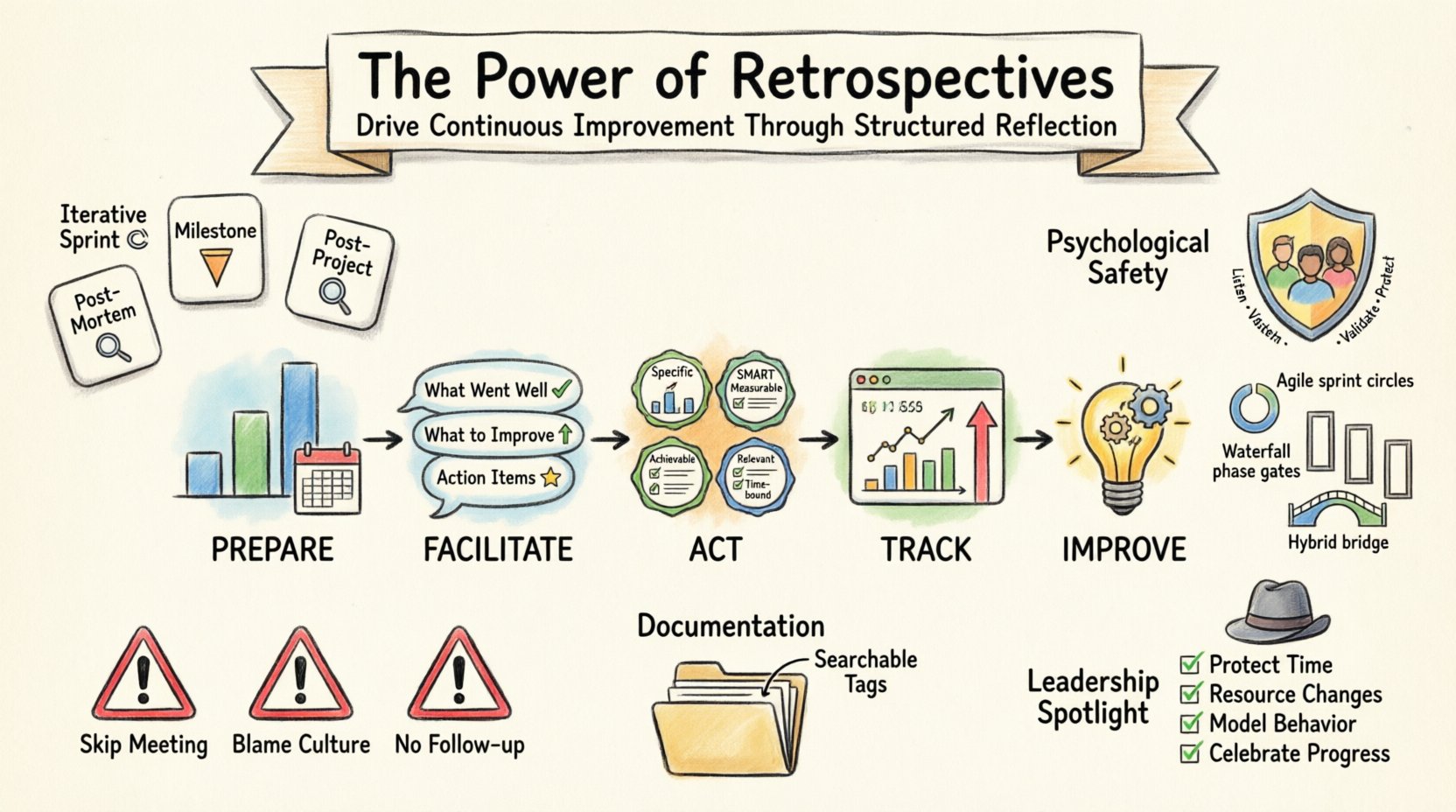
Why Retrospectives Matter in Project Management 📊
Many organizations view project reviews as a waste of time. They argue that the focus should be on delivery, not discussion. However, without a mechanism to capture lessons learned, teams are destined to repeat the same mistakes. A retrospective is a dedicated space to pause, analyze, and evolve.
- Identify Root Causes: It shifts the focus from blaming individuals to understanding systemic issues.
- Boost Morale: When team members feel heard, engagement increases. Successes are celebrated, and challenges are addressed collaboratively.
- Optimize Processes: Small adjustments made during a review can lead to significant efficiency gains in the next phase.
- Knowledge Transfer: Insights gained are documented and shared, preventing knowledge silos.
Without this formalized reflection, project management relies on memory and intuition. With it, the organization builds a repository of institutional wisdom that compounds over time.
Types of Project Management Reviews 🔄
Different stages of a project require different types of reviews. A retrospective at the end of a sprint differs from a post-implementation review after a major product launch. Understanding the distinction ensures the right goals are set for each session.
| Review Type | Timing | Primary Focus |
|---|---|---|
| Iterative Retrospective | End of every cycle/sprint | Process tweaks, team dynamics, immediate workflow issues |
| Milestone Review | Upon completing a major phase | Deliverable quality, stakeholder alignment, budget adherence |
| Post-Project Closure | After final delivery | Overall success metrics, long-term lessons, client satisfaction |
| Post-Mortem | After a failure or critical incident | Root cause analysis, recovery actions, prevention strategies |
Preparing for a High-Value Review Session 🛠️
Preparation is the most overlooked aspect of a retrospective. If the team walks into the room without context, the session will likely devolve into complaints. Preparation sets the tone for constructive dialogue.
1. Gather Data Early
Decisions should be based on facts, not feelings. Before the meeting, collect relevant metrics and artifacts. This might include:
- Burn-down charts or velocity reports.
- Customer feedback or stakeholder survey results.
- Incident logs or bug counts.
- Timeline variance analysis.
Having this data available allows the team to see patterns objectively. It removes the subjectivity that often leads to unproductive arguments.
2. Set the Stage
The environment matters. Whether virtual or physical, the setting should encourage openness. For virtual sessions, ensure the link is stable and the tools are accessible. For in-person meetings, arrange seating to facilitate eye contact rather than hierarchy.
3. Define the Goal
Not every review needs to solve every problem. Define the specific objective for the session. Is the goal to improve communication? To reduce technical debt? To clarify roles? A focused goal prevents the meeting from becoming a catch-all venting session.
Facilitating the Session: The Process 🗣️
A structured approach keeps the discussion on track. While flexibility is important, a lack of structure often leads to dominance by louder voices. The following phases provide a reliable framework.
Phase 1: What Went Well?
Start on a positive note. Acknowledge successes and contributions. This builds psychological safety and ensures the team feels valued. Ask participants to share specific examples of what worked.
- Did the communication flow smoothly?
- Were there any unexpected wins?
- Did the team meet a difficult deadline?
Documenting these wins reinforces good behavior and provides a reference point for future planning.
Phase 2: What Could Be Improved?
Once the positives are established, transition to challenges. This is often the most difficult part. To make it productive, focus on the process, not the person. Avoid language that assigns blame. Instead of saying “John missed the deadline,” say “The deadline was missed because the testing phase started late.”
Techniques to facilitate this include:
- Start, Stop, Continue: What should we start doing? What should we stop? What should we continue?
- Mad, Sad, Glad: How did we feel about the project? What made us angry? What made us happy?
- Timeline: Plot events chronologically to identify where friction occurred.
Phase 3: Actionable Items
A retrospective without action is just a complaint session. The goal is to generate a list of improvements that can be implemented immediately. These items must be specific, assigned, and time-bound.
Use the SMART criteria for these action items:
- Specific: Clearly define the task.
- Measurable: How will success be tracked?
- Achievable: Is it realistic for the team?
- Relevant: Does it solve the root problem?
- Time-bound: When will it be completed?
Psychological Safety: The Foundation of Honesty 🛡️
The success of any review depends on psychological safety. This is the belief that one will not be punished or humiliated for speaking up with ideas, questions, concerns, or mistakes. Without it, participants will withhold critical information to protect themselves.
Leaders play a crucial role here. If a project manager admits their own mistakes during the review, it signals that vulnerability is safe. If a team member points out a process flaw and is ignored, the culture shifts toward silence.
- Listen Actively: Do not interrupt. Validate the speaker’s perspective.
- Separate Intent from Impact: Acknowledge that people usually mean well, even if the outcome was poor.
- Protect the Process: Ensure that no negative repercussions follow honest feedback.
Integrating Reviews into Methodologies 🏗️
Different project management methodologies require different integration points for reviews. The core principles remain the same, but the timing and frequency vary.
Agile and Scrum
In Agile environments, retrospectives are a standard ceremony at the end of every sprint. This cadence allows for rapid iteration on the process itself. The focus is often on immediate workflow adjustments. The team can implement a change in the very next sprint.
Waterfall
Traditional projects often lack frequent review points. In Waterfall, retrospectives should be scheduled at major phase gates. This allows for adjustments before moving to the next stage, preventing costly rework later. Since the project is longer, the review can be more in-depth and strategic.
Hybrid Models
Many organizations use a hybrid approach. They might use Agile for development but Waterfall for deployment. In these cases, combine the frequency of Agile reviews with the strategic scope of Waterfall reviews. Ensure that stakeholders are included in the phase-gate reviews but keep the team-focused sessions internal.
Tracking and Measuring Improvement 📈
How do you know if the retrospective is working? You need to track the implementation of action items and the resulting impact on project health. Without measurement, improvement is anecdotal.
Consider establishing a dashboard that tracks the following metrics over time:
- Completion Rate: Percentage of action items completed from the previous review.
- Repeat Issues: Are the same problems appearing in consecutive reviews?
- Velocity Trends: Is the team’s output becoming more consistent?
- Team Satisfaction: Regular pulse surveys on team morale and process friction.
If the same issue appears in three consecutive reviews without resolution, it indicates a systemic blockage that requires higher-level intervention. If the completion rate of action items is low, the team may be overcommitting or the items may be too vague.
Common Pitfalls to Avoid ⚠️
Even experienced teams can fall into traps that diminish the value of reviews. Being aware of these common pitfalls helps maintain the integrity of the process.
- Skipping the Meeting: When deadlines are tight, reviews are often the first to be cut. This is a mistake. Addressing the issue early saves time later.
- Blame Culture: If the tone is accusatory, the session becomes defensive. Focus on “we” instead of “you”.
- Ignoring Action Items: If improvements are discussed but never implemented, trust in the process erodes. Follow up on commitments.
- Lack of Facilitation: Without a neutral facilitator, dominant personalities can steer the conversation. Rotate the facilitator role to share ownership.
- Too Many Participants: Keep the group small enough for everyone to speak. If stakeholders are needed, invite them for a specific segment, not the whole session.
The Role of Leadership in Continuous Improvement 👔
Leadership support is the single biggest factor in the success of a review culture. If management does not value the insights gained, the team will eventually stop trying.
Leaders should:
- Protect the Time: Ensure the meeting slot is sacred and not encroached upon by other tasks.
- Resource the Changes: If an action item requires budget, tools, or headcount, leadership must approve and provide it.
- Model Behavior: Show that they are learning too. Share what management is changing based on feedback.
- Celebrate Progress: Recognize when a team successfully implements a change and sees a benefit.
Documentation and Knowledge Management 📝
Insights must be preserved. Verbal discussions fade quickly. Documentation ensures that lessons learned are not lost when team members rotate or projects conclude.
Create a central repository for retrospective outcomes. This should include:
- The date and participants of the session.
- The key issues identified.
- The agreed-upon action items.
- The status of those items.
- Any decisions made regarding process changes.
Make this documentation searchable. When a new project starts, the team should be able to search for “communication issues” or “vendor delays” and find relevant past experiences.
Scaling the Practice Across the Organization 🌍
As teams grow, consistency becomes harder to maintain. Scaling the practice requires standardization without stifling autonomy.
- Standard Templates: Provide a basic template for recording outcomes to ensure consistency.
- Training: Train facilitators on how to run effective sessions. New facilitators can learn from experienced ones.
- Community of Practice: Create a group of leaders who discuss how they are handling reviews. Share best practices and challenges.
- Feedback Loops: Allow teams to suggest changes to the review process itself. The process should evolve as the organization evolves.
Moving Forward with Intention 🏁
Project management reviews are a powerful tool for driving continuous improvement. They turn experience into strategy and chaos into order. By focusing on psychological safety, structured facilitation, and actionable outcomes, teams can create a culture of learning.
The goal is not perfection. It is progress. Every project presents a new opportunity to refine how the team works. By committing to the practice of reflection, organizations build resilience and adaptability. These are the qualities that sustain long-term success in a changing market.
Start small. Schedule the next review. Invite the team. Listen closely. Implement one change. Repeat. Over time, these small shifts compound into a significant competitive advantage.
Related posts:
 How Project Management Actually Works: A Definitive Overview for Intermediate Professionals
 The Hidden Cost of Chaos: Common Mistakes Stalling Your Project Management Career
 Agile vs. Waterfall: A Real-World Comparison for Senior Project Managers Deciding Frameworks
 5-Step Quick Start Guide to Structuring Any Project Management Initiative from Scratch