


Entering the field of project management is a significant career move. It requires a blend of organizational skills, leadership, and strategic thinking. This guide outlines the essential steps for building a robust foundation, understanding the lifecycle, and navigating the complexities of delivering value without relying on specific tools or hype.
A strategic approach ensures that you do not just manage tasks, but manage outcomes. Whether you are transitioning from an individual contributor or entering the workforce fresh, having a clear map helps mitigate risk and aligns your efforts with organizational goals. Below, we break down the critical components of this journey.
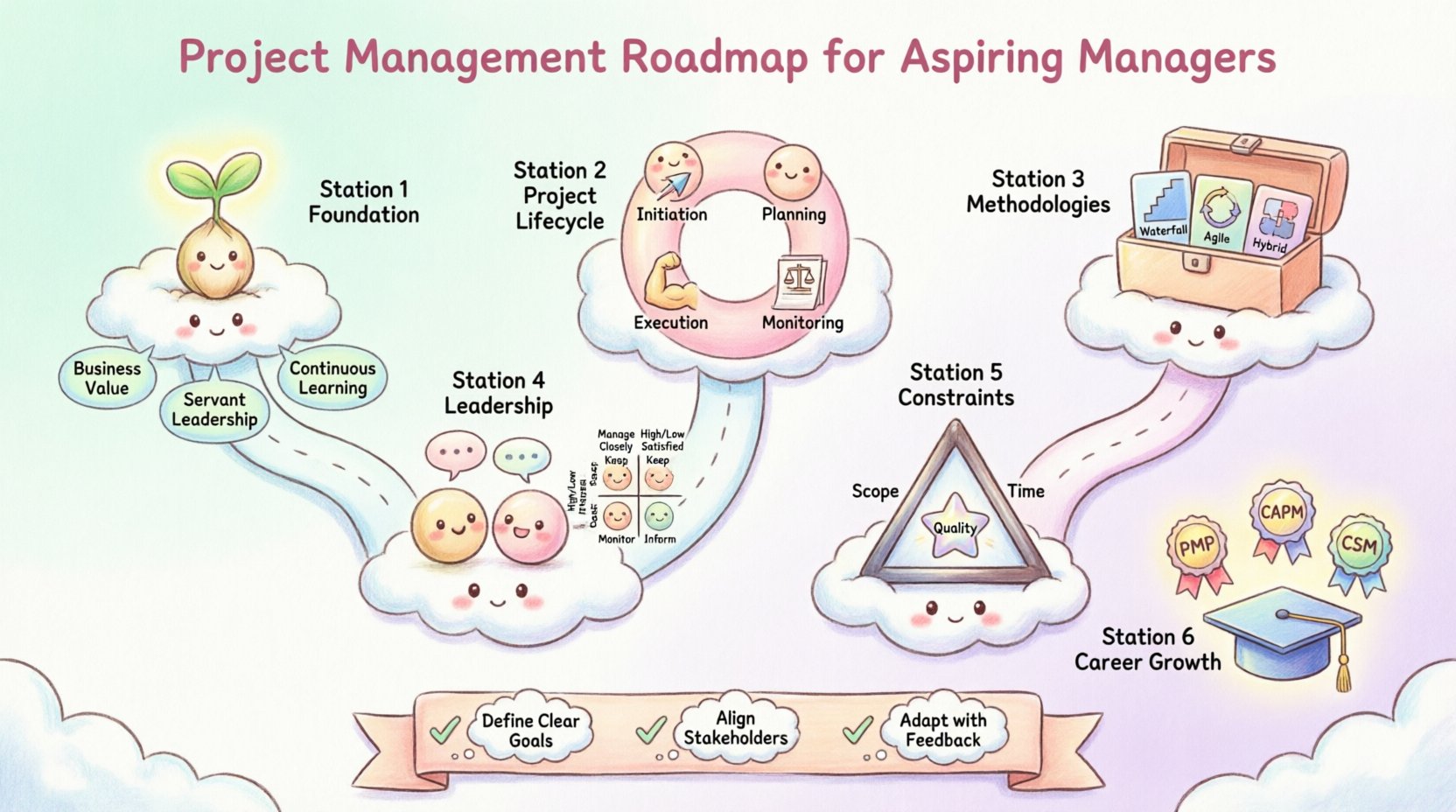
🏗️ Phase 1: Building the Foundation
Before diving into schedules and budgets, you must establish the mindset required to lead. Project management is less about command and control and more about facilitation and clarity.
- Understand the Business Value: Every project exists to solve a problem or seize an opportunity. You must understand the “why” behind the work.
- Adopt a Servant Leadership Style: Your role is to remove obstacles for your team, not to dictate every move.
- Commit to Continuous Learning: Methodologies evolve. Stay updated on industry standards and best practices.
It is vital to recognize that this role is dynamic. The environment changes, stakeholders shift, and requirements evolve. Resilience and adaptability are your primary assets.
Essential Skills Matrix
| Category | Key Competencies | Why It Matters |
|---|---|---|
| Technical | Scope definition, scheduling, risk analysis | Ensures the work gets done correctly |
| Behavioral | Communication, negotiation, empathy | Ensures the team stays aligned and motivated |
| Strategic | Budgeting, resource allocation, governance | Ensures the project fits within business constraints |
🔄 Phase 2: The Project Lifecycle
Every project, regardless of size or industry, follows a logical progression. Understanding these phases prevents chaos and ensures accountability at every stage.
1. Initiation 🚀
This phase defines the project at a high level. The goal is to determine if the work is viable and worth the investment.
- Identify Stakeholders: Who cares about the outcome? Document their interests and influence.
- Define the Business Case: What is the return on investment? Is there a clear problem statement?
- Create a Project Charter: A formal document that authorizes the existence of the project and gives the manager the authority to apply resources.
2. Planning 📝
Planning is the most critical phase for success. It transforms the charter into a detailed roadmap.
- Scope Management: Clearly define what is included and, crucially, what is excluded. This prevents scope creep.
- Work Breakdown Structure (WBS): Break the project into smaller, manageable deliverables.
- Schedule Development: Establish milestones and dependencies between tasks.
- Risk Assessment: Identify potential pitfalls before they occur and create mitigation strategies.
3. Execution 💪
This is where the work happens. The project manager coordinates people and resources.
- Team Coordination: Assign tasks based on skills and availability.
- Quality Assurance: Ensure deliverables meet the defined standards.
- Communication: Keep stakeholders informed of progress through regular updates.
4. Monitoring & Controlling ⚖️
While execution happens, you must track performance against the plan.
- Track KPIs: Monitor schedule variance, budget variance, and quality metrics.
- Change Control: Implement a formal process for approving scope changes.
- Performance Reporting: Provide transparent reports on status, risks, and issues.
5. Closing 🏁
Formally end the project and capture lessons learned.
- Handover: Ensure the deliverable is accepted by the client or end-user.
- Resource Release: Free up team members for new work.
- Post-Mortem: Document what went well and what did not for future reference.
🛠️ Phase 3: Methodologies and Frameworks
Selecting the right approach depends on the nature of the work. There is no single “best” way; there is only the right fit for the context.
Waterfall Approach
Linear and sequential. Each phase must be completed before the next begins.
- Best For: Construction, manufacturing, or projects with fixed requirements.
- Pros: Clear structure, easy to manage budget and timeline.
- Cons: Inflexible to changes; testing happens late.
Agile Approach
Iterative and incremental. Work is delivered in small cycles.
- Best For: Software development, creative projects, or uncertain requirements.
- Pros: High adaptability, frequent feedback, faster time to value.
- Cons: Can be difficult to predict final cost; requires high stakeholder involvement.
Hybrid Model
Combines elements of both Waterfall and Agile.
- Best For: Large enterprises with regulatory requirements but needing innovation.
- Strategy: Use Waterfall for high-level planning and compliance, Agile for execution.
| Framework | Flexibility | Documentation | Client Involvement |
|---|---|---|---|
| Waterfall | Low | High | Low (mostly at start/end) |
| Agile | High | Low (Just-in-time) | High (Continuous) |
| Hybrid | Medium | Medium | Medium to High |
🤝 Phase 4: Leadership and Communication
Technical skills get you the job; soft skills keep you there. Managing people is often harder than managing tasks.
Stakeholder Management
Not all stakeholders are equal. Use a power/interest grid to categorize them.
- High Power, High Interest: Manage closely. Engage them frequently.
- High Power, Low Interest: Keep satisfied. Provide high-level updates.
- Low Power, High Interest: Keep informed. They can be advocates or blockers.
- Low Power, Low Interest: Monitor. Minimal effort required.
Conflict Resolution
Conflict is natural when resources are scarce and goals compete. Address it early.
- Collaborate: Find a win-win solution.
- Compromise: Each party gives up something.
- Avoid: Ignoring the issue (only for trivial matters).
- Accommodate: Yield to the other party to preserve relationships.
Effective Communication
Clarity reduces errors. Ensure your messages are concise and directed at the right audience.
- Tailor the Message: Executives need high-level summaries; teams need task details.
- Choose the Right Channel: Use email for documentation, meetings for discussion, instant messaging for quick queries.
- Listen Actively: Understand concerns before proposing solutions.
💰 Phase 5: Managing Constraints
You will constantly balance competing constraints. The most common model is the “Iron Triangle,” which includes Scope, Time, and Cost.
The Iron Triangle Explained
If you change one side, at least one other side must change to maintain quality.
- Scope: The features and functions required.
- Time: The deadline or schedule.
- Cost: The budget and resources available.
- Quality: The standard of the deliverable (often the center of the triangle).
When a stakeholder requests more features (Scope), you must either increase the budget (Cost), extend the deadline (Time), or reduce quality. Your job is to communicate these trade-offs clearly.
Risk Management
Risks are uncertain events that can impact the project. You cannot eliminate them, but you can manage them.
- Identify: Brainstorm potential risks with the team.
- Assess: Determine probability and impact (High/Medium/Low).
- Plan Response:
- Avoid: Change the plan to eliminate the risk.
- Mitigate: Reduce probability or impact.
- Transfer: Shift the risk to a third party (e.g., insurance).
- Accept: Acknowledge the risk and have a contingency plan.
🚀 Phase 6: Career Growth and Certification
Building a roadmap for your career is just as important as building a roadmap for a project. Certification validates your knowledge, but experience validates your capability.
Recognized Credentials
- PMP (Project Management Professional): Globally recognized, requires experience and exam.
- PRINCE2: Popular in Europe and government sectors.
- CAPM (Certified Associate in Project Management): Entry-level credential for those with less experience.
- CSM (Certified ScrumMaster): Focused on Agile and Scrum frameworks.
Continuous Development
The field does not stand still. Stay engaged with the community.
- Join Professional Groups: Connect with peers to share challenges and solutions.
- Read Industry Publications: Keep abreast of trends in remote work, digital transformation, and sustainability.
- Mentorship: Find a mentor to guide your growth, and eventually, mentor others.
📋 Checklist for Your First Project
Before launching your initial initiative, ensure the following items are addressed.
- ✅ Project Charter signed off by the sponsor.
- ✅ Stakeholder register completed.
- ✅ Initial budget approved.
- ✅ Team members identified and committed.
- ✅ Communication plan established.
- ✅ Risk register initiated.
- ✅ Tools for collaboration and tracking selected.
- ✅ Kick-off meeting scheduled.
🔍 Navigating Challenges
You will encounter obstacles. Here is how to handle common scenarios without panic.
Scenario: Scope Creep
Stakeholders keep adding small tasks that weren’t in the original plan.
- Response: Do not say “no” immediately. Say, “That is a great idea. Let’s add it to the change log and discuss the impact on the timeline and budget.” This forces a decision on the trade-off.
Scenario: Resource Unavailability
A key team member is pulled away for another project.
- Response: Review the critical path. Can the work be redistributed? Do we need to negotiate a return date? Communicate the impact on the deadline immediately to the sponsor.
Scenario: Low Morale
The team feels burnt out or unmotivated.
- Response: Check in individually. Acknowledge their hard work. Celebrate small wins. Ensure the workload is realistic. Reconnect them to the purpose of the project.
📈 Final Thoughts
Becoming a project manager is a journey of continuous improvement. It involves balancing hard data with human dynamics. By following a structured approach, you reduce uncertainty and increase the likelihood of success.
Remember that you do not need to know everything immediately. You need to know how to find answers, how to lead the team, and how to communicate effectively. Start with a solid foundation, respect the lifecycle, and prioritize your people. With patience and strategy, you will build a career that delivers tangible value to your organization.
Focus on the process, maintain integrity, and keep learning. That is the true roadmap to success in this field.
