


Project management is not merely a job title; it is a trajectory. Moving from the operational details of a coordinator to the strategic vision of a director requires a deliberate evolution of skills, mindset, and influence. This journey is not linear, nor is it guaranteed by tenure alone. It demands a conscious effort to understand the shifting expectations at every stage of the career ladder.
Whether you are currently managing schedules and tracking deliverables or aiming for the C-suite, understanding the specific competencies required for the next rung is essential. This guide outlines the practical steps, responsibilities, and strategic shifts needed to advance your career from entry-level coordination to executive leadership.
Understanding the Hierarchy of Project Leadership 🏛️
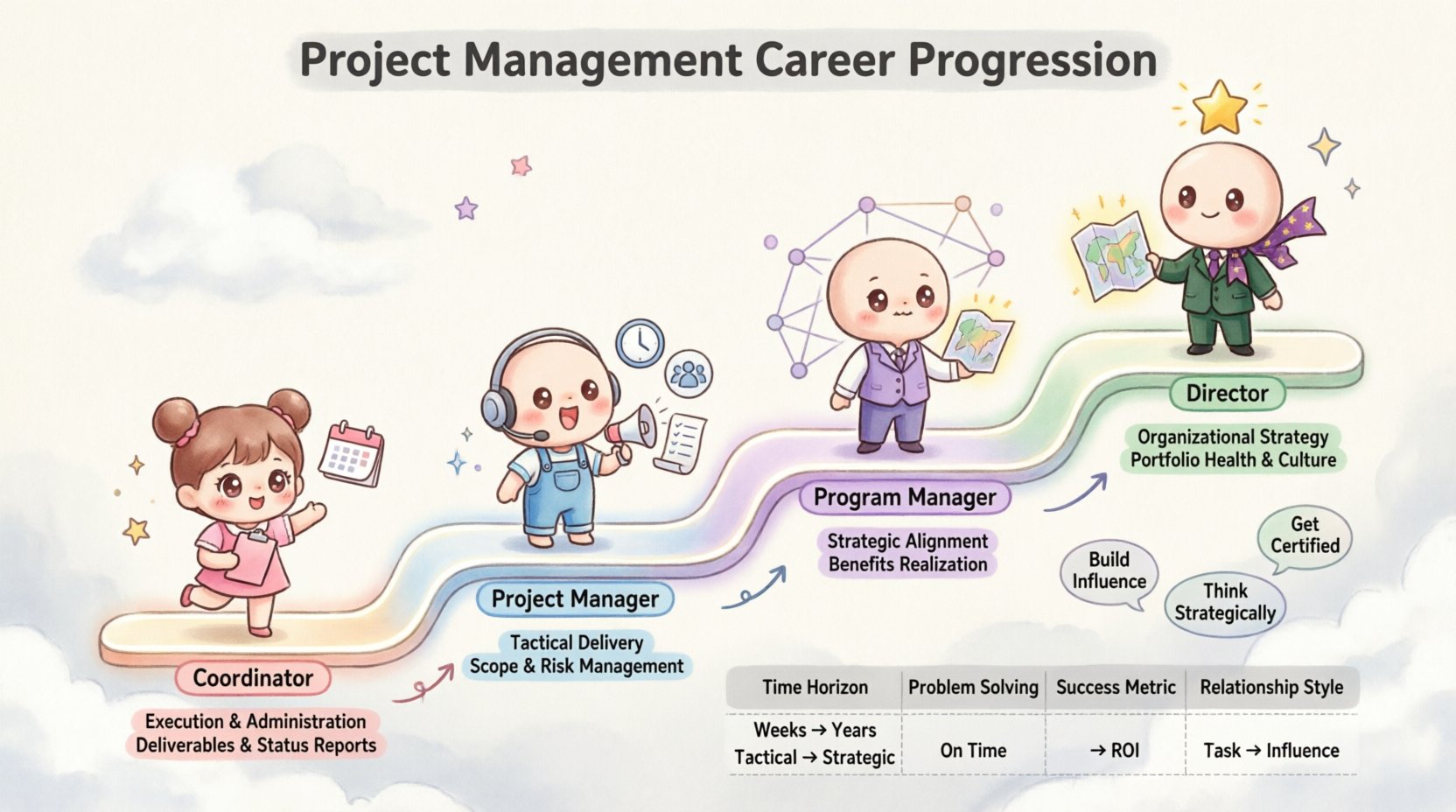
Before diving into the specifics of each role, it is helpful to visualize the structure. The path typically flows from execution to strategy. Each level introduces a new layer of complexity, moving away from individual tasks and toward organizational impact.
The following table provides a high-level overview of the progression:
| Level | Focus Area | Primary Output | Key Stakeholder |
|---|---|---|---|
| Coordinator | Execution & Administration | Deliverables & Status Reports | Project Manager |
| Project Manager | Tactical Delivery | Completed Project Outcomes | Sponsor & Team |
| Program Manager | Strategic Alignment | Benefits Realization | Executive Leadership |
| Director | Organizational Strategy | Portfolio Health & Culture | Board & C-Suite |
Each transition involves shedding old habits and adopting new frameworks. The Coordinator manages the what and when. The Director manages the why and how much.
Phase 1: The Project Coordinator Foundation 🛠️
The journey begins in the trenches of execution. As a Project Coordinator, your primary value lies in reliability, organization, and communication. You are the glue that holds the daily operations together. This role is critical because it teaches you the mechanics of how projects actually move through an organization.
Core Responsibilities
- Schedule Management: Maintaining timelines, updating calendars, and ensuring milestones are met.
- Documentation: Archiving meeting notes, requirements, and change logs.
- Resource Tracking: Monitoring time and budget usage at a granular level.
- Communication Hub: Disseminating information between team members and leadership.
The Mindset Shift Required
At this stage, success is measured by completeness. Did the meeting happen? Is the document signed? Did the task move to the next status? While this operational focus is necessary, you must begin to look for patterns. Why did this meeting run over? Why was this document delayed? These questions are the seeds of future strategic thinking.
Do not limit yourself to administrative tasks. Observe how decisions are made. Listen to how the Project Manager negotiates scope. Ask questions about the business case behind the work. This curiosity is the first step toward advancement.
Phase 2: Stepping into Project Management 🎯
Transitioning from Coordinator to Project Manager is a significant leap. You move from supporting the process to owning the outcome. You are now responsible for the budget, the timeline, the quality, and the people involved.
Key Competencies for Success
- Scope Control: Managing scope creep without damaging relationships. Knowing when to say no or when to trade value for time.
- Risk Management: Proactively identifying potential blockers before they become crises.
- Team Leadership: Motivating a group of individuals who may not report to you directly.
- Financial Acumen: Understanding cost variance, forecasting, and resource allocation.
Building Your Authority
Authority in this role is not derived from a title but from consistency. When you say a deadline is fixed, it must be fixed. When you identify a risk, you must bring a solution, not just a problem. Stakeholders need to trust that you can navigate uncertainty.
Communication becomes more high-stakes. You are no longer just reporting facts; you are interpreting data for decision-makers. You must learn to translate technical delays into business impacts. For example, instead of saying “the server migration is late,” say “the launch date will shift by two weeks, impacting Q3 revenue targets.”
Phase 3: Leading Programs and Portfolios 📊
As you progress to Senior Project Manager or Program Manager, the scope expands from a single initiative to a collection of related projects. The goal shifts from delivering outputs to delivering outcomes and value.
Strategic Alignment
At this level, you must understand the broader organizational strategy. You are no longer just managing a project; you are managing a portfolio of work that supports the company’s mission. This requires:
- Benefit Realization: Ensuring that the projects actually deliver the promised value after implementation.
- Dependency Management: Handling complex interdependencies between different teams and departments.
- Resource Optimization: Allocating talent across multiple projects to maximize efficiency.
Navigating Politics
With larger scope comes larger political complexity. You will need to negotiate resources with other department heads. You must influence decisions without direct authority. This is where soft skills become as critical as technical knowledge.
Building a network of peers across the organization is vital. You need allies in finance, operations, and engineering who understand your challenges and can support your initiatives.
Phase 4: Executive Leadership as a Director 👔
The Director level represents the pinnacle of project management leadership. Here, the focus is entirely on organizational health, culture, and long-term strategy. You are responsible for the project management office (PMO) or the entire function.
Primary Objectives
- Vision Setting: Defining how the organization approaches delivery. Are we Agile? Waterfall? Hybrid?
- Culture Building: Fostering an environment where continuous improvement and transparency are the norm.
- Talent Development: Mentoring the next generation of managers and coordinators.
- Investment Strategy: Deciding which projects to fund and which to cancel based on strategic fit.
The Director’s Perspective
You are no longer looking at the Gantt chart; you are looking at the balance sheet and the market landscape. Your role is to ensure that the organization has the capability to execute its strategy. You are the bridge between the C-suite vision and the operational reality.
This role requires a high degree of emotional intelligence. You must manage the expectations of the board while protecting your teams from burnout. You are responsible for the well-being of the delivery function as a whole.
Critical Skill Shifts Across Levels 🔄
Understanding the specific differences between levels helps you prepare for the next step. The table below breaks down the shift in focus required for each transition.
| Dimension | Coordinator / PM | Director / Executive |
|---|---|---|
| Time Horizon | Weeks to Months | Years to Quarters |
| Problem Solving | Technical & Tactical | Strategic & Systemic |
| Success Metric | On Time, On Budget | ROI, Market Share, Culture |
| Relationship | Task-Oriented | Influence-Oriented |
| Knowledge | Process & Tools | Business & Industry Trends |
Education and Professional Credentials 📜
While experience is the primary driver of growth, credentials validate your commitment and knowledge. They act as a signal to recruiters and hiring managers that you understand the industry standards.
Relevant Certifications
- PMP (Project Management Professional): The gold standard for general project management. Best pursued after gaining significant experience.
- PRINCE2: Common in Europe and government sectors, focusing on process.
- Agile Certifications (CSM, PSM): Essential for roles in software and tech-driven environments.
- Program Management (PgMP): For those moving into the program management track.
Do not chase certifications for the sake of the badge. Use them to fill gaps in your knowledge. If you lack financial experience, study finance. If you struggle with leadership, take a management course. The credential is secondary to the competency.
Building Influence Without Authority 🤝
As you climb the ladder, you will find yourself leading people who do not report to you. This is the definition of influence. You cannot order people to work harder; you must inspire them to see the value.
Strategies for Influence
- Deliver Consistently: Reliability builds trust. If your word is your bond, people will listen when you ask for help.
- Understand Their Goals: Align your project goals with the personal goals of your stakeholders. If you help them succeed, they will help you.
- Share Credit: Publicly acknowledge the contributions of your team and partners. Never take all the credit.
- Listen First: Before proposing a solution, understand the constraints and concerns of the other party.
Building a personal brand is also crucial. Speak at industry events, write articles, or mentor junior colleagues. Visibility ensures that when opportunities arise, your name is on the shortlist.
Navigating the Modern Work Landscape 🌐
The environment in which you manage projects is changing. Remote work, hybrid teams, and AI-driven tools are reshaping the profession.
Adapting to Change
- Remote Leadership: Managing distributed teams requires different communication rhythms. You must be intentional about connection and clarity.
- Tool Agnosticism: Do not rely on a single platform. Understand the principles behind the tools so you can adapt when technology changes.
- AI Integration: Embrace automation for administrative tasks. This frees you to focus on high-value strategic work.
- Resilience: Market conditions shift rapidly. Your ability to pivot without causing panic is a key leadership trait.
Final Thoughts on Long-Term Growth 🌱
The path from coordinator to director is a marathon. It requires patience, persistence, and a willingness to learn from failure. There will be projects that do not succeed. There will be moments where you feel overwhelmed.
Focus on the process of improvement rather than the destination. Every project is an opportunity to refine your craft. Every stakeholder interaction is a chance to practice influence. Every challenge is a lesson in leadership.
Keep your eyes on the horizon, but keep your feet on the ground. The most effective leaders are those who remember their roots while steering the ship toward the future. Your journey is unique, but the principles of value, integrity, and strategic thinking remain constant.
Start where you are. Use what you have. Do what you can. The next level will be waiting when you are ready to take the step.
Related posts:
 How Project Management Actually Works: A Definitive Overview for Intermediate Professionals
 The Hidden Cost of Chaos: Common Mistakes Stalling Your Project Management Career
 Agile vs. Waterfall: A Real-World Comparison for Senior Project Managers Deciding Frameworks
 5-Step Quick Start Guide to Structuring Any Project Management Initiative from Scratch