
Enterprise Architecture (EA) serves as the backbone for organizational alignment between business strategy and IT execution. For Chief Enterprise Architects, navigating the complexity of digital transformation requires a structured methodology. The Open Group Architecture Framework, widely known as TOGAF, stands as the industry standard for guiding these critical initiatives. This guide provides a comprehensive look at TOGAF, focusing on its practical application, core components, and certification pathways for leaders aiming to establish robust architecture practices.
Understanding TOGAF is not about memorizing diagrams. It is about adopting a disciplined approach to managing change. Whether you are leading a team or steering a large-scale digital initiative, the principles within this framework help ensure that technology investments deliver genuine business value. This overview breaks down the essential elements, from the Architecture Development Method to the certification tracks available for professionals.
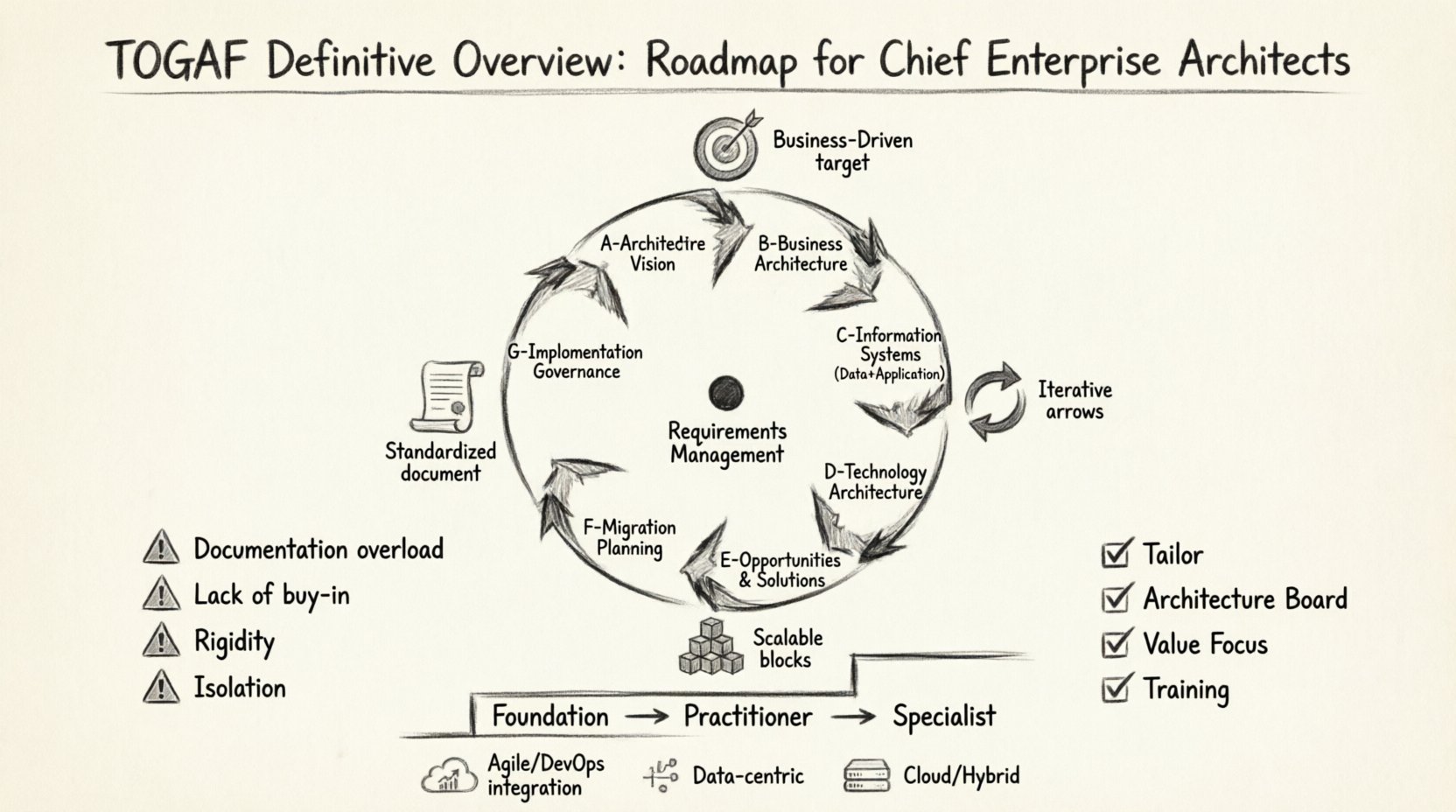
📚 Understanding the TOGAF Standard
TOGAF is a framework that provides a detailed approach for designing, planning, implementing, and governing an enterprise information architecture. Developed by The Open Group, it is a free standard that is widely adopted across various sectors including finance, healthcare, government, and telecommunications.
The framework is modular. It does not force a single rigid process but offers a toolkit that can be tailored to specific organizational needs. This flexibility is crucial for Chief Enterprise Architects who must balance standardization with agility. The core of the standard is the Architecture Development Method (ADM), a cyclical process that guides the creation and implementation of enterprise architecture.
🔑 Key Principles of TOGAF
- Business-Driven: Architecture must start with business goals. Technology serves the business, not the other way around.
- Iterative: The process is cyclical. Architects revisit phases to refine outcomes based on new information.
- Scalable: The framework applies to entire enterprises or specific domains within them.
- Standardized: It uses common terminology and models to ensure communication clarity across the organization.
When implementing TOGAF, the focus remains on value delivery. It is not a documentation exercise. The artifacts produced during the process must inform decision-making and drive action. This distinction separates effective architecture practices from theoretical exercises.
🔄 The Architecture Development Method (ADM)
The heart of TOGAF is the Architecture Development Method. It is a step-by-step approach used to develop an enterprise architecture. The ADM is iterative, allowing architects to revisit phases as requirements evolve. It ensures that the architecture remains aligned with business needs throughout the lifecycle.
Below is a detailed breakdown of the ADM phases. Each phase has specific objectives, inputs, and outputs that guide the architectural work.
Phase A: Architecture Vision
This initial phase sets the stage. The goal is to define the scope, identify stakeholders, and secure the necessary commitments. The Architecture Vision document is the primary output here. It outlines the high-level goals and constraints of the project. Without a clear vision, subsequent work lacks direction. This phase ensures that the business sponsors understand the value proposition before resources are committed.
Phase B: Business Architecture
Here, the focus shifts to understanding the business landscape. Architects define the business strategy, governance, organization, and key business processes. The output includes a Business Architecture Definition and a Business Architecture Requirements Specification. This phase ensures that the technology solution supports actual business operations, not just theoretical models.
Phase C: Information Systems Architectures
Phase C is divided into two sub-phases: Data Architecture and Application Architecture.
- Data Architecture: Defines the logical and physical data assets and data management resources. It ensures data is managed as an asset.
- Application Architecture: Provides a blueprint for the individual application systems, their interactions, and their relationships to the core business processes of the organization.
Phase D: Technology Architecture
This phase describes the hardware and software infrastructure required to support the deployed applications. It includes logical technology capabilities and physical technology services. The Technology Architecture Specification is the key deliverable. It ensures that the underlying infrastructure can scale and perform according to business requirements.
Phase E: Opportunities and Solutions
Now the focus moves to implementation planning. Architects identify the major building blocks of the solution and determine the sequencing of work. This phase involves assessing the impact of the architecture on the current organization and planning the migration. It results in an Implementation and Migration Plan and an Architecture Definition Document.
Phase F: Migration Planning
Phase F refines the plan established in Phase E. It involves detailed project planning, resource allocation, and risk assessment. The goal is to create a realistic roadmap for moving from the baseline architecture to the target architecture. This phase often overlaps with Phase E, ensuring that the plan is actionable.
Phase G: Implementation Governance
During implementation, Phase G ensures that the projects stay true to the architecture. Architects act as stewards, monitoring compliance. If deviations occur, they are addressed through governance mechanisms. This phase ensures that the final solution matches the architectural vision.
Phase H: Architecture Change Management
Enterprise architecture is not a one-time project. Phase H manages changes to the architecture over time. As the business evolves, the architecture must adapt. This phase ensures that the architecture remains relevant and supports future business goals. It involves reviewing the architecture and triggering new cycles of the ADM if significant changes are required.
Requirements Management
Running parallel to all ADM phases is Requirements Management. This function ensures that all requirements are captured, tracked, and addressed throughout the lifecycle. It acts as a central hub for feedback, ensuring that no stakeholder need is lost during the development process.
📂 Architecture Content Framework
TOGAF defines a standard structure for architecture content. This structure ensures consistency across different projects and organizations. The framework organizes content into Building Blocks, Artifacts, and Deliverables.
🏗️ Architecture Building Blocks (ABBs)
Building Blocks represent reusable components. They can be specifications, components, or standards that are used to build solutions. Using ABBs reduces redundancy and promotes interoperability. Architects should strive to identify existing blocks before creating new ones.
📄 Artifacts
Artifacts are the tangible outputs of the ADM. They include models, diagrams, and specifications. Common artifacts include the Architecture Principles, Architecture Requirements, and Architecture Definitions. Each phase produces specific artifacts that contribute to the overall architecture.
📝 Deliverables
Deliverables are the formal outputs that satisfy the requirements of the stakeholders. They are often signed off and archived. Examples include the Statement of Architecture Work and the Architecture Compliance Report.
🎓 Certification Paths for Architects
The Open Group offers a structured certification program to validate knowledge of the TOGAF Standard. This certification is recognized globally and signals a commitment to professional development. There are two levels of certification for the TOGAF Standard.
| Certification Level | Focus | Prerequisites |
|---|---|---|
| TOGAF Enterprise Architecture Foundation | Understanding the terminology, principles, and concepts of the ADM. | None |
| TOGAF Enterprise Architecture Practitioner | Applying the concepts in a real-world context. | Foundation Certification required |
| TOGAF Enterprise Architecture Specialist | Specialized knowledge in specific areas like Security or Workforce. | Practitioner Certification required |
Achieving these certifications demonstrates a baseline competence. However, the true value lies in applying this knowledge to solve complex business problems. Many organizations require this certification for senior architecture roles.
⚙️ Implementing TOGAF in Your Organization
Adopting TOGAF is a significant undertaking. It requires cultural change, not just process change. Here are key strategies for successful implementation.
1. Tailor the Framework
Do not implement TOGAF exactly as written. The standard provides a menu of options. Select the parts that fit your organization’s maturity and needs. If you are a smaller team, a full ADM cycle might be overkill. Tailoring ensures the framework remains lightweight and useful.
2. Establish an Architecture Board
Governance is critical. An Architecture Board provides oversight and makes decisions regarding architectural standards. This board should include senior stakeholders from both business and IT. Their role is to ensure alignment and resolve conflicts.
3. Focus on Value
Measure the impact of architecture work. Track metrics such as time to market, reduction in technical debt, or improvement in system reliability. If the architecture does not demonstrate value, stakeholders will lose interest. Keep the focus on business outcomes.
4. Invest in Training
Ensure the team understands the framework. Training sessions and workshops help build a common language. When everyone speaks the same language, communication becomes more efficient. This reduces misunderstandings and accelerates project delivery.
🚧 Common Implementation Challenges
Even with a solid plan, challenges arise. Recognizing these early helps mitigate risks. Below are common pitfalls observed during TOGAF adoption.
- Documentation Overload: Creating too many documents can slow down progress. Focus on essential artifacts that drive decisions.
- Lack of Executive Buy-in: Without support from leadership, architecture initiatives struggle. Secure sponsorship early and communicate value clearly.
- Rigidity: Treating the framework as a rigid set of rules can stifle innovation. Allow flexibility for creative problem-solving.
- Isolation: Architecture teams must work closely with development and operations. Siloed teams lead to disjointed solutions.
Addressing these challenges requires continuous communication and adaptation. The goal is to create a sustainable architecture practice, not just a temporary project.
🔮 Future Trends and Adaptability
The landscape of enterprise architecture is evolving. New methodologies and tools are emerging. TOGAF adapts to these changes through updates like TOGAF 10. This version focuses on a modular structure that allows for easier updates and integration with modern practices.
Integration with Agile and DevOps
Traditional architecture processes can sometimes clash with Agile and DevOps. The key is to find a balance. Architecture should enable agility, not hinder it. This means defining guardrails rather than detailed blueprints. Automated governance tools can help enforce standards without manual bottlenecks.
Data-Centric Architecture
With the rise of data analytics and AI, data architecture has gained prominence. TOGAF includes specific guidance for managing data as a strategic asset. Architects must prioritize data quality, governance, and accessibility to support modern analytics initiatives.
Cloud and Hybrid Environments
Most enterprises now operate in hybrid environments. Architecture decisions must account for public cloud, private cloud, and on-premises systems. The Technology Architecture phase needs to be robust enough to handle this complexity. Interoperability and security remain top priorities.
🛠️ Tools and Repositories
Managing architecture requires a repository to store models, documents, and standards. While specific software products exist, the concept of an Architecture Repository is central to the framework. This repository serves as the single source of truth for all architecture content.
When selecting a repository, consider the following criteria:
- Accessibility: Stakeholders must be able to view and search content easily.
- Version Control: Architecture changes over time. Versioning ensures history is preserved.
- Integration: The repository should integrate with project management and development tools.
- Security: Sensitive architectural data must be protected.
The repository is not just a storage facility. It is a knowledge management system. It captures lessons learned and reusable assets. This helps prevent reinventing the wheel for every new project.
🤝 Building the Architecture Community
Architecture is a collaborative effort. Building a community of practice within the organization fosters knowledge sharing. This can take the form of regular meetings, brown bag sessions, or online forums.
Engaging the wider technical community ensures that architecture standards are understood and adopted. It also helps identify gaps in knowledge or process. A strong community creates a culture where quality architecture is the norm.
📊 Measuring Success
How do you know if the architecture practice is successful? Quantitative and qualitative metrics help. Look at adoption rates of standards, reduction in duplicate systems, and improvement in project delivery times. Qualitative feedback from stakeholders is equally important. Are they satisfied with the clarity of the architecture? Is the team feeling supported?
Regular reviews of these metrics allow for continuous improvement. If a metric is not moving in the right direction, adjust the approach. Architecture is a service function. It must adapt to the needs of the consumers.
🔍 Deep Dive into the Architecture Repository
The Architecture Repository is a critical component of the TOGAF framework. It stores all architecture artifacts, from high-level vision documents to detailed technical specifications. It is designed to support the Architecture Content Framework.
Key areas within the repository include:
- Architecture Metamodel: Defines the structure and relationships of architecture content.
- Architecture Knowledge Management: Stores the actual models, documents, and specifications.
- Standards Information Base: Contains the standards that must be adhered to.
- Reference Models: Generic architectures that can be adapted for specific needs.
- Architecture Building Blocks: The reusable components mentioned earlier.
Managing this repository effectively ensures that knowledge is preserved even as personnel change. It prevents the loss of institutional memory. This is vital for long-term enterprise stability.
🎯 Final Thoughts for the Journey
Becoming a Chief Enterprise Architect requires a blend of technical knowledge, business acumen, and leadership skills. TOGAF provides the structure needed to navigate this complex environment. It offers a common language and a proven process for managing change.
Success comes from tailoring the framework to your unique context. It requires patience and persistence. The ADM cycle is not a quick fix; it is a discipline. By adhering to the principles of business alignment, iterative development, and governance, architects can deliver significant value.
Remember that the goal is not to produce perfect documents. The goal is to enable the organization to achieve its strategic objectives. Use the tools and processes at your disposal to facilitate this. Stay focused on the outcome, and the process will follow. With the right approach, TOGAF becomes a powerful asset in your toolkit for driving digital transformation.