


Project management is fundamentally a discipline of coordination and alignment. While technical execution and resource allocation are critical, the human element often dictates the success or failure of an initiative. At the core of this human element lies stakeholder communication. It is not merely about sending updates or holding meetings; it is about building trust, managing expectations, and ensuring that every voice contributing to the project is heard and understood.
In complex environments, the nuances of who needs to know what, when, and how can make the difference between a smooth delivery and a chaotic failure. This guide explores the structural and psychological aspects of stakeholder communication, providing a framework for managing relationships without relying on specific tools or software products.
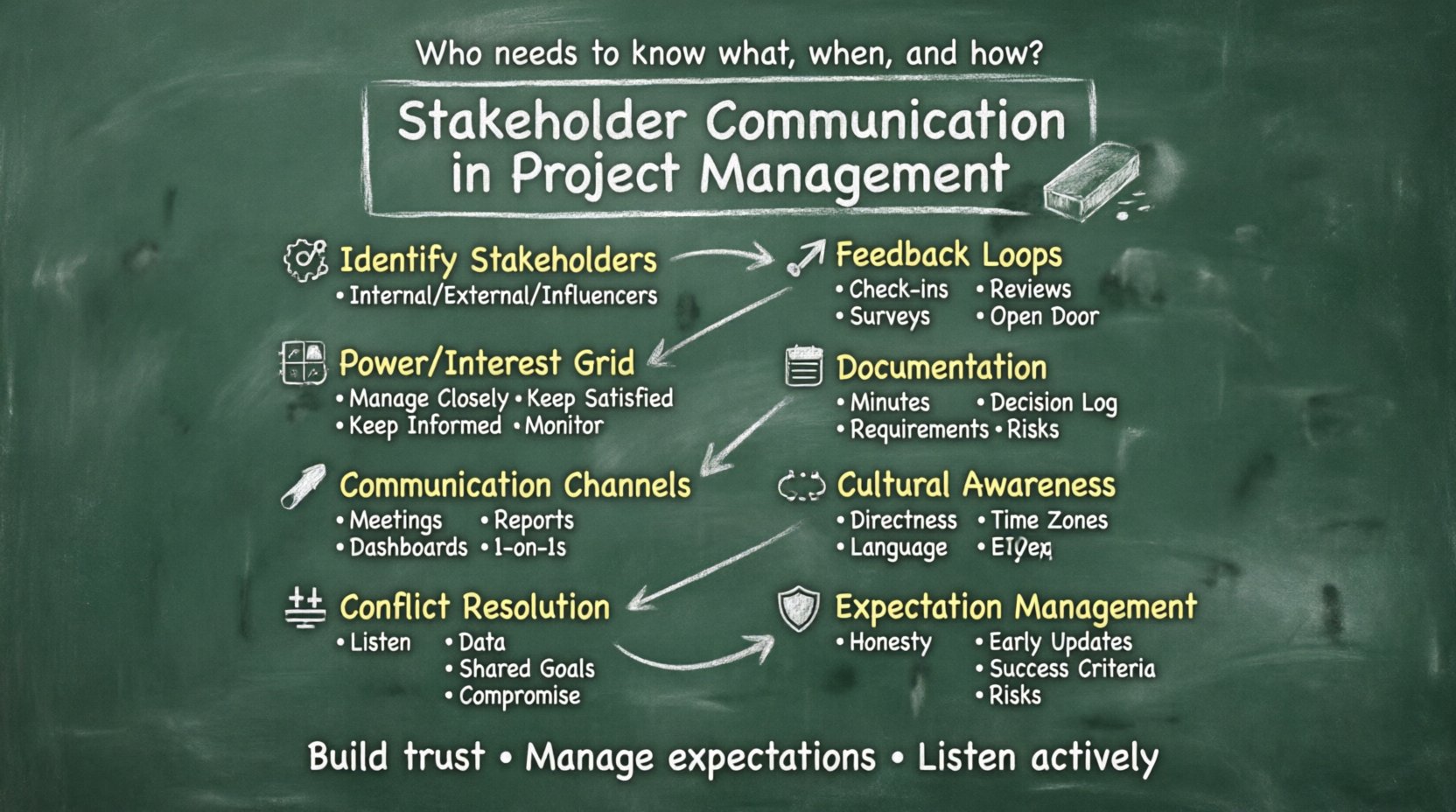
1. Identifying the Right People 🎯
The first step in effective communication is knowing exactly who your stakeholders are. A stakeholder is anyone who is affected by the outcome of the project or has the ability to influence its direction. This group is rarely static; it evolves as the project progresses. Failing to identify key players early can lead to surprises later, such as last-minute requirement changes or blocked approvals.
To begin, categorize stakeholders into three primary groups:
- Internal Stakeholders: These are team members, department heads, and executive sponsors within your organization. Their primary concern is often alignment with organizational goals and resource availability.
- External Stakeholders: These include clients, vendors, regulatory bodies, and end-users. They are often outside the immediate control of the project team and may have different priorities.
- Influencers: Individuals who do not have direct authority but hold significant sway over decision-makers. Ignoring these voices can undermine your efforts, even if they are not officially on the steering committee.
Creating a comprehensive list is not enough. You must understand the relationship dynamics between these groups. Who reports to whom? Who relies on whom for information? Mapping these connections helps you anticipate how information will flow through the organization.
2. Mapping Influence and Interest 🗺️
Once identified, you must prioritize communication efforts. Not every stakeholder requires the same level of attention or frequency of contact. A common and effective method for this is the Power/Interest Grid. This tool helps you decide how to engage based on two dimensions: how much power they have to influence the project, and how much interest they have in the outcomes.
| Category | Characteristics | Communication Strategy |
|---|---|---|
| High Power, High Interest | Key decision-makers and sponsors. | Manage Closely: Regular, detailed updates. Engage them in key decisions. |
| High Power, Low Interest | Senior executives or regulatory bodies. | Keep Satisfied: Concise, high-level reports. Ensure no roadblocks exist. |
| Low Power, High Interest | End-users or team members. | Keep Informed: Frequent updates on progress and changes. Solicit feedback. |
| Low Power, Low Interest | General public or peripheral departments. | Monitor: Minimal effort. General announcements when necessary. |
This matrix prevents resource fatigue. You do not want to overwhelm a high-power, low-interest stakeholder with daily logs, nor do you want to leave a high-interest user in the dark about a change that affects their workflow.
3. Defining Communication Channels 📡
The medium is often as important as the message. Different stakeholders prefer different ways of receiving information. Relying on a single channel, such as email, can lead to missed information or perceived lack of transparency. A robust communication plan utilizes a mix of synchronous and asynchronous methods.
- Formal Meetings: Weekly status meetings or steering committee reviews. These are best for alignment, decision-making, and handling complex issues that require real-time discussion.
- Written Reports: Weekly or monthly summaries. These provide a permanent record of progress, risks, and budget status. They are essential for stakeholders who need to review information at their own pace.
- Digital Collaboration: Shared dashboards or document repositories. These allow for transparency without constant meetings. Stakeholders can access the latest data when they need it.
- Direct Conversations: One-on-one chats for sensitive topics. Not every issue is suitable for a group setting. Private conversations can build trust and resolve personal conflicts.
It is crucial to define the frequency for each channel. Over-communicating creates noise and reduces the perceived value of the updates. Under-communicating creates anxiety and uncertainty. Establishing a rhythm that aligns with the project lifecycle is key.
4. Navigating Conflict and Resistance ⚖️
Conflict is inevitable in project management. It often arises when stakeholder interests clash or when resources are scarce. How you handle resistance determines the trajectory of the project. Avoiding conflict is not a solution; addressing it constructively is.
When facing a resistant stakeholder, consider the following approaches:
- Active Listening: Allow the stakeholder to express their concerns fully without interruption. Often, resistance stems from a feeling of being unheard. Acknowledge their perspective before offering a counter-argument.
- Data-Driven Arguments: Use objective facts to support your position. Emotions can cloud judgment, but data provides a neutral ground for discussion. Show how the proposed change impacts the timeline or budget.
- Focus on Shared Goals: Remind all parties of the overarching project objectives. When stakeholders realize they are working toward the same success metric, collaboration becomes easier.
- Compromise and Trade-offs: Be willing to negotiate. If a stakeholder requests a change that is not feasible, offer an alternative that meets their underlying need without derailing the schedule.
Remember that resistance is often a signal of risk. A stakeholder pushing back may have identified a flaw in the plan that others have missed. Treat their opposition as a resource for risk identification rather than an obstacle to be removed.
5. Establishing Feedback Loops 🔄
Communication should not be a one-way street. If you are only broadcasting information, you are not truly communicating. You must create mechanisms for feedback to flow from stakeholders back to the project team. This ensures that your understanding of requirements remains accurate and that satisfaction levels are monitored.
Effective feedback mechanisms include:
- Scheduled Check-ins: Regular intervals dedicated to asking “What is not working?” or “What do you need next?”
- Surveys and Polls: Useful for gathering sentiment from a large group of stakeholders quickly.
- Review Sessions: At the end of each phase, conduct a formal review where stakeholders validate deliverables.
- Open Door Policy: Encourage stakeholders to reach out if they have urgent concerns, ensuring they feel supported rather than blocked.
When feedback is received, act on it visibly. If a stakeholder suggests a change and you implement it, communicate that change back to them. This closes the loop and reinforces the value of their input.
6. Documentation and Record Keeping 📝
In high-stakes environments, verbal agreements are insufficient. Documentation serves as the single source of truth. It protects the team from scope creep and provides clarity on decisions that were made.
Key documents to maintain include:
- Meeting Minutes: Record decisions, action items, and owners for every significant meeting. Distribute these immediately after the meeting.
- Decision Log: A running list of major decisions made throughout the project, including the rationale behind them.
- Requirement Specifications: Detailed descriptions of what is being built, agreed upon by stakeholders.
- Risk Registers: A living document that tracks potential issues and mitigation strategies.
Documentation is not just about record-keeping; it is about accountability. When everyone knows what was agreed upon, there is less room for ambiguity. Ensure that these documents are accessible to the relevant stakeholders, but maintain version control to prevent confusion.
7. Cultural and Emotional Awareness 🌍
Project teams are increasingly global and diverse. Cultural nuances play a significant role in how communication is perceived. What is considered direct feedback in one culture may be seen as rude in another. Similarly, concepts of time and hierarchy vary widely.
Consider the following factors:
- Directness vs. Indirectness: Some stakeholders prefer blunt honesty, while others prefer a softer approach. Adapt your style to match their expectations.
- Time Zones: If working across regions, respect working hours. Do not schedule meetings that require someone to wake up at an unreasonable hour.
- Language Barriers: Avoid jargon and idioms that may not translate well. Keep language clear and simple.
- Emotional Intelligence: Recognize the emotional state of stakeholders. Stress can make communication difficult. Timing your updates during calm periods can improve reception.
Building emotional intelligence involves empathy. It means understanding that stakeholders have pressures and goals outside of your project that influence their behavior. Acknowledging these pressures builds rapport and makes collaboration smoother.
8. Managing Expectations Consistently 🛡️
One of the most common sources of friction is the gap between expectation and reality. This gap widens when communication is inconsistent. You must manage expectations from day one.
- Be Honest About Constraints: If resources are limited, state it clearly. Do not promise what cannot be delivered.
- Update Early and Often: If a delay is likely, communicate it as soon as possible. Bad news travels fast; you want to be the one delivering it.
- Define Success Criteria: Ensure all stakeholders agree on what success looks like before work begins. This prevents shifting goalposts later.
- Highlight Risks Proactively: Do not hide potential issues. Presenting risks with mitigation plans shows competence and control.
When expectations are managed well, stakeholders feel secure even when challenges arise. They understand the landscape and are prepared for the journey.
Conclusion 🏁
Stakeholder communication is a dynamic, ongoing process that requires attention, strategy, and adaptability. It is not a task to be completed at the start of a project but a discipline to be practiced throughout its lifecycle. By identifying the right people, mapping their influence, choosing appropriate channels, and maintaining clear documentation, you create an environment where collaboration thrives.
The nuances of this communication lie in the details: the tone of an email, the timing of a meeting, and the empathy shown during a conflict. Mastering these details does not happen overnight. It requires consistent effort and a willingness to listen. When you prioritize the human side of project management, you align not just the work, but the people behind it.
Success in project management is measured by delivery, but it is sustained by relationships. Invest in your communication strategy, and the project will follow suit.
Related posts:
 How Project Management Actually Works: A Definitive Overview for Intermediate Professionals
 The Hidden Cost of Chaos: Common Mistakes Stalling Your Project Management Career
 Agile vs. Waterfall: A Real-World Comparison for Senior Project Managers Deciding Frameworks
 5-Step Quick Start Guide to Structuring Any Project Management Initiative from Scratch