


Establishing an Enterprise Architecture (EA) function within an organization is a significant undertaking. It requires more than just adopting a framework; it demands a cultural shift and a structured approach to managing complexity. The TOGAF (The Open Group Architecture Framework) provides a proven methodology for this process. This guide outlines the essential steps to launch a robust Architecture Practice, focusing on practical implementation rather than theoretical idealism.
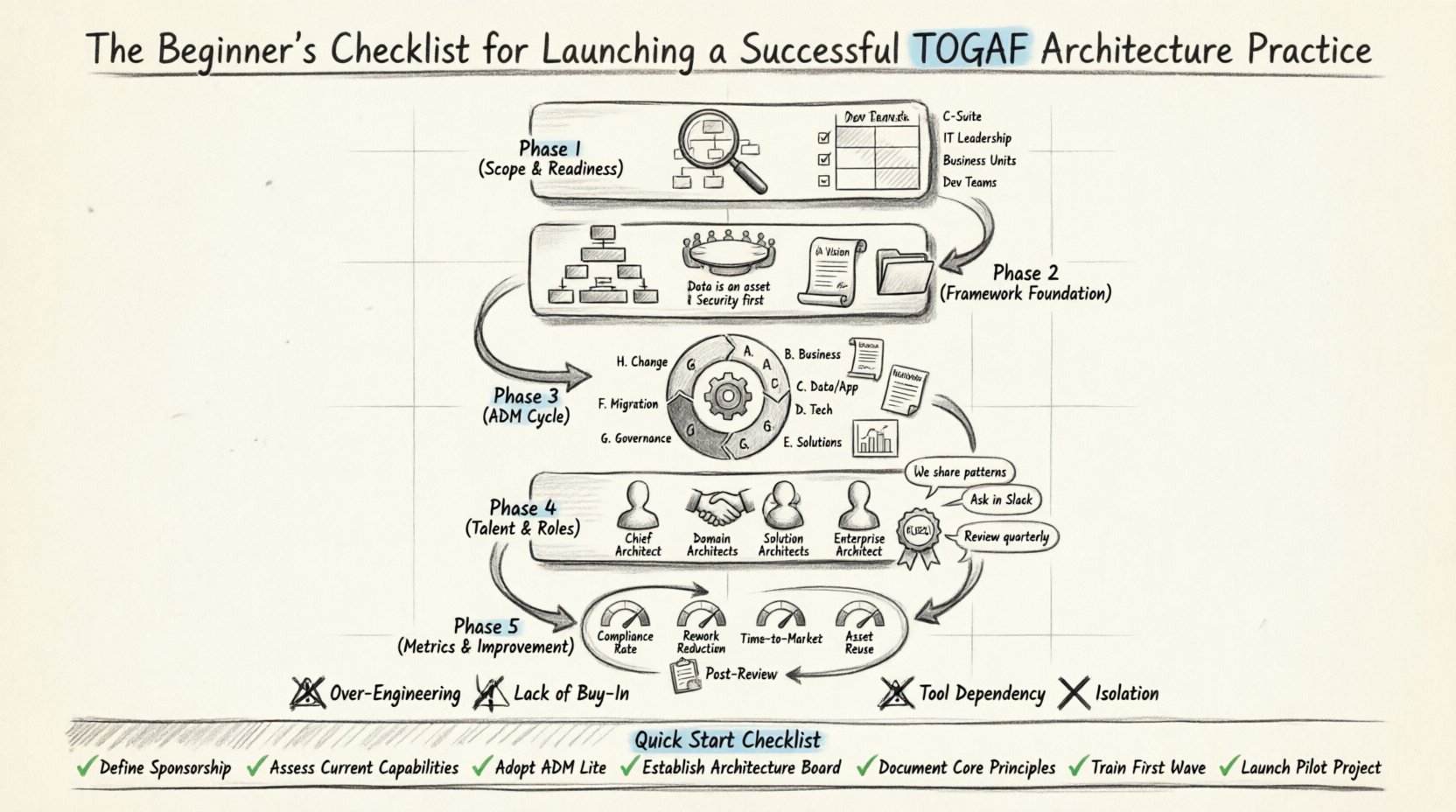
📋 Phase 1: Defining Scope and Readiness
Before deploying the Architecture Development Method (ADM), you must understand the environment you are entering. A practice launched without context often fails to deliver value. This phase focuses on alignment with business goals and assessing the current state.
🔍 Assessing Organizational Maturity
Not every organization is ready for full-scale TOGAF implementation. You need to evaluate the current maturity of IT and business processes.
- Current State Analysis: Review existing documentation, governance structures, and decision-making processes.
- Stakeholder Identification: Map out who cares about the architecture. This includes C-level executives, department heads, and technical leads.
- Value Proposition: Define what success looks like. Is it cost reduction, speed to market, or regulatory compliance?
📊 Stakeholder Matrix
Understanding who influences the project is critical. Use a matrix to categorize stakeholders based on their interest and influence.
| Stakeholder Type | Interest Level | Key Concerns |
|---|---|---|
| C-Suite Executives | High | ROI, Strategic Alignment, Risk |
| IT Leadership | High | Integration, Standards, Maintenance |
| Business Unit Heads | Medium | Feature Delivery, Time to Market |
| Development Teams | Medium | Tooling, Usability, Constraints |
🏗️ Phase 2: Building the Framework Foundation
TOGAF is flexible, but flexibility can lead to inconsistency if not managed. You need to establish a baseline framework that guides decisions without stifling innovation.
🛠️ Establishing Governance
Governance ensures that architecture decisions are followed and that standards are upheld. This is not about policing, but about enabling consistency.
- Architecture Board: Form a committee responsible for reviewing major architectural decisions. This group should include representatives from business and IT.
- Decision Rights: Clearly define who has the authority to approve changes. Avoid ambiguity in the approval chain.
- Compliance Checks: Implement checkpoints where projects must demonstrate alignment with the enterprise architecture before proceeding.
📜 Defining Standards and Principles
Standards provide the guardrails for your architecture. Principles are the high-level guidelines that drive these standards.
- Principle Definition: Create a set of 10-15 core principles. Examples include “Data is an asset” or “Security is a prerequisite”.
- Standard Catalog: Document the technologies and patterns that are approved for use within the organization.
- Exemptions Process: Define a clear path for teams to request exceptions to standards when business needs dictate.
🔄 Phase 3: Implementing the ADM Cycle
The Architecture Development Method (ADM) is the heart of TOGAF. It is an iterative cycle that ensures architecture is developed systematically. For a beginner practice, it is best to start small.
🌟 Starting with the Preliminary Phase
This phase sets the stage for the entire engagement. It involves defining the scope and customizing the framework.
- Scope Definition: Determine which business areas or IT domains the architecture will cover initially.
- Framework Tailoring: Adapt the TOGAF framework to fit the organization’s size and complexity. Remove steps that add no value.
- Resource Planning: Identify the skills and tools needed to support the ADM cycle.
🚩 The Core ADM Cycles
Once the foundation is set, move through the core phases of the ADM. Each phase has specific deliverables and outcomes.
- Phase A: Architecture Vision: Define the scope, constraints, and stakeholders. Create a high-level vision document.
- Phase B: Business Architecture: Model the business processes, organization, and strategy.
- Phase C: Information Systems Architectures: Define data and application architectures.
- Phase D: Technology Architecture: Specify the hardware, software, and network infrastructure.
- Phase E: Opportunities and Solutions: Identify implementation projects and migration strategies.
- Phase F: Migration Planning: Create a detailed plan for transitioning to the target architecture.
- Phase G: Implementation Governance: Oversee the actual implementation to ensure compliance.
- Phase H: Architecture Change Management: Manage changes to the architecture over time.
📝 Deliverables Management
Documentation is a byproduct of the process, not the goal. Focus on creating useful artifacts.
- Architecture Contract: An agreement between the architecture team and the project team.
- Architecture Requirements: Clear statements of what the architecture must achieve.
- Gap Analysis: A comparison of the baseline and target states to identify what needs to change.
👥 Phase 4: Talent and Roles
Even the best framework fails without the right people. You need to define roles that fit within the organization’s existing structure.
👔 Key Architecture Roles
Assign responsibilities clearly to avoid overlap and confusion.
- Chief Architect: Provides overall leadership and strategic direction.
- Domain Architects: Focus on specific areas like Data, Application, or Technology.
- Solution Architects: Bridge the gap between enterprise architecture and specific projects.
- Enterprise Architect: Oversees the integration of all domains and ensures alignment.
🎓 Skill Development
Architecture is a practice that improves with experience. Invest in learning and development.
- Certification: Encourage team members to pursue TOGAF certification to validate their knowledge.
- Mentorship: Pair senior architects with junior staff to transfer knowledge effectively.
- Community of Practice: Create a forum for architects to share lessons learned and discuss challenges.
📈 Phase 5: Metrics and Continuous Improvement
To prove the value of the Architecture Practice, you must measure its impact. Without metrics, the practice is viewed as a cost center rather than a value driver.
📉 Defining Success Metrics
Track indicators that reflect both efficiency and effectiveness.
- Compliance Rate: Percentage of projects that adhere to architectural standards.
- Rework Reduction: Decrease in changes required after implementation due to architectural oversight.
- Time to Market: Reduction in time from concept to deployment for approved projects.
- Asset Reuse: Number of times existing architecture assets are utilized in new projects.
🔄 Feedback Loops
Architecture is not static. It must evolve with the business.
- Post-Implementation Reviews: Conduct reviews after major projects to assess architectural outcomes.
- Stakeholder Surveys: Regularly ask stakeholders if the architecture practice is meeting their needs.
- Iterative Refinement: Update standards and processes based on feedback and changing business conditions.
🛡️ Common Pitfalls to Avoid
Launching an architecture practice involves risks. Being aware of common traps can help you navigate the early stages successfully.
- Over-Engineering: Creating complex models that no one uses. Keep diagrams simple and actionable.
- Lack of Buy-In: Failing to engage business leaders early. Ensure the practice supports business goals.
- Tool Dependency: Relying too heavily on specific tools. Focus on the process first, tools second.
- Isolation: Working in a vacuum. Integrate with project management and delivery teams.
🏁 Final Thoughts on Execution
Building a successful TOGAF Architecture Practice is a marathon, not a sprint. It requires patience, persistence, and a commitment to delivering tangible value. By following this checklist, you establish a solid foundation for long-term success.
Remember that the goal is not to create perfect documentation, but to enable better decision-making across the enterprise. Focus on the people, the process, and the value they bring to the organization. With a clear strategy and disciplined execution, the Architecture Practice will become an integral part of the organization’s success.
📝 Quick Start Checklist
- ✅ Identify key stakeholders and secure executive sponsorship.
- ✅ Define the scope and initial goals of the practice.
- ✅ Establish an Architecture Board and governance model.
- ✅ Draft core principles and standards.
- ✅ Train the initial team on TOGAF fundamentals.
- ✅ Launch a pilot project to demonstrate value.
- ✅ Implement metrics to track progress and impact.
Related posts:
 TOGAF Definitive Overview: A Clear Roadmap for Chief Enterprise Architects Starting Their Journey
 How to Begin Your TOGAF Practice: The Essential Quick Start Guide for Architecture Leads
 TOGAF Component Breakdown: Understanding the ADM Cycle Without the Jargon
 TOGAF Case Study: How a Global Enterprise Aligned Strategy and Technology from Day One