


The Sprint Review is often misunderstood as a simple demonstration of completed features. In reality, it is a critical inspection of the Increment and a collaborative session for the future of the product. This is where the Scrum Team and stakeholders align on what has been delivered and how it fits into the broader vision. Confidence during this event does not come from memorizing scripts; it comes from preparation, clarity, and a genuine understanding of the value being delivered.
When you present your work, you are not just showing code or design. You are inviting stakeholders to participate in the definition of the next steps. Whether you are a Scrum Master, Product Owner, or Developer, your role in this meeting is to facilitate transparency and gather actionable feedback. This guide breaks down the essential strategies for navigating the Sprint Review with authority and clarity.
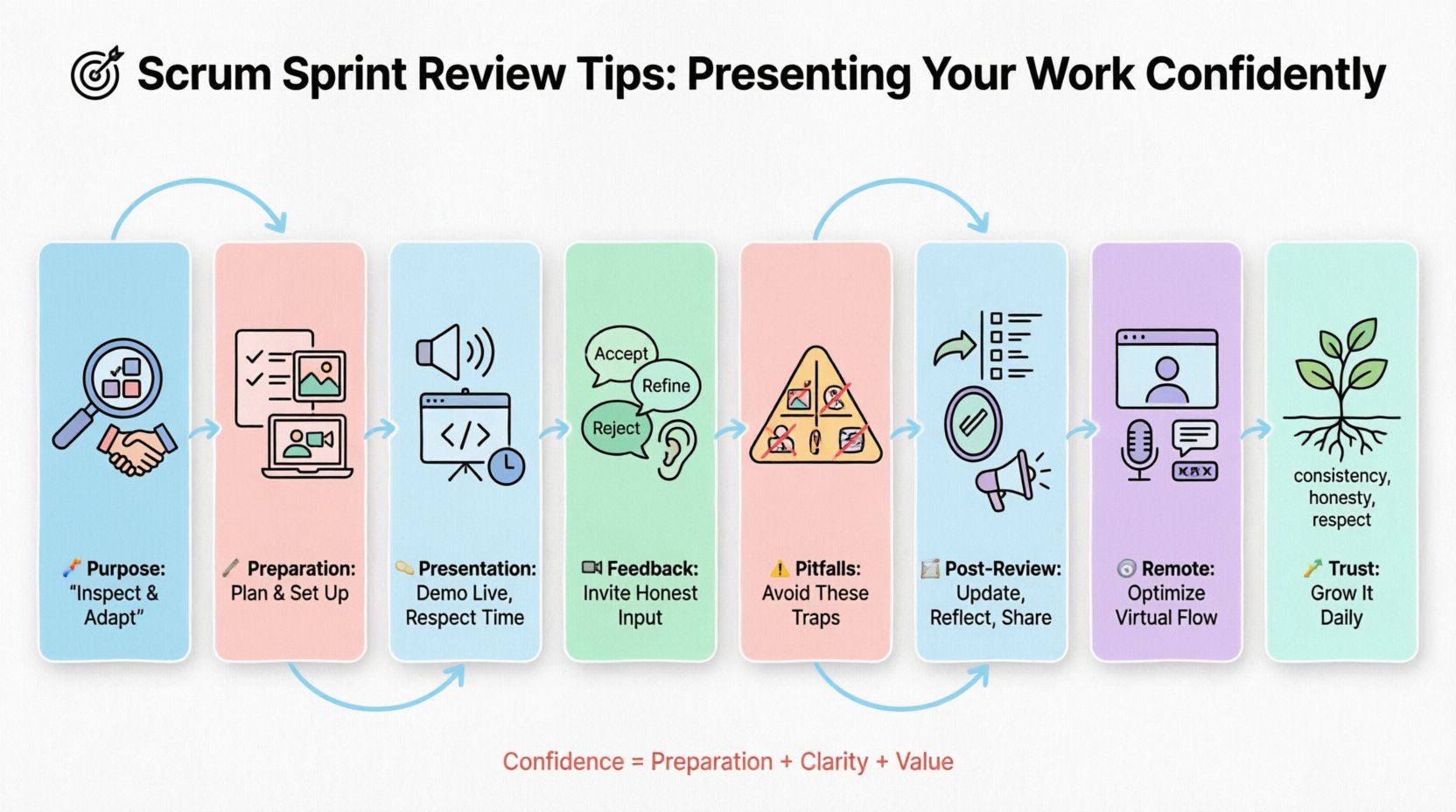
Understanding the Purpose of the Sprint Review 🎯
Before stepping up to the presentation, it is vital to internalize the objective. The Sprint Review is an informal meeting to inspect the outcome of the Sprint and determine future adaptations. It is a time for inspection, not just presentation.
- Inspect the Increment: Show what is actually done. It must meet the Definition of Done.
- Adapt the Product Backlog: Discuss what to do next based on market changes and feedback.
- Collaborate: Stakeholders and the Scrum Team work together to refine the backlog.
If you treat this as a status report for management, you miss the opportunity to shape the product. The goal is to foster a shared understanding of the product’s current state and its future direction.
Preparation: The Foundation of Confidence 🛠️
Confidence is rarely spontaneous. It is the result of diligent preparation. A well-prepared Sprint Review reduces anxiety and allows the team to focus on the conversation rather than the mechanics of the presentation.
1. Curate the Stories
Not every user story completed in the Sprint needs to be presented. Select items that provide value and demonstrate progress towards the Sprint Goal. Focus on the stories that matter most to the stakeholders.
- Choose stories that align with the Sprint Goal.
- Ensure the story is fully tested and meets the Definition of Done.
- Prepare a brief narrative for each story. What problem does it solve?
- Have a backup story ready in case a demo fails or time runs short.
2. Prepare the Environment
The setting can influence the energy of the meeting. Whether in-person or remote, ensure the environment supports the flow of information.
- In-Person: Arrange seating so everyone can see the screen. Ensure the projector works.
- Remote: Test your audio and video connections beforehand. Ensure screen sharing permissions are set correctly.
- Tools: Use a shared platform for the backlog if possible, so stakeholders can see the live updates.
3. Invite the Right People
The Sprint Review is a Scrum Team event, but it requires stakeholders. Ensure the Product Owner, Developers, and Scrum Master are present. Invite key stakeholders who have the authority to make decisions or provide critical feedback.
| Role | Responsibility in Review | Key Question to Ask |
|---|---|---|
| Product Owner | Accept or reject work based on the Definition of Done. | Is this aligned with the product vision? |
| Developers | Demonstrate the Increment and explain technical decisions. | Does this function as intended? |
| Stakeholders | Provide feedback and discuss market needs. | How does this impact the user experience? |
During the Review: Presentation Techniques 💬
Once the meeting begins, your delivery matters. You want to engage the room, not put them to sleep. The tone should be conversational and inviting.
1. Start with the Sprint Goal
Begin the review by restating the Sprint Goal. This reminds everyone why the team worked on these specific items. It sets the context for the work being shown.
- Recap the objective clearly.
- State whether the goal was met or partially met.
- Explain any variances honestly.
2. Demonstrate, Don’t Just Describe
Live demonstrations are powerful. They allow stakeholders to interact with the product. If a feature is ready, show it in action.
- Walk through a typical user journey.
- Highlight the problem the feature solves.
- Allow stakeholders to try the feature themselves if appropriate.
3. Be Honest About Challenges
If something did not work as planned, do not hide it. Transparency builds trust. Explain what was attempted, why it fell short, and what the team is doing to resolve it.
- Admit technical debt if it impacts future work.
- Discuss scope changes that occurred during the Sprint.
- Focus on solutions rather than excuses.
4. Manage Time Effectively
The Sprint Review is timeboxed. For a one-month Sprint, the review should last no more than four hours. Keep an eye on the clock to ensure all stories are covered.
- Allocate specific time slots for each story.
- If a story is complex, summarize it if time is running out.
- Use a visible timer if necessary to keep the team on track.
Handling Feedback and Questions 🗣️
The most stressful part of the review is often the feedback session. Stakeholders may have strong opinions or new ideas. How you handle this determines the success of the collaboration.
1. Listen Actively
Do not interrupt. Let stakeholders finish their thoughts. Nod and take notes. This shows respect and ensures you understand their perspective fully.
- Paraphrase what they said to confirm understanding.
- Avoid becoming defensive about the work.
- Separate the idea from the implementation.
2. Categorize Feedback
Not all feedback is actionable immediately. Use a system to categorize incoming feedback so it can be processed later.
- Accept: The feature is good and meets requirements.
- Reject: The feature does not meet requirements or Definition of Done.
- Refine: The idea is valuable but needs more discussion or backlog refinement.
3. Avoid Scope Creep
Stakeholders might suggest adding new work during the review. Remind them that the Sprint Backlog is locked for the current Sprint. New ideas belong in the Product Backlog for the next planning session.
- Politely state that the current Sprint is complete.
- Offer to add the idea to the backlog for future consideration.
- Direct the discussion back to the current Increment.
Common Pitfalls to Avoid ⚠️
Even experienced teams can stumble during a Sprint Review. Being aware of common mistakes helps you steer clear of them.
| Pitfall | Why It Happens | How to Fix It |
|---|---|---|
| Overloading the Demo | Trying to show too much to impress. | Focus on quality over quantity. Select key stories. |
| Ignoring Technical Debt | Worrying about looking behind the scenes. | Share technical challenges openly. Explain impact on speed. |
| Speaking Over Stakeholders | Excitement leads to talking too much. | Practice active listening. Pause to invite questions. |
| Focusing on Code | Developers explaining implementation details. | Focus on business value and user experience. |
Technical Debt and Transparency
Technical debt is a normal part of software development. Hiding it during the review creates a false sense of security. It is better to be transparent about the health of the codebase.
- Explain how technical debt affects future velocity.
- Discuss plans to address it in upcoming Sprints.
- Involve stakeholders in prioritizing debt reduction.
Post-Review Actions 📝
The Sprint Review does not end when the meeting closes. There are follow-up tasks that ensure the feedback is integrated effectively.
1. Update the Product Backlog
Feedback from the review often results in new items or changes to existing items. The Product Owner should update the backlog immediately.
- Add new ideas discussed during the meeting.
- Refine existing items based on stakeholder input.
- Re-prioritize the backlog as needed.
2. Reflect on the Presentation
The Scrum Team should reflect on how the presentation went. This is part of the continuous improvement process.
- What went well during the demo?
- What questions were difficult to answer?
- How was the timing managed?
- What can be improved for the next Sprint Review?
3. Communicate Outcomes
If certain decisions were made that affect the broader organization, communicate them. Ensure that stakeholders who were not present get a summary of the outcomes.
- Send a brief summary email or message.
- Highlight key decisions made.
- Share the updated backlog or roadmap.
Adapting to Remote Environments 🌐
Remote work has changed how Scrum Teams collaborate. The Sprint Review often happens via video conferencing tools. This requires additional preparation.
1. Optimize Screen Sharing
In a remote setting, the screen is the focal point. Ensure the interface is clean and easy to read.
- Use a high-resolution display.
- Minimize browser tabs and distractions.
- Ensure text is large enough to read on smaller screens.
2. Manage Audio Quality
Audio issues can ruin the flow of a meeting. Poor sound quality leads to misunderstandings and frustration.
- Use a good quality microphone.
- Test audio levels before the meeting starts.
- Encourage participants to mute when not speaking.
3. Facilitate Interaction
It is harder to engage a remote audience. Use tools to keep people involved.
- Use chat features for quick feedback.
- Ask direct questions to specific stakeholders.
- Use polls or reaction buttons to gauge sentiment.
Building Long-Term Trust 🔗
Every Sprint Review is an opportunity to build trust with stakeholders. Consistency in delivery and communication over time creates a strong foundation.
- Deliver on commitments consistently.
- Be honest about risks and challenges.
- Value stakeholder input and act on it.
- Respect the time of the team and the stakeholders.
When stakeholders trust the team, the feedback becomes more constructive. They are more willing to support the team’s decisions and understand the complexities of software development.
Conclusion
Presenting your work confidently in a Sprint Review is a skill that develops over time. It requires a balance of technical knowledge, communication ability, and emotional intelligence. By preparing thoroughly, focusing on value, and handling feedback with grace, you can turn the Sprint Review into a powerful driver for product success.
Remember, the goal is not to impress, but to inform and collaborate. When the team and stakeholders work together openly, the product evolves in a direction that truly meets user needs. Keep refining your approach, and let the Increment speak for itself.