


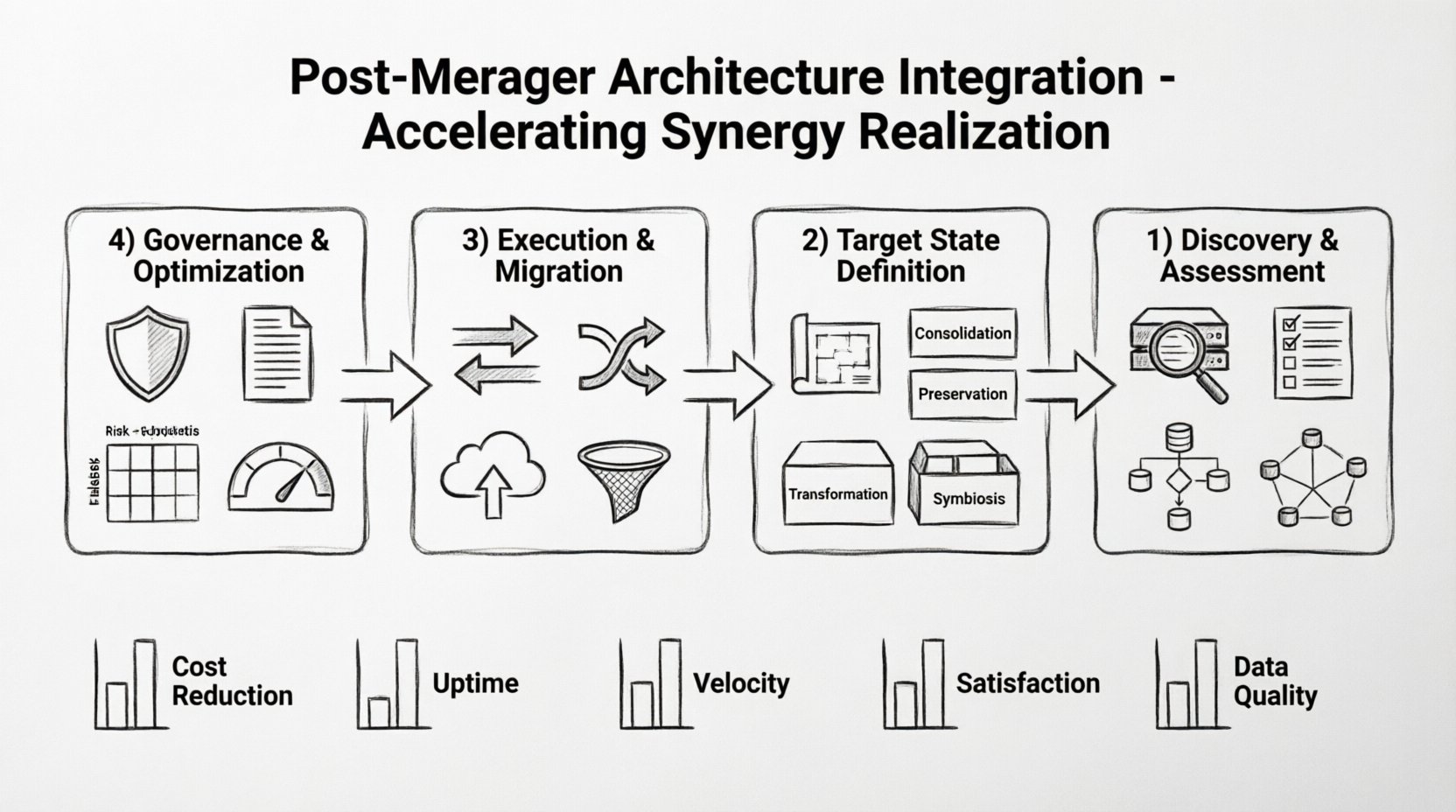
The convergence of two distinct enterprise entities creates a moment of profound complexity. Mergers and acquisitions promise value, yet the realization of that value often stalls within the technology landscape. Post-merger architecture integration is not merely a technical exercise; it is a strategic imperative that dictates the speed and efficacy of synergy realization. When two organizations combine, their legacy systems, data structures, and operational protocols collide. Without a deliberate integration strategy, the resulting friction can erode the anticipated benefits of the transaction.
This guide outlines a rigorous approach to aligning enterprise architectures. We focus on the tangible steps required to consolidate technology stacks, harmonize data governance, and establish a unified operational framework. The goal is stability, efficiency, and a clear path forward.
🔍 Phase 1: Discovery and Assessment
Before any changes are implemented, a comprehensive inventory of the existing environment is mandatory. This phase is about understanding the current state without bias. It involves mapping the technology landscape of both entities to identify overlaps, gaps, and dependencies.
- Asset Inventory: Catalog all hardware, software licenses, and cloud resources. This includes on-premise servers, virtualized environments, and SaaS subscriptions.
- Application Portfolio: List all applications by business function. Determine which are critical to operations and which are redundant.
- Data Architecture: Analyze database schemas, data flows, and integration points. Identify where data lives and how it moves between systems.
- Network Topology: Map out connectivity, security zones, and latency issues. Ensure that network capacity can support the combined load.
This assessment reveals the technical debt inherited from both organizations. Some systems may be end-of-life, while others might be over-provisioned. Understanding this baseline allows architects to make informed decisions about what to keep, what to retire, and what to replace.
🗺️ Phase 2: Defining the Target State
Once the current state is understood, the target architecture must be defined. This is the blueprint for the future state of the combined entity. It is not about replicating one culture onto the other, but creating a new, optimized standard.
Integration Models
Different scenarios require different integration approaches. The choice depends on the strategic intent of the merger.
| Model | Description | Best For |
|---|---|---|
| Consolidation | Merging systems into a single, unified platform. Reduces complexity and cost. | High synergy goals, redundant systems. |
| Preservation | Maintaining separate systems with defined interfaces. Minimizes disruption. | Strategic acquisitions where the target operates independently. |
| Transformation | Building a new architecture from scratch. High risk, high reward. | Legacy-heavy environments requiring modernization. |
| Symbiosis | Partial integration where specific capabilities are shared while others remain distinct. | Complementary businesses with distinct market needs. |
Selecting the right model requires alignment with business leadership. Technology should serve the business strategy, not dictate it.
🚀 Phase 3: Execution and Migration
This is the most visible phase of the integration. It involves the actual movement of data, the shutdown of legacy systems, and the activation of new platforms. Execution must be meticulous to avoid service disruption.
Migration Patterns
- Lift and Shift: Moving infrastructure as-is to a new environment. Fast, but does not address technical debt.
- Re-platforming: Moving to a new infrastructure while optimizing for the new environment. Balances speed and efficiency.
- Refactoring: Rewriting applications to take advantage of cloud-native capabilities. Slow, but maximizes long-term value.
- Replacement: Substituting an on-premise system with a cloud-based alternative. Often the cleanest break from legacy constraints.
Data Harmonization
Data is the lifeblood of the enterprise. Merging data requires careful planning to ensure integrity and consistency.
- Master Data Management: Establish a single source of truth for critical entities like customers and products.
- Data Cleansing: Remove duplicates and correct errors before migration. Dirty data migrates faster than clean data.
- Mapping: Define clear rules for how data fields in System A map to System B.
- Validation: Verify data integrity post-migration through automated checks and manual sampling.
🛡️ Phase 4: Governance and Optimization
Integration does not end with cutover. Ongoing governance ensures that the new architecture remains stable and evolves with the business.
Establishing Standards
A unified set of standards prevents the emergence of shadow IT and ensures consistency across the organization.
- Technology Standards: Define approved vendors, languages, and platforms.
- Security Policies: Unify access controls, encryption standards, and compliance requirements.
- Development Practices: Adopt consistent coding standards, testing protocols, and deployment pipelines.
Risk Management
New architectures introduce new risks. A proactive approach is necessary to identify and mitigate them.
| Risk Category | Impact | Mitigation Strategy |
|---|---|---|
| Service Disruption | Downtime during migration affects revenue and reputation. | Staged rollouts and rollback plans. |
| Data Loss | Loss of critical business records during transfer. | Comprehensive backups and verification steps. |
| Cultural Friction | Resistance from staff adapting to new tools. | Change management and training programs. |
| Cost Overruns | Integration costs exceed initial budget estimates. | Strict financial tracking and contingency funds. |
📊 Metrics for Success
To verify that synergy realization is occurring, specific metrics must be tracked. These indicators provide objective evidence of progress.
- Cost Reduction: Track the decrease in total cost of ownership (TCO) for the technology stack.
- System Availability: Monitor uptime percentages to ensure stability during the transition.
- Velocity: Measure the speed of new feature deployment and incident resolution.
- User Satisfaction: Survey employees on the usability and effectiveness of new systems.
- Data Quality: Assess the accuracy and completeness of data in the unified environment.
🧩 Challenges in Architecture Integration
While the path is clear, obstacles often arise. Recognizing these challenges early allows for better preparation.
Legacy Dependencies
Older systems often rely on proprietary protocols or outdated languages that are no longer supported. Integration may require building adapters or wrappers to facilitate communication. In some cases, the cost of maintaining these systems outweighs the benefit, necessitating a full replacement.
Cultural Differences
Technology is built by people. Different organizations often have different working cultures. One team might prioritize speed, while another prioritizes stability. Reconciling these differences requires strong leadership and clear communication channels.
Data Silos
Departments often build their own systems without sharing data. Breaking down these silos is essential for a unified view of the business. This requires breaking down political barriers as well as technical ones.
🔄 Continuous Evolution
The architecture is never static. As the market changes, the technology must adapt. Post-merger integration is not a one-time event; it is a continuous process of optimization.
- Regular Reviews: Conduct quarterly architecture reviews to ensure alignment with business goals.
- Feedback Loops: Encourage feedback from users to identify pain points in the new systems.
- Investment Planning: Allocate budget for ongoing maintenance and future innovation.
By treating integration as a journey rather than a destination, organizations can maintain momentum and continue to realize value long after the initial merger is complete.
🏁 Moving Forward
The successful integration of enterprise architectures requires discipline, clarity, and a focus on business value. It is a complex undertaking that touches every part of the organization. By following a structured approach, leaders can navigate the challenges and build a robust foundation for growth. The synergy of a merger is realized not through the signing of contracts, but through the seamless operation of the combined technology landscape.
Focus on the fundamentals: assess thoroughly, plan deliberately, execute carefully, and govern continuously. This is the path to a stable, efficient, and scalable future.
Related posts:
 Enterprise Architecture Strategy Blueprint for Digital Transformation Success
 EA Guide; Aligning Business Strategy with IT Architecture – A CIO’s Actionable Framework
 Cloud-First Enterprise Architecture: Strategic Planning for Flexibility and Control
 EA Guide: Data Governance Architecture Framework – Ensuring Quality, Security, and Compliance