
Enterprise Architecture is a complex discipline requiring structured methodologies to align business needs with technical capabilities. The Open Group Architecture Framework (TOGAF) provides a robust framework for this alignment. Within the Architecture Development Method (ADM), Phase D is critical. It focuses on Information Systems Architecture. This phase translates the high-level business strategy into concrete specifications for data, applications, and technology.
Understanding this phase is essential for architects who need to move from abstract concepts to actionable blueprints. It bridges the gap between the business architecture defined in earlier phases and the technology that will support it. This guide explores the core components, deliverables, and processes involved in Phase D without relying on specific vendor tools or marketing hype.
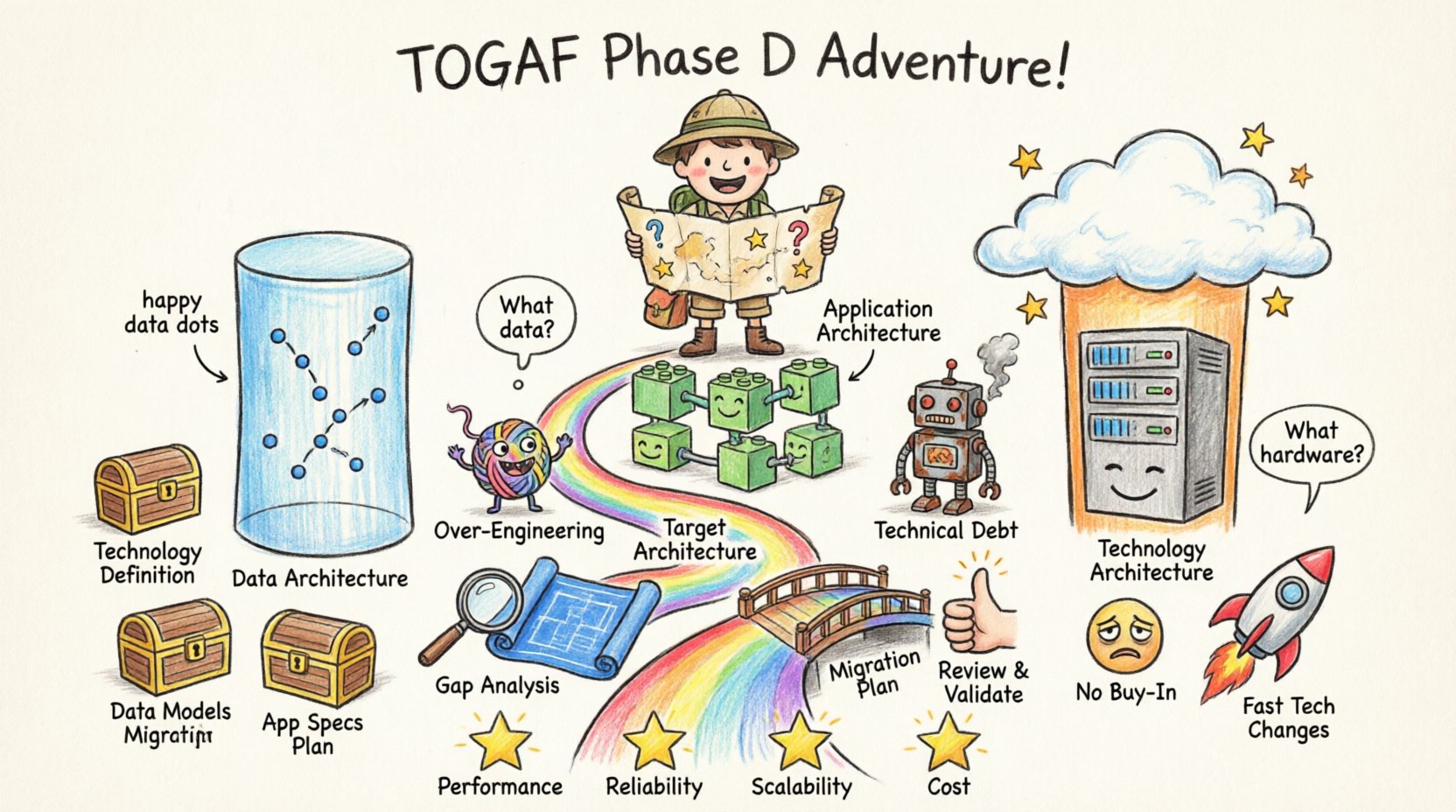
🧭 Understanding the Objective of Phase D
Phase D is technically titled Technology Architecture in some documentation, but in the context of Information Systems Architecture, it encompasses the broader scope of how data, applications, and technology interact to support business goals. The primary objective is to develop a target technology architecture that supports the target business and data architectures.
This phase is not merely about selecting hardware or software. It is about defining the standards, models, and rules that govern the technology landscape. The focus remains on the what and the how of the infrastructure, ensuring it is robust, scalable, and secure.
Key Goals
- Define the logical software and hardware capabilities.
- Identify necessary infrastructure and migration strategies.
- Ensure alignment with the Business and Data Architecture.
- Establish standards for technology implementation.
🗄️ The Three Pillars of Information Systems Architecture
To effectively navigate Phase D, one must understand the three distinct but interconnected architecture domains. These domains form the backbone of the technical landscape.
1. Data Architecture
Data architecture defines the structure of an organization’s logical and physical data assets and data management resources. It is the foundation upon which applications are built and technologies are deployed.
- Conceptual Data Models: High-level views of data entities and their relationships.
- Logical Data Models: Detailed definitions of data structures, including keys and constraints.
- Physical Data Models: Specific implementations on storage systems.
The goal is to ensure data integrity, security, and accessibility across the enterprise. It involves defining data flows and how data moves between different systems.
2. Application Architecture
Application architecture describes a set of applications that support business processes and interact with users. It defines the relationships between these applications and how they integrate.
- Application Portfolio: A list of all applications in use.
- Application Interaction: How applications communicate with each other.
- Application Services: The functional capabilities provided by applications.
This domain focuses on modularity and reusability. It avoids siloed systems by defining clear interfaces and integration patterns.
3. Technology Architecture
Technology architecture specifies the logical software and hardware capabilities required to support the deployment of business, data, and application services. This is where the infrastructure resides.
- Network Infrastructure: Connectivity and communication protocols.
- Hardware Platforms: Servers, storage, and mobile devices.
- System Software: Operating systems, middleware, and databases.
This layer ensures that the underlying environment is capable of supporting the applications and data layers above it.
📊 Comparing the Architecture Domains
The following table summarizes the distinctions and relationships between the domains within Phase D.
| Domain | Primary Focus | Key Question |
|---|---|---|
| Data Architecture | Information Assets | What data do we need and how is it structured? |
| Application Architecture | Software Functions | Which applications support our business processes? |
| Technology Architecture | Infrastructure | What hardware and platforms support the software? |
🔄 The Process Flow in Phase D
Executing Phase D involves a series of steps that guide the architect from the current state to the target state. This process is iterative and relies heavily on stakeholder engagement.
Step 1: Analyze the Gap
Before designing the future state, you must understand the current state. This involves reviewing the existing technology landscape, data stores, and application portfolios. Identify gaps between the current capabilities and the requirements defined in Phase A (Architecture Vision) and Phase B (Business Architecture).
Step 2: Develop the Target Architecture
Using the gap analysis, define the target technology architecture. This includes selecting standards and protocols. It involves creating diagrams that show how data flows and how applications interact with the infrastructure.
Step 3: Define Migration Strategies
Transitioning from the current state to the target state requires a plan. This phase defines the work packages and projects needed to achieve the target architecture. It considers risks, costs, and dependencies.
Step 4: Review and Validate
Stakeholders review the proposed architecture. Feedback is incorporated to ensure the solution meets business needs. This validation step is crucial before moving to implementation.
📂 Key Deliverables
Phase D produces specific artifacts that serve as the blueprint for implementation. These deliverables are essential for communication between architects and developers.
- Technology Architecture Definition: A comprehensive document outlining the target technology landscape.
- Data Architecture Definition: Models and standards for data management.
- Application Architecture Definition: Specifications for application interactions.
- Migration Plan: A roadmap for moving from the baseline to the target architecture.
- Implementation Governance Plan: Guidelines for ensuring projects adhere to the architecture.
⚠️ Common Challenges and Pitfalls
While the framework provides structure, real-world implementation presents unique difficulties. Recognizing these early can save significant time and resources.
1. Over-Engineering
There is a tendency to create overly complex architectures that are difficult to implement. The goal is simplicity and effectiveness, not complexity for its own sake. Keep the design aligned with actual business requirements.
2. Ignoring Technical Debt
Legacy systems often hold significant technical debt. Ignoring this during the planning phase can lead to integration failures. Assess the cost of maintaining old systems versus replacing them.
3. Lack of Stakeholder Buy-In
Architecture is not just a technical exercise. If business stakeholders do not understand or support the proposed changes, adoption will fail. Communication must be clear and focused on value.
4. Rapidly Changing Technology
The technology landscape evolves quickly. An architecture designed today may be obsolete in two years. Build flexibility into the design to accommodate future changes without requiring a complete overhaul.
🔗 Integration with Other Phases
Phase D does not exist in isolation. It is part of a continuous cycle within the ADM cycle.
Inputs from Previous Phases
- Phase A (Vision): Provides the scope and constraints.
- Phase B (Business): Defines the business processes to be supported.
- Phase C (Data): Defines the information requirements.
Outputs to Subsequent Phases
- Phase E (Opportunities): Uses the architecture to identify migration projects.
- Phase F (Migration): Provides the detailed technical plans for implementation.
- Phase G (Implementation): Guides the actual development and deployment.
🛠️ Practical Considerations for Beginners
For those new to this framework, it is important to approach the work methodically. Do not rush into technical details before understanding the business context.
Start with Standards
Establishing standards early helps maintain consistency. Define naming conventions, security protocols, and integration patterns. This reduces ambiguity during implementation.
Focus on Interoperability
Systems rarely operate in a vacuum. Ensure that the architecture supports interoperability. Define clear interfaces and APIs where necessary to allow different components to work together.
Document Everything
Documentation is not optional. It serves as a reference for future maintenance and troubleshooting. Keep the documentation updated as the architecture evolves.
📈 Measuring Success
How do you know if Phase D was successful? Success is measured by the alignment of the technical solution with business objectives.
- Performance: Does the system meet the required speed and throughput?
- Reliability: Is the system available when needed?
- Scalability: Can the system grow with the business?
- Cost Efficiency: Is the solution sustainable within budget?
🚀 Moving Forward
Phase D is a pivotal moment in the Architecture Development Method. It transforms abstract ideas into concrete technical plans. By focusing on Data, Application, and Technology architectures, architects ensure that the enterprise has the infrastructure to support its future.
Remember that architecture is a living discipline. It requires continuous refinement as business needs and technology capabilities change. Stay informed, engage with stakeholders, and maintain a focus on value delivery. This approach ensures that the architecture remains relevant and effective over time.
With a solid understanding of Phase D, you are better equipped to navigate the complexities of enterprise transformation. The path forward involves continuous learning and adaptation. Use this foundation to build robust, resilient, and efficient information systems.