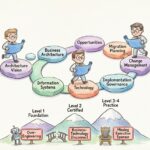
Enterprise Architecture (EA) has long been a subject of intense debate within the technology and business sectors. The Open Group Architecture Framework, commonly known as TOGAF, stands as one of the most widely recognized methodologies for structuring this discipline. Yet, despite its prominence, significant confusion persists regarding its purpose, application, and value. Many organizations approach TOGAF with hesitation, fearing it will become a bureaucratic burden rather than a strategic asset. This guide aims to clear the air. We will dissect common misconceptions, examine the core principles, and provide a clear path for implementation without unnecessary baggage.
Whether you are a seasoned architect or a business leader evaluating architectural standards, understanding the reality behind the framework is crucial. Below, we separate fact from fiction to help you navigate the landscape of Enterprise Architecture with clarity and confidence.
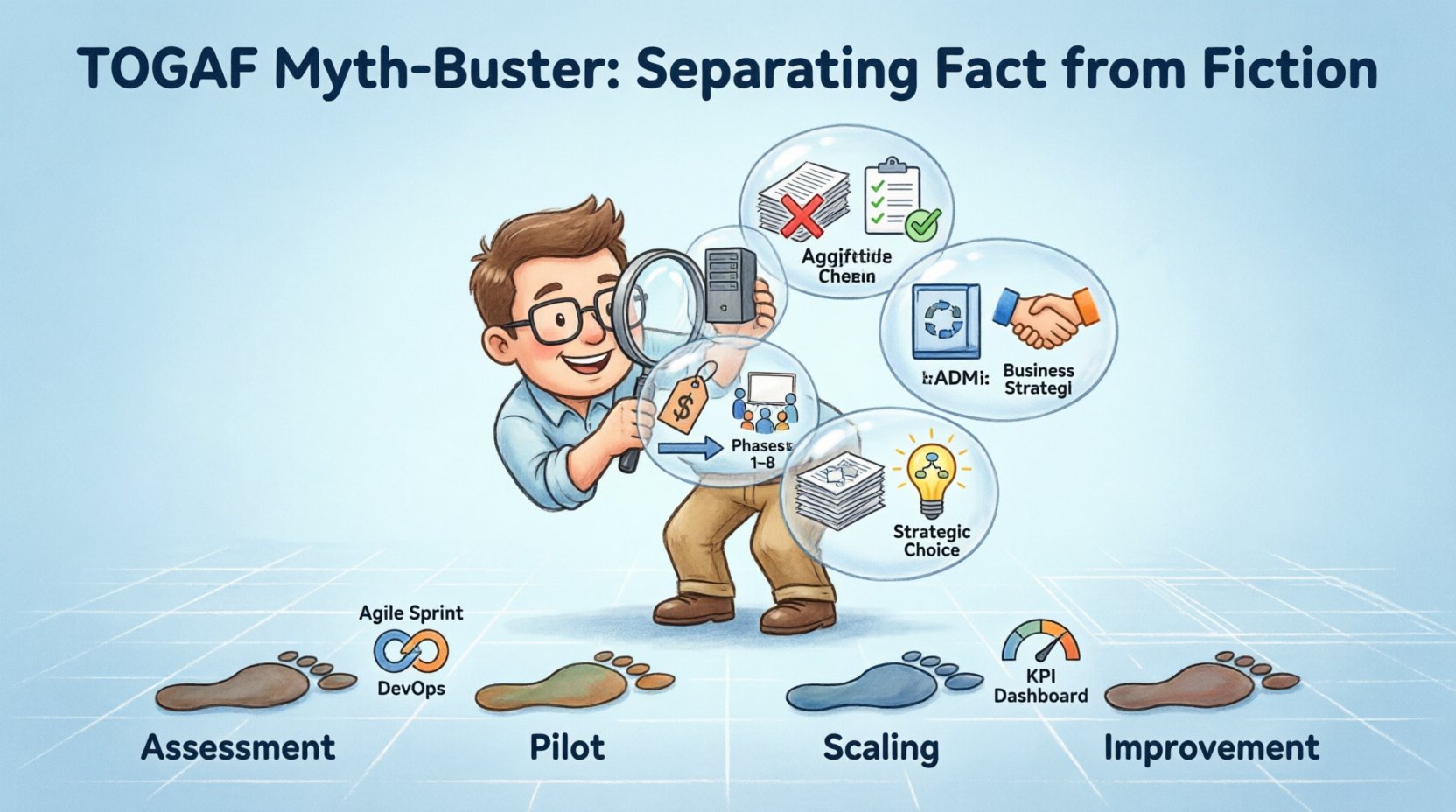
🔍 The Core Identity of TOGAF
Before addressing myths, it is essential to define what the framework actually is. TOGAF is not a software product, a set of rigid rules, or a mandatory compliance standard. It is a framework for developing an enterprise architecture. It provides a structured approach to designing, planning, implementing, and governing an enterprise information architecture.
The framework consists of several key components:
- The Architecture Development Method (ADM): A step-by-step process for developing architecture.
- The Architecture Content Framework: Guidelines for the content to be developed.
- The Enterprise Continuum: A view of the repository of assets.
- The Architecture Capability Framework: Guidance on setting up an Architecture Center of Excellence.
When used correctly, this structure provides a common language and process for aligning IT investments with business goals. It is designed to be adaptable, not prescriptive. The flexibility is its greatest strength, though often misunderstood.
🚫 Myth 1: TOGAF is Too Heavy and Bureaucratic
One of the most persistent criticisms of TOGAF is the perception that it forces organizations into a rigid, document-heavy process that slows down delivery. The belief is that every decision requires a massive set of diagrams, reports, and approvals before any work can begin.
The Reality: The framework is iterative and scalable. The ADM cycle is designed to repeat, allowing for continuous refinement. Organizations are not required to produce every artifact for every project. Instead, the framework encourages tailoring. You can adopt the high-level phases without creating exhaustive documentation for every iteration.
Key Takeaways:
- Tailoring is Encouraged: You can select specific parts of the ADM that apply to your context.
- Agile Compatibility: Modern interpretations of the framework integrate well with Agile and DevOps practices. Architecture can be delivered in increments.
- Value over Volume: The goal is to create value, not to fill a repository with files. If a document does not aid decision-making, it should not be created.
Organizations that fail to adapt TOGAF to their size and speed often create the bureaucracy they fear. The framework itself does not mandate bureaucracy; poor implementation does.
🚫 Myth 2: Enterprise Architecture is Just About IT
There is a common assumption that EA is solely the responsibility of the IT department. The view is that it deals only with servers, networks, and software licenses. This narrow perspective limits the potential impact of the architecture function.
The Reality: TOGAF explicitly defines Business Architecture as a core domain. It focuses on the business strategy, governance, organization, and key business processes. The framework is designed to bridge the gap between business strategy and IT implementation.
When Business Architecture is prioritized, the following benefits emerge:
- Strategic Alignment: IT projects are directly linked to business capabilities and objectives.
- Process Optimization: Architecture reviews can identify inefficiencies in operational workflows, not just technical debt.
- Unified Vision: Stakeholders from finance, operations, and marketing can engage with the same architectural artifacts.
By treating architecture as a holistic business capability, organizations ensure that technology serves the business, rather than the business serving technology.
🚫 Myth 3: You Need Expensive Software to Implement EA
Many leaders believe that successful Enterprise Architecture requires expensive, proprietary modeling tools. They assume that without a specific platform, the architecture cannot be managed or visualized effectively.
The Reality: The framework is methodology-first. Tools are enablers, not requirements. While specialized platforms can assist with repository management and visualization, the core value lies in the thinking and the process.
Common practices that do not require specialized software include:
- Whiteboarding Sessions: Collaborative design workshops to define capabilities and flows.
- Standard Office Suites: Documentation and basic diagrams can be created using standard word processors and presentation software.
- Open Standards: Using open data formats ensures that information is not locked into a single vendor ecosystem.
Investing in people and process maturity yields higher returns than investing in tools. A tool with a broken process will only automate chaos.
🚫 Myth 4: The ADM is a Linear Process
The Architecture Development Method (ADM) is often depicted as a straight line from Phase A (Architecture Vision) to Phase H (Architecture Change Management). This leads to the expectation that you must finish Phase G before moving to Phase H.
The Reality: The ADM is a cycle. It is iterative. Real-world projects rarely follow a perfect linear path. Requirements change, market conditions shift, and technical constraints evolve. The framework anticipates this through feedback loops.
Understanding the Iteration:
- Requirements Management: This is central to the cycle. Requirements are continuously validated against the architecture.
- Recursion: Each phase can be broken down into sub-iterations. For example, Phase B (Business Architecture) might have its own internal cycles.
- Implementation: Implementation projects are often handled in parallel with architecture definition in later phases.
Thinking of the ADM as a rigid checklist misses the dynamic nature of enterprise change management.
🚫 Myth 5: Documentation is the Goal
A significant portion of architectural effort is sometimes lost in the creation of diagrams and specifications. The output becomes the deliverable, rather than the decision support the output provides.
The Reality: Documentation is a means to an end. The purpose of architecture documentation is communication and governance. If the stakeholders do not understand the content, or if the content does not influence decisions, it has failed.
Best Practices for Documentation:
- Target Audience: Create specific views for specific stakeholders (e.g., CIO view vs. Developer view).
- Living Artifacts: Treat architecture documents as living records that are updated as the system evolves.
- Minimal Viable Documentation: Create the smallest amount of documentation necessary to ensure clarity and compliance.
📊 Comparing Framework Approaches
To further clarify the positioning of TOGAF, it is helpful to compare how different architectural concerns are addressed across various methodologies. The following table outlines common distinctions.
| Focus Area | TOGAF Approach | Common Misconception |
|---|---|---|
| Scope | Enterprise-wide, holistic | Only covers IT infrastructure |
| Flexibility | Adaptable, tailorable | Rigid, one-size-fits-all |
| Output | Architecture Definitions & Plans | Static Documentation Only |
| Integration | Compatible with Agile/DevOps | Waterfall only |
| Ownership | Business and IT aligned | IT Department only |
🛠️ Understanding the Architecture Content Framework
The Content Framework defines the building blocks of the architecture. It ensures that when different teams work on different parts of the enterprise, they use consistent definitions and structures. This prevents fragmentation and ensures interoperability.
Key Building Blocks:
- Architecture Building Blocks (ABB): Describes the capabilities required to deliver the business strategy.
- Solution Building Blocks (SBB): Describes the specific products and services used to implement the capabilities.
- Architecture Artifacts: The tangible outputs like diagrams, matrices, and reports.
By standardizing these building blocks, organizations can track how specific capabilities are delivered across multiple projects. This provides a clear view of the enterprise’s technical debt and investment distribution.
🔄 The Evolution: TOGAF 10
The framework is not static. It evolves to reflect changes in the technology landscape. The recent updates to TOGAF (Version 10) reflect a shift towards a more modular and integrated approach.
Key Updates in Modern Versions:
- Modular Structure: Parts of the framework can be adopted independently.
- Integration with Standards: Better alignment with ISO standards and other industry frameworks.
- Focus on Capabilities: Greater emphasis on business capabilities rather than just IT systems.
- Open Architecture: Continued commitment to openness and accessibility of the framework.
Adopting the latest version ensures that your architecture practice remains relevant to current market trends and technological advancements.
🚀 Implementing EA Without the Baggage
How do organizations start without falling into the traps of bureaucracy? The path to success involves a phased approach that prioritizes quick wins and stakeholder buy-in.
Phase 1: Assessment and Strategy
- Evaluate the current maturity of your architecture practice.
- Identify key pain points that architecture could solve (e.g., integration issues, duplication).
- Secure executive sponsorship to ensure resources are allocated.
Phase 2: Pilot Project
- Select a high-visibility project that benefits from structured planning.
- Apply the ADM selectively to this project.
- Document the outcomes and the effort required.
Phase 3: Scaling and Governance
- Establish an Architecture Review Board (ARB) to oversee compliance and standards.
- Expand the repository to include lessons learned from the pilot.
- Integrate architecture gates into the project lifecycle.
Phase 4: Continuous Improvement
- Review the effectiveness of the framework annually.
- Adjust the tailoring rules based on feedback.
- Invest in training to build internal competency.
📉 Common Pitfalls to Avoid
Even with the best intentions, implementation can fail. Awareness of common pitfalls helps organizations navigate these challenges.
1. Lack of Business Context
Creating architecture that does not speak the language of the business. Use business terminology in all diagrams and reports.
2. Over-Engineering
Designing for a future that may never happen. Focus on the immediate requirements and the near-term future.
3. Ignoring Stakeholders
Developing architecture in a silo. Engage stakeholders early and often to validate assumptions.
4. Neglecting Change Management
Architecture is a change initiative. Address the cultural impact of new processes and standards.
🤝 Integrating with Agile and DevOps
There is often a perceived conflict between the long-term planning of EA and the rapid iteration of Agile and DevOps. This is a false dichotomy. Architecture provides the guardrails, while Agile provides the vehicle.
Strategies for Integration:
- Architecture as Code: Define architectural constraints in automated pipelines.
- Iterative Architecture: Deliver architectural components in sprints rather than waiting for a complete design.
- Empowered Teams: Allow development teams to make local decisions within the boundaries set by the enterprise architecture.
- Continuous Compliance: Use tools to check for compliance continuously, rather than at the end of a project.
This approach ensures that speed is not sacrificed for stability, and stability does not stifle innovation.
📈 Measuring Success
How do you know if the architecture practice is working? You need to define metrics that reflect value, not just activity.
Key Performance Indicators (KPIs):
- Alignment Score: Percentage of IT projects aligned with business strategy.
- Reduction in Redundancy: Decrease in duplicate systems or capabilities.
- Time to Market: Impact of architecture on project delivery speed.
- Cost Savings: Reduction in maintenance costs due to standardization.
- Stakeholder Satisfaction: Feedback from business leaders on the support provided.
Regularly reporting on these metrics keeps the architecture function accountable and visible.
🌐 The Future of Enterprise Architecture
The landscape of technology is shifting rapidly. Cloud computing, artificial intelligence, and data privacy regulations are reshaping the role of the architect.
Trends to Watch:
- Data-Centric Architecture: Focus on data governance and quality as foundational elements.
- Ecosystem Thinking: Managing architecture beyond organizational boundaries to include partners and suppliers.
- Security by Design: Integrating security requirements from the initial vision phase.
- Sustainability: Considering the environmental impact of IT infrastructure and architecture decisions.
Staying informed about these trends ensures that the enterprise remains resilient and competitive.
🏁 Final Thoughts on Framework Adoption
Adopting an enterprise architecture framework is a journey, not a destination. It requires commitment, patience, and a willingness to adapt. By dispelling the myths and focusing on the core value proposition, organizations can leverage TOGAF to drive meaningful change.
Success comes from balancing structure with flexibility. It comes from empowering people rather than controlling processes. When the focus remains on delivering business value, the framework serves its purpose effectively. Whether you are starting from scratch or refining an existing practice, the principles outlined here provide a solid foundation for success.
Remember that the goal is not to create a perfect blueprint for the future. The goal is to create a navigational system that helps the enterprise move forward with confidence in an uncertain world.