
Enterprise Architecture (EA) frameworks provide the structure needed to align business strategy with IT capabilities. The Open Group Architecture Framework (TOGAF) remains one of the most widely adopted standards in this domain. This guide offers a detailed walkthrough of the Architecture Development Method (ADM), focusing on the journey from the Preliminary Phase through to Migration Planning. By understanding each stage, organizations can ensure their architectural decisions support long-term goals while maintaining flexibility.
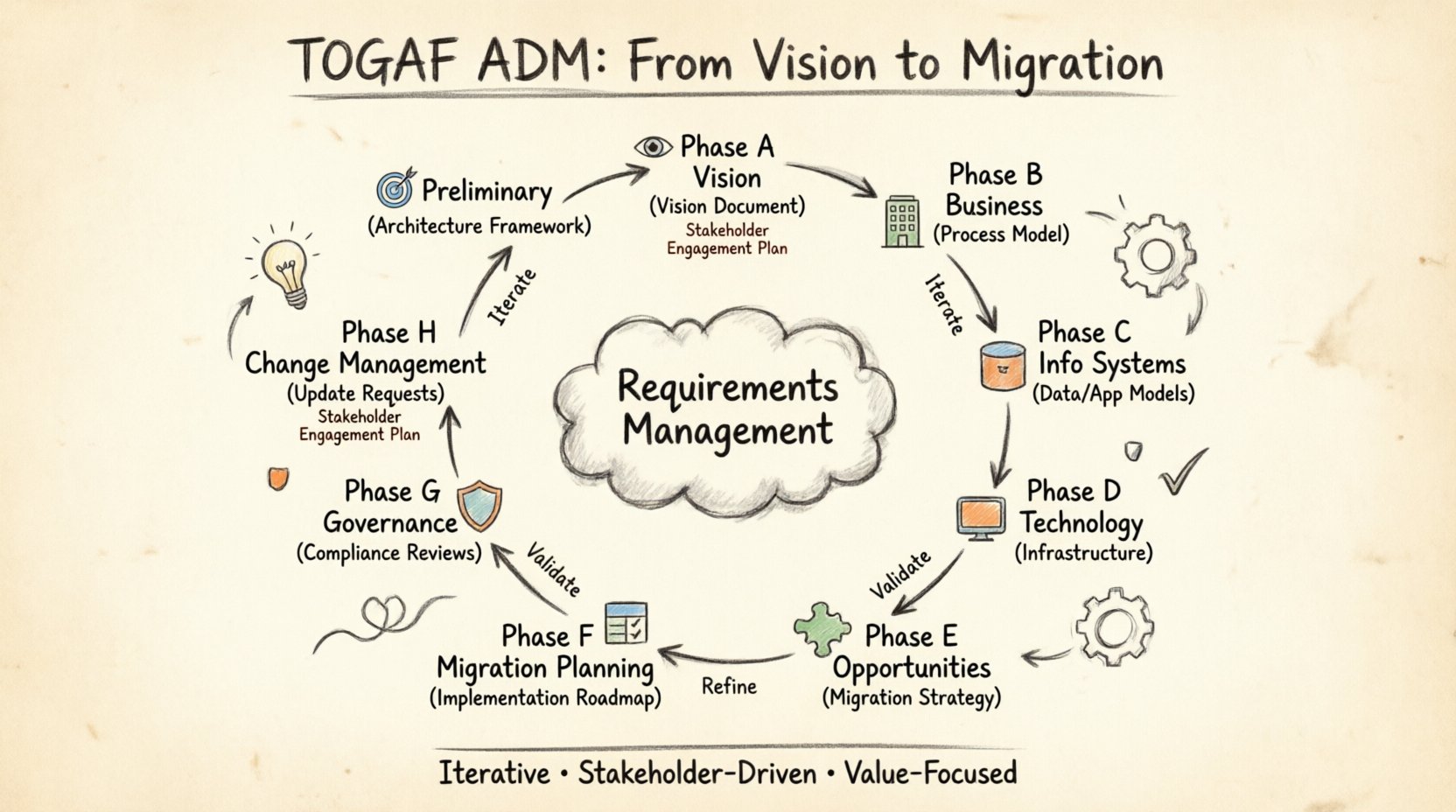
Understanding the TOGAF ADM Cycle 🔄
The core of TOGAF is the Architecture Development Method (ADM). It is an iterative process designed to guide the creation and implementation of enterprise architecture. The ADM is not a linear checklist but a cycle that repeats as business needs evolve. Below is a summary of the phases involved in this lifecycle.
| Phase | Focus Area | Key Output |
|---|---|---|
| Preliminary | Setting the Stage | Architecture Framework Definition |
| Phase A | Architecture Vision | Architecture Vision Document |
| Phase B | Business Architecture | Business Architecture Model |
| Phase C | Information Systems Architectures | Data and Application Models |
| Phase D | Technology Architecture | Technology Infrastructure Model |
| Phase E | Opportunities & Solutions | Implementation Migration Plan |
| Phase F | Migration Planning | Migration Implementation Plan |
| Phase G | Implementation Governance | Governance Deliverables |
| Phase H | Architecture Change Management | Architecture Change Request |
Requirements Management is a central component that connects to all phases. It ensures that the architecture remains aligned with the needs of the stakeholders throughout the development process.
Phase 0: The Preliminary Phase 🎯
Before any specific architecture is built, the organization must prepare its environment. The Preliminary Phase establishes the foundation. This is where the enterprise defines the principles, standards, and constraints that will guide the architecture work.
Key Activities in the Preliminary Phase
- Define the Architecture Capability: Determine how the architecture function will operate within the organization. This includes roles, responsibilities, and the required skill sets.
- Establish the Architecture Principle: Create high-level guidelines that govern decision-making. These principles ensure consistency across all future projects.
- Select Tools and Standards: Choose the modeling languages and repository tools that will be used to document the architecture.
- Define the Scope: Identify the boundaries of the architecture effort. Is this a whole-enterprise view or a specific business unit?
The output of this phase is a tailored TOGAF framework. It is not a copy-paste of the standard; it is adapted to fit the specific culture and size of the organization.
Phase A: Architecture Vision 👁️
Phase A sets the context for the entire project. The goal is to define the scope and identify the stakeholders who will influence or be influenced by the architecture.
Primary Objectives
- Identify Stakeholders: List everyone who has an interest in the outcome. This includes business leaders, IT staff, and end-users.
- Define the Business Case: Explain why the architecture effort is necessary. What problems is it solving?
- Set the Scope: Clearly delineate what is in scope and what is out of scope for this iteration.
- Establish the Architecture Vision: Create a high-level view of the future state that stakeholders can understand.
During this phase, the Architecture Vision document is produced. This document serves as the contract between the architecture team and the business. It outlines the goals, constraints, and expected benefits. If the vision is not agreed upon here, the project risks losing support later.
Phase B: Business Architecture 🏢
Once the vision is set, the focus shifts to the business itself. Phase B describes the business processes, governance, organization, and key business entities.
Core Deliverables
- Business Process Model: A map of how work flows through the organization. This highlights inefficiencies and opportunities for improvement.
- Organization Map: A representation of the business units and their relationships.
- Business Service Catalog: A list of services the business provides to internal or external customers.
- Business Function Model: A breakdown of the capabilities required to run the business.
The business architect works closely with business leaders to ensure the model reflects reality. This phase is critical because it ensures the IT solution actually supports the business operations. If the business architecture is weak, the downstream data and technology architectures will likely fail to deliver value.
Phase C: Information Systems Architectures 🗄️
Phase C is often divided into two sub-phases: Data Architecture and Application Architecture. It translates the business requirements into information and software needs.
Data Architecture
- Define Data Entities: Identify the key data objects (e.g., Customer, Product, Order) that the organization manages.
- Establish Data Flow: Map how data moves between systems and processes.
- Set Data Standards: Define naming conventions, formats, and security levels for data assets.
Application Architecture
- Map Applications: Identify the software systems used to support business processes.
- Analyze Interactions: Understand how applications talk to each other (APIs, integrations, data exchange).
- Identify Gaps: Determine if current applications support the future business model or if new solutions are needed.
This phase bridges the gap between business needs and technical implementation. It ensures that data is consistent and that applications are not siloed unnecessarily.
Phase D: Technology Architecture 💻
Phase D focuses on the infrastructure required to support the applications and data defined in Phase C. This includes hardware, networks, and cloud services.
Key Considerations
- Hardware Specifications: Define the processing power, storage, and memory requirements.
- Network Topology: Plan the connectivity between sites, users, and data centers.
- Security Infrastructure: Establish firewalls, encryption methods, and access controls.
- Cloud Strategy: Decide which components will reside on-premises and which will be hosted in the cloud.
The Technology Architecture must be robust enough to handle the load expected from the business operations. It also needs to be scalable to accommodate future growth. Security is a primary concern at this stage, as the infrastructure protects the data and applications defined in previous phases.
Phase E: Opportunities and Solutions 🧩
After defining the target architecture, Phase E identifies the gap between the current state and the future state. It then determines the best path to bridge that gap.
Strategic Decisions
- Gap Analysis: Compare the baseline architecture with the target architecture to find missing pieces.
- Identify Projects: List the specific initiatives required to move from current to target.
- Build Business Case: Justify the investment for each identified project.
- Group Projects: Organize projects into logical workstreams or portfolios.
This phase is where the architecture moves from theory to action. It defines the building blocks that will be implemented. The output is a high-level implementation strategy that guides the planning in the next phase.
Phase F: Migration Planning 📅
Migration Planning is the bridge between design and execution. It creates a detailed schedule and plan for implementing the architecture.
Planning Components
- Project Sequencing: Determine the order in which projects should be executed. Some projects must be completed before others can begin.
- Resource Allocation: Assign budget and personnel to specific workstreams.
- Risk Assessment: Identify potential obstacles and create mitigation strategies.
- Implementation Plan: Create a detailed roadmap with milestones and deadlines.
A well-structured migration plan prevents chaos during implementation. It ensures that stakeholders know what to expect and when to expect it. The plan should also account for potential delays or changes in business priorities.
Phase G: Implementation Governance 🛡️
Once the projects begin, Phase G ensures they stay true to the architecture. It acts as a quality control mechanism during the execution of the plan.
Governance Activities
- Compliance Checks: Verify that implemented solutions match the architectural standards.
- Architecture Compliance Review: Conduct formal reviews at key milestones.
- Conformance Management: Address deviations from the plan and approve necessary changes.
Without governance, projects can drift away from the intended architecture, leading to technical debt and integration issues. The governance board ensures that the investment delivers the promised value.
Phase H: Architecture Change Management 🔄
Change is constant. Phase H ensures that the architecture evolves as the business environment changes. It manages requests for changes to the architecture.
Change Management Process
- Monitor the Environment: Keep an eye on external factors like regulations, market shifts, and new technologies.
- Review Architecture: Periodically assess if the current architecture still meets business needs.
- Manage Requests: Evaluate change requests to determine if they align with the strategy.
- Update Documentation: Ensure the architecture repository reflects the current state.
This phase closes the loop, feeding insights back into the Preliminary Phase or restarting the ADM cycle for new iterations. It ensures the architecture remains relevant over time.
Requirements Management: The Central Loop 🔄
Requirements Management is not a phase; it is a continuous process that runs through every step of the ADM. It ensures that the architecture remains aligned with business requirements.
Key Functions
- Collection: Gather requirements from stakeholders across the organization.
- Analysis: Evaluate requirements for feasibility and alignment.
- Traceability: Link requirements to architecture artifacts to ensure they are addressed.
- Monitoring: Track the status of requirements throughout the project lifecycle.
By maintaining a strong requirements management process, organizations can avoid building solutions that do not meet user needs. It acts as the anchor that keeps the architecture grounded in reality.
Best Practices for Success 🏆
Implementing TOGAF successfully requires discipline and commitment. The following practices can help organizations navigate the ADM effectively.
- Engage Stakeholders Early: Do not wait until the Vision phase to involve business leaders. Their input is crucial from the start.
- Iterate Frequently: The ADM is iterative. Do not try to perfect every phase before moving to the next. Allow for refinement as you go.
- Maintain Documentation: Keep the architecture repository up to date. Outdated documentation leads to confusion and errors.
- Focus on Value: Always ask how the architecture delivers value to the business. If it does not, reconsider the approach.
- Train the Team: Ensure all architects understand the framework and the organization’s specific tailoring of it.
Final Considerations for Architecture Teams ⚙️
Building enterprise architecture is a complex endeavor. It requires balancing technical constraints with business ambitions. The TOGAF framework provides a structured path, but it is up to the team to execute it with precision.
Success depends on clear communication, rigorous planning, and continuous governance. By following the steps outlined in this walkthrough, organizations can build architectures that are resilient, scalable, and aligned with strategic goals.
Remember that the framework is a tool, not a rulebook. It should be adapted to fit the specific needs of the organization. Flexibility within the structure allows for innovation while maintaining stability.
As technology evolves, so must the architecture. Regular reviews and change management ensure that the system remains fit for purpose. With a solid foundation laid during the Preliminary Phase and a clear migration plan, the path forward becomes manageable.
The journey from vision to implementation is long, but with the ADM as a guide, the destination is clear. Focus on the value delivered to the business, and the technical details will follow naturally.