Enterprise architecture frameworks provide the structural backbone for aligning IT capabilities with business strategy. Among these, The Open Group Architecture Framework (TOGAF) remains a standard for organizational design and governance. However, implementing a framework is not merely about documentation; it is about operationalizing standards that withstand scrutiny. An audit is not a punitive event but a verification of maturity. This guide outlines the essential steps to prepare for a TOGAF audit, ensuring your architecture function is compliant, robust, and ready for evaluation.
🔍 Understanding the Audit Objective
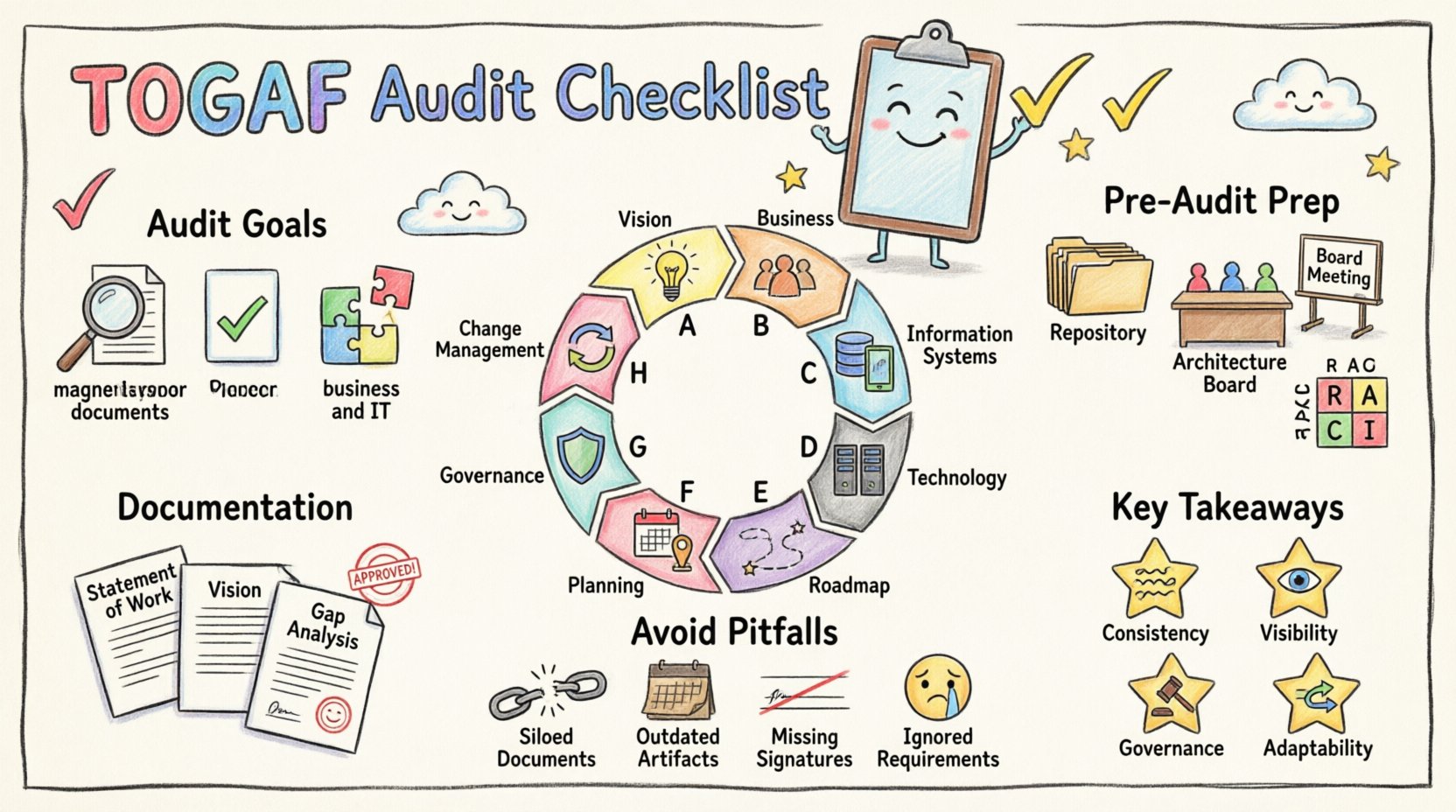
Before diving into the checklist, it is crucial to understand the scope. An audit typically examines whether the architecture practice adheres to the defined standards of the TOGAF Standard, 10th Edition. The goal is to verify that the Architecture Development Method (ADM) is being applied consistently and that governance structures are effective.
Key objectives of the audit include:
- Verification of Process Adherence: Confirming that the ADM cycles are followed correctly.
- Assessment of Deliverables: Ensuring required artifacts exist and are up to date.
- Evaluation of Governance: Checking if architecture decisions are reviewed and approved.
- Validation of Alignment: Ensuring business goals drive architectural choices.
📋 Pre-Audit Preparation Phase
Preparation begins weeks before the official audit date. This phase focuses on consolidation and gap analysis. Rushing this stage often leads to findings that could have been avoided.
1. Governance Structure Review
Auditors will look for evidence of a functioning Architecture Board. This body is responsible for reviewing architecture work products and making decisions on standards. You must verify the following:
- Chart of Authority: Is the role of the Chief Architect clearly defined?
- Meeting Minutes: Are Architecture Board meetings documented regularly?
- Decision Logs: Is there a record of approved and rejected architectural decisions?
- Roles and Responsibilities: Are RACI matrices updated for key architecture activities?
2. Repository Integrity Check
The repository is the single source of truth for all architecture artifacts. It must be accessible, organized, and current. Ensure that:
- All documents are version controlled.
- Links between artifacts are functional.
- Access permissions are set correctly to ensure security without hindering collaboration.
- There is a clear naming convention for all files.
🔄 The ADM Phase Checklist
The core of TOGAF is the Architecture Development Method. Auditors will scrutinize specific phases to ensure they are not skipped or abbreviated. Below is a detailed breakdown of the checklist items for each phase.
Phase A: Architecture Vision
This phase sets the scope and constraints. It defines the high-level objectives.
- ✅ Architecture Vision Document exists and is approved.
- ✅ Stakeholder list is comprehensive and up to date.
- ✅ Scope and constraints are clearly defined.
- ✅ Statement of Architecture Work is signed off.
- ✅ Initial Business Capability Assessment is documented.
Phase B: Business Architecture
This phase models the business landscape, including strategy, governance, and processes.
- ✅ Business Principles are defined and communicated.
- ✅ Business Scenarios are utilized to derive requirements.
- ✅ Business Process Model is documented (e.g., BPMN).
- ✅ Business Function and Service Breakdown is complete.
- ✅ Organization Map reflects current and target states.
Phase C: Information Systems Architectures
This phase focuses on data and application architecture. It bridges business needs with technology solutions.
- ✅ Data Architecture: Data entities, flows, and repositories are mapped.
- ✅ Application Architecture: Application portfolio is cataloged.
- ✅ Integration requirements are identified and prioritized.
- ✅ Application interoperability is documented.
- ✅ Data standards and security policies are applied.
Phase D: Technology Architecture
This phase defines the hardware, software, and network infrastructure required to support the applications.
- ✅ Technology Standards are defined and approved.
- ✅ Infrastructure components are cataloged.
- ✅ Network topology diagrams are accurate.
- ✅ Security architecture aligns with technology choices.
- ✅ Performance requirements are specified.
Phase E: Opportunities and Solutions
This phase identifies options and creates the implementation plan.
- ✅ Gap Analysis is performed between Baseline and Target.
- ✅ Building Blocks (BBs) are identified and classified.
- ✅ Implementation Roadmap is developed.
- ✅ Migration Plan is outlined with milestones.
- ✅ Risk assessment is conducted for proposed solutions.
Phase F: Migration Planning
Here, the focus shifts to detailed planning for the transition.
- ✅ Implementation Governance Plan is ready.
- ✅ Project portfolio is aligned with architecture.
- ✅ Resource requirements are estimated.
- ✅ Budget estimates are documented.
- ✅ Communication plan for stakeholders is established.
Phase G: Implementation Governance
This phase ensures that the projects stay true to the architecture.
- ✅ Architecture Compliance Reviews are scheduled.
- ✅ Architecture Contracts are used with project teams.
- ✅ Deviations are tracked and justified.
- ✅ Architecture change requests are processed.
- ✅ Lessons learned are captured during project lifecycles.
Phase H: Architecture Change Management
This phase ensures the architecture evolves with the enterprise.
- ✅ Change Management process is active.
- ✅ Architecture refresh cycles are defined.
- ✅ Continuous improvement mechanisms are in place.
- ✅ Feedback loops from operations are integrated.
📄 Documentation Standards
Documentation is the tangible evidence of architecture work. It must be consistent, readable, and accessible. The following table outlines the critical deliverables expected during an audit.
| Document Type | Key Content Requirements | Approval Status |
|---|---|---|
| Statement of Architecture Work | Scope, objectives, constraints, stakeholders | Approved by Sponsor |
| Architecture Vision | High-level view, business value, risks | Approved by Architecture Board |
| Requirements Management Plan | How requirements are gathered and tracked | Approved by Stakeholders |
| Gap Analysis Report | Baseline vs. Target, impact assessment | Reviewed by Architects |
| Implementation Plan | Timeline, resources, dependencies | Approved by Project Sponsors |
| Compliance Statement | Adherence to standards and regulations | Verified by Compliance Officer |
⚠️ Common Pitfalls to Avoid
Even experienced teams face challenges during audits. Identifying these pitfalls beforehand allows for proactive remediation.
1. Siloed Documentation
Documents stored in separate locations without a central repository cause confusion. Ensure all artifacts are linked within the main architecture repository. A disconnected set of files suggests a lack of integration.
2. Outdated Artifacts
Using old diagrams or plans that do not reflect the current state is a significant finding. Regular reviews are necessary to keep the “as-is” and “to-be” models accurate.
3. Lack of Stakeholder Sign-off
Architecture decisions must be ratified. If a critical document lacks a signature or formal approval record, it is considered informal. Ensure all key stakeholders have signed off on major deliverables.
4. Ignoring Non-Functional Requirements
Focus on functionality often overshadows security, performance, and scalability. Auditors will check if these non-functional requirements were explicitly addressed in the design.
5. Inconsistent Terminology
Using different terms for the same concept across documents creates ambiguity. Maintain a glossary or taxonomy to ensure consistency throughout the enterprise.
🤝 Stakeholder Engagement
Architecture is a collaborative effort. The audit process will assess how well the architecture team engages with the business and IT communities.
- Communication Plans: Are there regular updates sent to stakeholders?
- Workshops: Was the architecture developed through collaborative sessions?
- Feedback Channels: Do stakeholders have a way to report issues or suggest changes?
- Training: Are users trained on new architectural standards?
Audit findings often highlight a disconnect between the architects and the project teams. Bridging this gap requires proactive engagement. Schedule regular syncs and ensure architecture is present during project kick-offs.
🛠️ Remediation and Continuous Improvement
The audit is not the end of the road. It is a checkpoint in a continuous improvement cycle. Once the audit is complete, the focus shifts to addressing findings.
1. Analyze Findings
Categorize findings by severity (Critical, High, Medium, Low). Understand the root cause of each gap. Is it a process issue, a tooling issue, or a skills gap?
2. Develop an Action Plan
Create a remediation plan with assigned owners and deadlines. Prioritize critical findings that pose a risk to compliance or security.
3. Implement Changes
Execute the action plan. Update documentation, adjust processes, or train staff as required. Ensure all changes are tracked.
4. Monitor Progress
Track the status of remediation efforts. Report progress to the Architecture Board. Ensure that fixes do not introduce new issues.
📝 Final Verification
Before the final audit meeting, conduct a mock review. Gather the team and walk through the checklist. Ask critical questions:
- Can we locate every required document instantly?
- Are the approval signatures valid and current?
- Does the repository reflect the current enterprise state?
- Are the stakeholders prepared to answer questions about their roles?
This internal validation reduces anxiety and ensures that the team presents a cohesive picture of maturity. It demonstrates a commitment to quality and transparency.
🔑 Key Takeaways
Preparing for a TOGAF audit requires discipline, organization, and a clear understanding of the framework’s requirements. It is not about creating documents for the sake of documentation. It is about ensuring that the architecture function adds value and provides direction.
Focus on the following core principles:
- Consistency: Apply the same standards across all projects.
- Visibility: Make architecture visible and accessible to stakeholders.
- Governance: Enforce reviews and approvals rigorously.
- Adaptability: Keep the architecture relevant as the business changes.
By following this checklist, organizations can ensure they are compliant, resilient, and ready for the scrutiny of an audit. The result is not just a passing grade, but a stronger architecture practice that drives business success.