Launching a new phase in a project is a pivotal moment. It is the transition from planning to execution, from strategy to action. Without a rigorous review process, teams often proceed with hidden risks, unclear expectations, or misaligned resources. This can lead to delays, budget overruns, or a complete loss of focus.
A structured approach ensures that every team member understands their role, every risk is accounted for, and the necessary resources are available. This comprehensive guide outlines 20 critical items you must verify before moving forward. Whether you are managing software development, construction, marketing campaigns, or organizational change, these steps provide a foundation for stability and success.
📋 Why a Phase Launch Checklist Matters
Projects are rarely linear. They consist of distinct phases, each with its own objectives, deliverables, and constraints. Moving from one phase to another without a formal gate review is akin to driving a vehicle without checking the brakes before entering a highway. A checklist serves as a quality gate.
It forces a pause to verify alignment. It shifts the focus from what is being done to how and why it is being done. By validating these items, you reduce the cognitive load on the team. They can focus on execution rather than clarifying ambiguities. This preparation is essential for maintaining momentum and preventing rework.
🛠️ The 20-Point Readiness Assessment
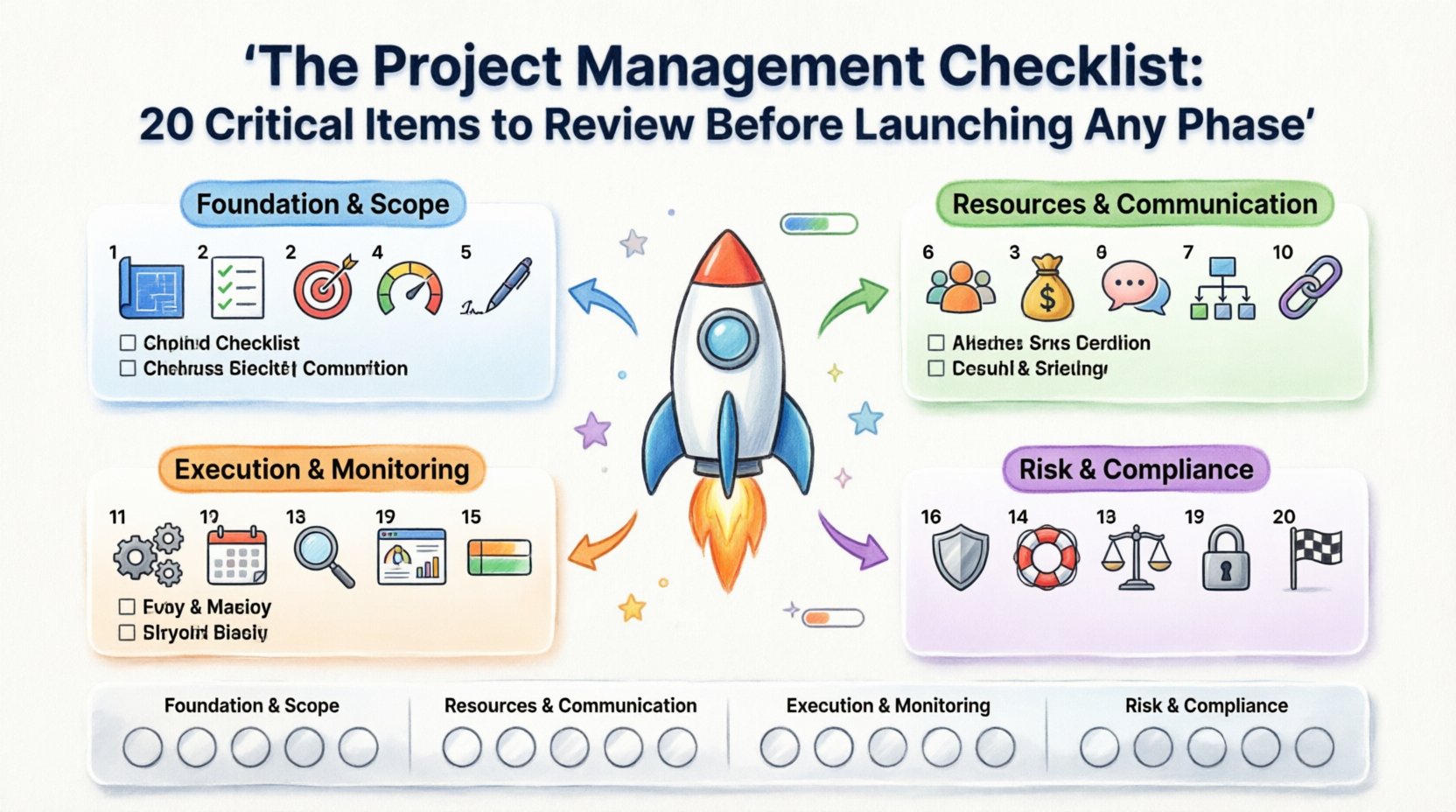
Below is a detailed breakdown of the twenty essential elements to review. We have categorized them into four key areas: Foundation, Resources, Execution, and Risk Control.
1️⃣ Foundation & Scope (Items 1-5)
The first five items ensure that the groundwork is solid. If the foundation is weak, the structure above it cannot stand.
- 1. Clear Phase Objectives Defined: Every phase must have specific, measurable goals. Vague aspirations like “improve performance” are insufficient. You need concrete targets, such as “reduce latency by 20%” or “complete user acceptance testing for Module A.” Ensure these objectives are documented and accessible to all team members.
- 2. Scope Boundaries Confirmed: Define what is included in this phase and, just as importantly, what is excluded. Scope creep often begins when boundaries are fuzzy. Review the scope statement to ensure no new requirements have been implicitly added without formal approval.
- 3. Deliverables Inventory: List every tangible output expected at the end of this phase. This could be code, reports, physical prototypes, or approved designs. Verify that each deliverable has a defined acceptance criterion.
- 4. Success Metrics Established: How will you measure success? Define the Key Performance Indicators (KPIs) for this specific phase. These metrics should align with the broader project goals but be specific enough to evaluate the current stage independently.
- 5. Stakeholder Sign-off: Ensure that the key decision-makers have reviewed and approved the plan for this phase. Their signature or digital confirmation validates that the direction is correct and that they are ready to support the outcomes.
2️⃣ Resources & Communication (Items 6-10)
Once the plan is set, you must ensure you have the means to execute it and the channels to communicate it.
- 6. Resource Allocation Verified: Confirm that the necessary human resources are available. Are the developers, designers, or analysts assigned to this phase actually free? Check for conflicts with other projects or leave schedules.
- 7. Budget Availability: Review the financial allocation for this phase. Are funds reserved? Is the spending limit clear? Ensure that procurement processes for any necessary tools or materials are initiated early enough not to block progress.
- 8. Communication Plan Active: Establish how information flows during this phase. Who needs to know what? When will status updates occur? Define the cadence of meetings and the preferred channels for urgent alerts versus routine reporting.
- 9. Team Roles & Responsibilities: Every team member should know exactly what is expected of them. Use a Responsibility Assignment Matrix to clarify who is responsible, accountable, consulted, and informed for each major task.
- 10. External Dependencies Identified: Projects rarely exist in a vacuum. Identify any reliance on external vendors, third-party APIs, or other internal teams. Confirm their timelines align with yours to prevent bottlenecks.
3️⃣ Execution & Monitoring (Items 11-15)
These items focus on the mechanics of doing the work and tracking it.
- 11. Task Breakdown Complete: The high-level plan must be broken down into actionable tasks. Each task should be small enough to be estimated and assigned, but large enough to have value. Ensure the hierarchy is logical and complete.
- 12. Schedule & Milestones: Create a timeline with intermediate milestones. These checkpoints allow you to gauge progress without waiting for the final phase completion. Ensure the timeline includes buffer time for unforeseen delays.
- 13. Quality Standards Defined: What constitutes a “done” task? Define the quality criteria before work begins. This prevents the need to rework finished items because they did not meet the required standard.
- 14. Change Management Process: Things will change. Have a formal process for handling scope changes during this phase. How will a request be submitted, evaluated, approved, or rejected? This prevents ad-hoc changes from derailing the schedule.
- 15. Reporting Mechanisms: Set up the dashboards or reports that will track progress. Ensure data is being collected accurately so that the reports reflect reality, not hope. Automate data collection where possible to reduce manual error.
4️⃣ Risk & Compliance (Items 16-20)
The final set of items protects the project from failure and ensures adherence to regulations.
- 16. Risk Register Updated: Review the list of potential risks. Have new risks emerged since the planning stage? Have the probabilities or impacts of existing risks changed? Assign owners to mitigate the top risks.
- 17. Contingency Plan Ready: For the high-priority risks, you need a plan B. If the primary vendor fails, what is the backup? If a key person leaves, who takes over? Document these contingency steps.
- 18. Compliance & Legal Review: Ensure the phase adheres to all relevant laws, regulations, and internal policies. This includes data privacy, safety standards, and intellectual property rights.
- 19. Security Protocols: If the phase involves data or digital assets, verify that security measures are in place. Access controls, encryption, and authentication methods must be tested and active before sensitive work begins.
- 20. Closure Criteria for Phase: Define exactly what needs to happen to declare this phase complete. This prevents the phase from lingering indefinitely. It ensures a clean handoff to the next phase.
📊 Quick Reference Table
Use this table to quickly scan the readiness status of your upcoming phase.
| Category | Item | Status |
|---|---|---|
| Foundation | Phase Objectives | ☐ |
| Foundation | Scope Boundaries | ☐ |
| Foundation | Deliverables Inventory | ☐ |
| Foundation | Success Metrics | ☐ |
| Foundation | Stakeholder Sign-off | ☐ |
| Resources | Resource Allocation | ☐ |
| Resources | Budget Availability | ☐ |
| Resources | Communication Plan | ☐ |
| Resources | Roles & Responsibilities | ☐ |
| Resources | External Dependencies | ☐ |
| Execution | Task Breakdown | ☐ |
| Execution | Schedule & Milestones | ☐ |
| Execution | Quality Standards | ☐ |
| Execution | Change Management | ☐ |
| Execution | Reporting Mechanisms | ☐ |
| Risk | Risk Register | ☐ |
| Risk | Contingency Plan | ☐ |
| Risk | Compliance & Legal | ☐ |
| Risk | Security Protocols | ☐ |
| Risk | Closure Criteria | ☐ |
🔄 Integrating the Checklist into Your Workflow
Having the list is only the first step. Integration requires discipline. You should schedule a specific meeting dedicated to reviewing these 20 items before authorizing the start of work. Do not mix this with general status updates. This meeting is binary: you either proceed, or you pause.
Assign a specific owner to the checklist. This person is responsible for verifying that each item has been addressed and documented. They should hold the authority to stop the launch if critical items remain incomplete. This creates a culture of accountability.
Keep the checklist accessible. It should not be a static document filed away. It should be a living artifact that evolves. If a new type of risk emerges during the project, update the checklist to include it for future phases. This continuous improvement ensures your project management maturity grows over time.
⚠️ Common Pitfalls When Skipping Reviews
Teams often rush through the preparation phase due to pressure to deliver. They believe speed is more valuable than stability. However, skipping these reviews often results in higher costs later.
One common issue is the “Assumption Trap.” Team members assume stakeholders agree on the scope when they do not. This leads to conflict when the deliverables are presented. Another pitfall is ignoring the “Resource Reality.” A plan may look perfect on paper, but if the team is already at 100% capacity on other tasks, the new phase will fail immediately.
Furthermore, neglecting the risk register can lead to surprise failures. Without a contingency plan, a single vendor delay can halt the entire project. These issues are preventable. The 20-point checklist is designed to surface these hidden problems before they become crises.
🔍 Ensuring Long-Term Project Health
Applying this checklist consistently builds a reputation for reliability. Stakeholders learn that when a phase is launched, it is because the groundwork is solid. This trust reduces friction and makes future approvals easier.
It also aids in post-project analysis. When you review what went wrong after the project ends, you can trace the root cause back to the checklist. Did we miss a resource conflict? Did we fail to define quality standards? This feedback loop allows you to refine the checklist for the next project, making your organization more efficient with every iteration.
Remember that project management is not about following rigid rules, but about ensuring clarity and control. This checklist provides the structure needed to achieve both. By reviewing these 20 items, you are not just checking boxes; you are securing the success of your work and the well-being of your team.