The landscape of enterprise architecture is shifting beneath our feet. As organizations navigate the complexities of digital transformation, the framework that guides them must evolve. The Open Group Architecture Framework, commonly known as TOGAF, stands at a pivotal juncture. For years, it has provided a standardized method for designing, planning, implementing, and governing an enterprise information architecture. However, the pace of technological change suggests that static models will no longer suffice. The next decade demands a dynamic, responsive, and integrated approach.
This guide explores the trajectory of TOGAF. It examines how the framework is adapting to meet the demands of modern digital ecosystems. We will look at the integration of artificial intelligence, the necessity of agility, and the evolving role of the enterprise architect. The goal is to provide a clear understanding of where the framework is heading and how practitioners can prepare.
📜 The Evolution of the Architecture Framework
TOGAF has historically been praised for its comprehensive nature. The Architecture Development Method (ADM) has served as the backbone for countless digital initiatives. Yet, the traditional perception of the framework often involves heavy documentation and lengthy phases. In the future, the focus is shifting toward value delivery and speed.
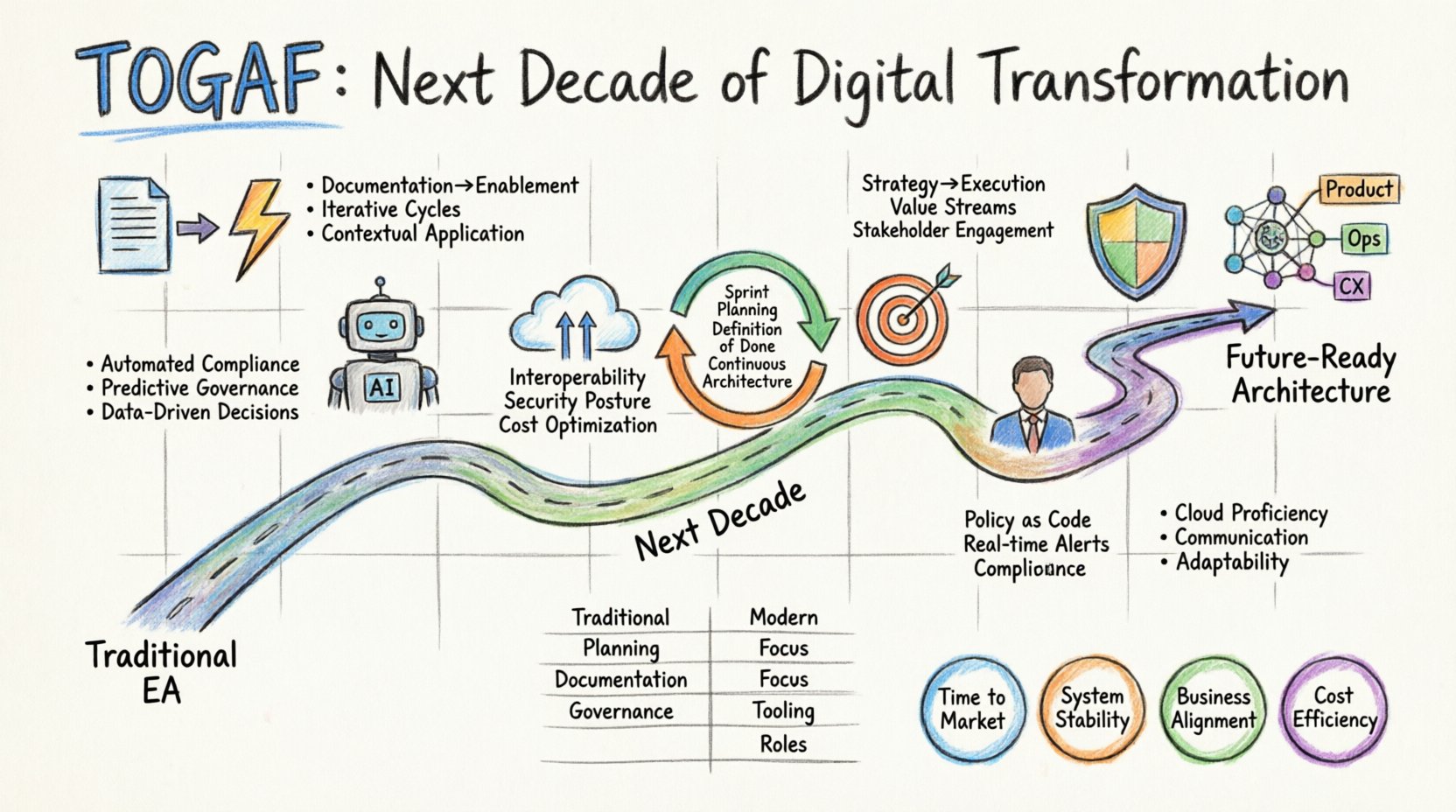
- From Documentation to Enablement: The emphasis is moving away from creating documents for compliance and toward creating artifacts that enable execution.
- Iterative Cycles: The linear progression of the ADM is being viewed through a more iterative lens, aligning with modern delivery cycles.
- Contextual Application: The framework is becoming less rigid. Practitioners are encouraged to tailor the core concepts to fit specific organizational needs without losing the underlying principles.
The upcoming decade will likely see a greater emphasis on the Architecture Capability Framework. This ensures that the organization has the governance, culture, and skills necessary to sustain architectural practices. It is not enough to have a model; the organization must have the capability to apply it effectively.
🤖 Integration of Artificial Intelligence and Automation
Artificial intelligence is reshaping every layer of the technology stack. Enterprise architecture cannot remain isolated from this trend. The integration of AI into architectural processes is a significant area of development for the framework.
Automated Compliance Checking
One of the most labor-intensive aspects of architecture is ensuring that new solutions comply with existing standards. Future iterations of the framework will likely emphasize tools that automate this verification. By leveraging machine learning, architecture repositories can flag deviations in real-time.
- Real-time Analysis: Systems will analyze proposed changes against architectural principles instantly.
- Predictive Governance: AI models can predict where a project might drift from standards based on historical data.
- Reduced Manual Overhead: Architects spend less time auditing and more time designing.
Data-Driven Decision Making
Architectural decisions are often based on intuition or limited data. The future outlook involves a shift toward data-driven decisions. By aggregating performance data across the enterprise, architects can validate the success of their designs. This feedback loop ensures that the architecture remains relevant as technology changes.
☁️ Cloud-Native and Hybrid Strategies
The shift to cloud computing is not merely a change in infrastructure; it is a change in how applications are built and managed. TOGAF must address the complexities of hybrid environments where workloads span on-premises data centers and multiple cloud providers.
- Interoperability: The framework will continue to emphasize standards that allow different systems to communicate, regardless of where they reside.
- Security Posture: With distributed systems comes distributed risk. Governance models must adapt to ensure security is woven into the fabric of the architecture, not applied as an afterthought.
- Cost Optimization: Cloud economics require constant monitoring. Architecture must include strategies for managing consumption and avoiding waste.
Practitioners must understand the nuances of containerization, serverless computing, and microservices. The architectural models of the past, which focused on monolithic structures, are insufficient for these environments. The framework is adapting to provide guidance on managing these distributed complexities.
🔄 Agile and DevOps Integration
Agile and DevOps methodologies have revolutionized software delivery. They prioritize speed, collaboration, and customer feedback. Historically, enterprise architecture was seen as a bottleneck to these methodologies. The future outlook requires a symbiotic relationship between EA and delivery teams.
The Concept of Agile Architecture
Agile architecture is not about skipping planning. It is about planning in a way that supports rapid change. The TOGAF framework is evolving to support this by focusing on the essential artifacts needed for decision-making rather than exhaustive documentation.
- Sprint Planning: Architects participate in sprint planning to ensure technical debt is managed.
- Definition of Done: Architectural standards are integrated into the criteria for completing a user story.
- Continuous Architecture: Architecture becomes a continuous activity rather than a phase at the beginning of a project.
DevSecOps Alignment
Security is often an afterthought in traditional development. DevSecOps integrates security into the development pipeline. Enterprise architecture must provide the guardrails that ensure security is maintained without slowing down deployment. This requires a shift from gatekeeping to enabling secure innovation.
📊 Comparing Traditional vs. Modern Practices
To understand the shift, it is helpful to compare how practices are evolving. The table below highlights key differences between traditional architectural approaches and the emerging modern practices.
| Dimension | Traditional Approach | Modern Future Outlook |
|---|---|---|
| Planning Style | Long-term, Waterfall | Iterative, Adaptive |
| Documentation | Comprehensive, Static | Lightweight, Living |
| Governance | Gate-based Approval | Continuous Monitoring |
| Focus | Infrastructure Stability | Business Value & Speed |
| Tooling | Manual Repository | Automated, Integrated |
| Roles | Separate Teams | Collaborative, Embedded |
This shift requires a change in mindset. It is not about discarding the principles of TOGAF but about applying them with greater flexibility. The core value of the framework remains the structured approach to solving complex business problems. The method of execution is what is changing.
🎯 Business Architecture Focus
One of the most significant trends in the next decade is the strengthening of Business Architecture. Historically, IT architecture dominated the conversation. However, digital transformation is fundamentally a business change. Technology is the enabler, but the business value is the goal.
- Strategy to Execution: There is a stronger emphasis on linking high-level strategy to operational execution. Business capabilities are mapped directly to technology capabilities.
- Value Streams: Understanding how value is delivered to the customer is paramount. Architecture is designed to optimize these streams.
- Stakeholder Engagement: Business leaders are more involved in architectural decisions. This ensures that the technology supports the actual business needs.
This alignment reduces the gap between what the business wants and what the technology delivers. It ensures that every architectural decision contributes to a measurable business outcome.
🛡️ Governance and Compliance in a Dynamic Environment
As systems become more distributed and dynamic, governance becomes more challenging. The regulatory landscape is also changing, with stricter data privacy and security laws emerging globally. TOGAF must provide a framework that supports compliance without hindering innovation.
Automated Governance
Manual governance processes are too slow for modern delivery speeds. Future governance models will rely heavily on automation. Policies will be encoded into the deployment pipelines. This ensures that compliance is checked every time code is pushed.
- Policy as Code: Rules are written in code and enforced by systems.
- Real-time Alerts: Violations are flagged immediately, allowing for rapid correction.
- Audit Trails: Automated logging provides transparent audit trails for regulators.
Adaptive Compliance
Compliance is not a one-time event. It is an ongoing state. The framework will need to support the ability to adapt to new regulations quickly. This requires architecture that is modular and flexible enough to incorporate new requirements without a complete overhaul.
👥 Skills and Roles for the Future
The role of the enterprise architect is evolving. The technical skills required are expanding to include data science, security, and business strategy. The soft skills required are also becoming more critical.
Technical Skills
- Cloud Proficiency: Deep understanding of cloud platforms and their service models.
- Data Engineering: Knowledge of data pipelines, lakes, and warehouses.
- Security Architecture: Ability to design secure systems by default.
Soft Skills
- Communication: Translating technical constraints into business language.
- Influence: Guiding teams toward best practices without direct authority.
- Adaptability: Willingness to change direction based on new information.
Organizations will need to invest in training and development to bridge these skill gaps. Certification remains a valuable indicator of knowledge, but practical experience with modern delivery models is becoming the true differentiator.
🌐 The Ecosystem of Architecture
Architecture does not exist in a vacuum. It is part of a larger ecosystem that includes product management, operations, and customer experience. The future outlook for TOGAF involves better integration with these disciplines.
- Product Management: Architects and product managers will work closer together to ensure the roadmap is technically feasible and strategically sound.
- Operations: The handover from development to operations will be seamless. Architecture will include operational requirements from the start.
- Customer Experience: Architecture decisions will consider the impact on the end-user experience. Performance and reliability are key architectural drivers.
📈 Measuring Success
How do we know if the framework is working? The metrics for success are shifting. It is no longer just about on-time delivery. It is about the quality of the outcome.
- Time to Market: How quickly can new capabilities be delivered?
- System Stability: How often do services fail or require remediation?
- Business Alignment: Are the delivered features actually driving business value?
- Cost Efficiency: Is the technology stack optimized for cost?
These metrics provide a holistic view of architectural health. They allow organizations to adjust their approach continuously.
🔮 Preparing for the Next Decade
For organizations and practitioners, preparation is key. Waiting for the framework to change completely is not an option. The work must begin now.
- Review Current Practices: Assess where your organization sits on the spectrum of traditional to modern.
- Invest in Tooling: Adopt tools that support automation and continuous architecture.
- Upskill Teams: Provide training on new technologies and methodologies.
- Foster Collaboration: Break down silos between architecture and delivery teams.
The journey is not about finding a single perfect model. It is about building an architecture capability that can adapt to whatever the future brings. The principles of TOGAF provide a solid foundation. The application of those principles must be fluid.
🏁 Final Thoughts
The next decade of digital transformation will be defined by speed, intelligence, and flexibility. TOGAF is adapting to meet these demands. By focusing on value, automation, and business alignment, the framework remains a vital tool for enterprise architects.
Practitioners who embrace these changes will find themselves better equipped to navigate the complexities of the modern enterprise. The framework is not a static set of rules; it is a living methodology. Its strength lies in its ability to evolve alongside the organizations it serves.
As we move forward, the focus remains on solving business problems through technology. The tools and methods may change, but the core mission of architecture remains the same: to provide clarity and direction in a complex world.