
Running a Scrum team effectively requires more than just attending meetings. It demands a structured rhythm that balances focus, collaboration, and adaptability. The daily workflow is the heartbeat of the Sprint, ensuring that the team moves toward the Goal without losing momentum. This guide explores the mechanics, roles, and mindset required to sustain a productive daily flow.
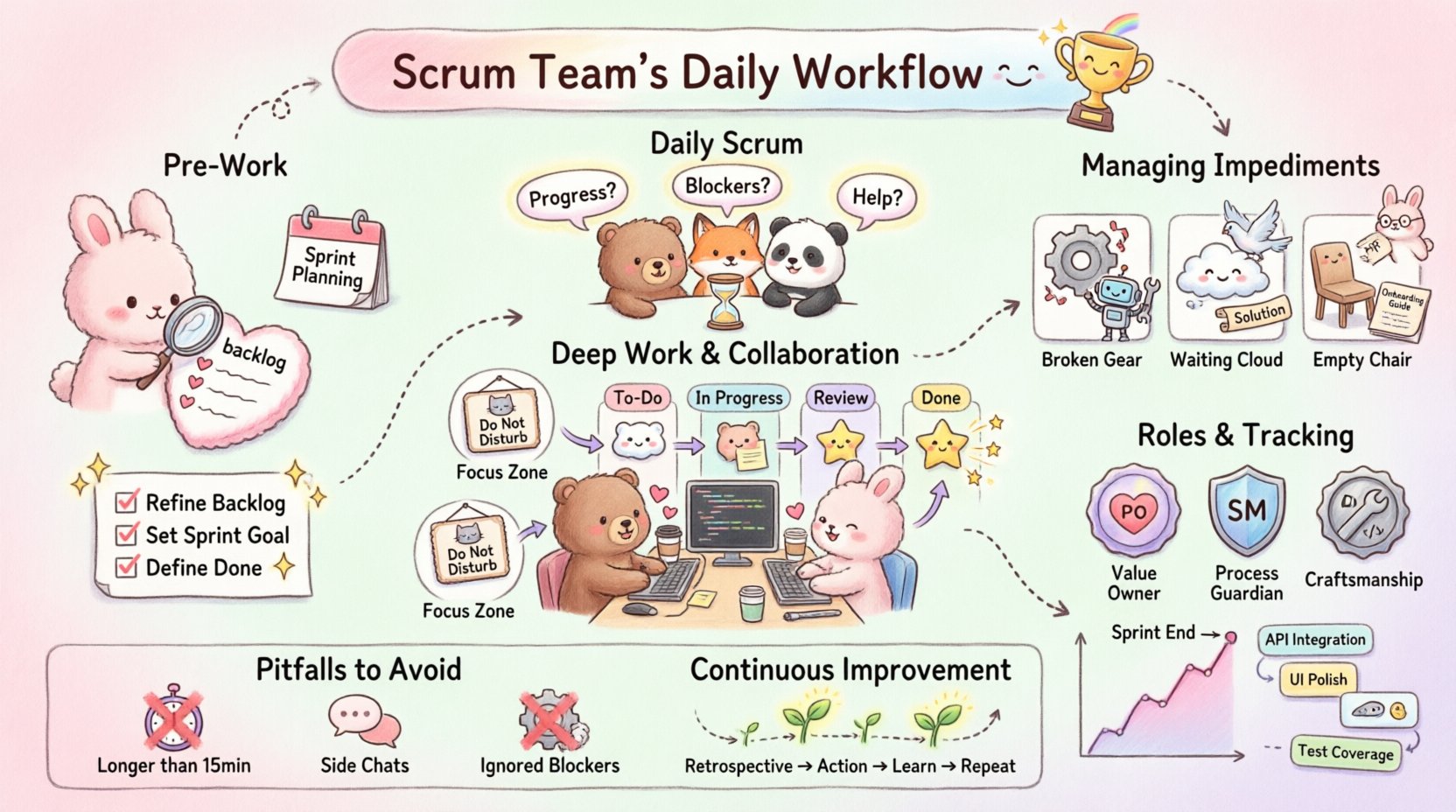
🌱 Understanding the Scrum Rhythm
Scrum is not merely a collection of events; it is a framework for complex product development. The daily workflow operates within the Sprint, a fixed-length iteration where value is delivered. Unlike traditional project management, Scrum relies on empirical process control—transparency, inspection, and adaptation.
For a team to function well, every member must understand how their individual tasks contribute to the Sprint Goal. The workflow is designed to prevent silos and encourage constant communication. When the daily rhythm is disrupted, the quality of the Increment often suffers.
📋 Pre-Work: Backlog Refinement & Sprint Planning
Before the first daily standup occurs, the groundwork must be laid. The workflow begins with the preparation of the work itself. This phase ensures that the team is not starting from zero every day.
- Backlog Refinement: This is an ongoing activity where the Product Owner and the Development Team clarify items. It involves sizing, ordering, and detailing user stories.
- Sprint Planning: At the start of the Sprint, the team selects items from the refined backlog. The goal is to create a Sprint Backlog that is achievable within the timebox.
- Definition of Done: Before work begins, the team must agree on what “complete” means. This prevents ambiguity during daily execution.
If the backlog is not refined, the daily workflow becomes bogged down in clarification questions. Teams should dedicate time to grooming the backlog so that the daily focus remains on execution rather than discovery.
🕒 The Daily Scrum: Coordination, Not Reporting
The Daily Scrum is the most misunderstood event in Scrum. It is not a status update for management. It is a planning meeting for the Development Team. The purpose is to inspect progress toward the Sprint Goal and adapt the Sprint Backlog if necessary.
Key Principles of the Daily Scrum
- Timebox: The event is strictly limited to 15 minutes.
- Location: It should occur at the same time and place to reduce overhead.
- Participants: Only the Development Team is required to attend. The Scrum Master ensures it happens, and the Product Owner may attend but is not required.
- Focus: The conversation is about the work, not the people.
Teams often fall into the trap of reporting to a leader. Instead, the conversation should be peer-to-peer. Questions like “What did you do yesterday?” are less effective than “How are we progressing toward the Sprint Goal?”
Typical Agenda Flow
| Phase | Focus | Key Question |
|---|---|---|
| Review Progress | Inspect the Sprint Backlog | Are we on track to finish the Sprint Goal? |
| Identify Gaps | Find missing dependencies | What needs to happen today to bridge the gap? |
| Adjust Plan | Re-assign work if needed | Who can help with the critical path items? |
🛠 Deep Work & Collaboration During the Sprint
Beyond the standup, the bulk of the workflow occurs in the remaining hours. This period requires intense focus and seamless collaboration. The goal is to maximize “Flow”—the rate at which value moves through the system.
Strategies for Effective Execution
- Limit Work in Progress (WIP): Starting too many tasks at once creates context switching. Completing one task before starting another reduces cycle time.
- Visual Management: Using boards to track status (To Do, In Progress, Review, Done) provides immediate transparency. This allows team members to see bottlenecks without asking.
- Pairing: For complex tasks, two people working together can reduce defects and spread knowledge. This is often more efficient than individual effort over time.
- Async Communication: Not every discussion needs a meeting. Documentation and comments on tasks allow for deep thinking without interruption.
During these hours, the team should strive to protect focus time. Interruptions from outside the team should be minimized. If a stakeholder needs information, they should be directed to the Product Owner or the Scrum Master to shield the developers.
🚧 Managing Impediments and Blockers
Obstacles are inevitable. The daily workflow includes a mechanism to identify and remove them quickly. An impediment is anything that prevents the team from moving forward. If left unresolved, these can stall the entire Sprint.
Identifying Blockers
Blockers are often technical or environmental. Examples include waiting for access rights, missing specifications, or external dependencies.
| Blocker Type | Example | Resolution Strategy |
|---|---|---|
| Technical | Legacy system API is down | Engage infrastructure team immediately |
| Process | Waiting for approval | Escalate to Product Owner for prioritization |
| Resource | Key team member is unavailable | Redistribute work or adjust Sprint scope |
The Scrum Master plays a critical role here. Their primary responsibility is to remove impediments. However, the team must also own their blockers. If a developer hits a wall, they should announce it immediately, not wait for the next review.
👥 Roles in the Daily Flow
Each role has specific responsibilities that keep the workflow moving. Understanding these distinctions prevents role confusion and ensures accountability.
- Product Owner: Focuses on value. They are available to clarify requirements. They do not manage the team’s daily tasks but ensure the team is working on the right things.
- Scrum Master: Focuses on the process. They coach the team on Scrum theory and remove obstacles. They facilitate the Daily Scrum if the team struggles.
- Development Team: Focuses on the work. They are self-organizing. They decide who does what and how to do it. They commit to the Sprint Goal.
📊 Tracking Progress Without Micromanagement
Monitoring progress is essential, but it must be done in a way that respects autonomy. The team needs to know if they are on track without feeling watched.
Visual Indicators
- Sprint Burndown: A chart showing remaining work over time. It helps the team see if they need to adjust their pace.
- Task Boards: Physical or digital boards that show the state of work. Moving a card to “Done” is a clear signal of progress.
- Definition of Done: A checklist that must be met for every item. This ensures quality is not sacrificed for speed.
Avoid tracking hours or individual productivity metrics. These can lead to gaming the system. Focus on output and value delivered instead. If the Sprint Goal is met, the workflow is successful.
⚠️ Common Pitfalls to Avoid
Even experienced teams can drift from best practices. Recognizing these patterns early saves time and effort.
- Long Standups: If the meeting runs over 15 minutes, it has lost its purpose. Split into smaller groups if the conversation gets too deep.
- Side Conversations: If two people start discussing a technical issue in detail during the standup, move it offline. Keep the main group focused.
- Ignoring Impediments: If a blocker is not raised, it will grow. Transparency is key.
- Overcommitting: Taking on too much work in Sprint Planning sets the team up for failure. Be realistic about capacity.
- Skipping Retrospectives: If the team does not reflect on their process, they cannot improve. The daily workflow is only as good as the continuous improvement cycle.
🔄 The Flow of Information
Information must flow freely across the team. When information is hoarded, the workflow stalls. Every team member should have access to the necessary context to make decisions.
Communication Channels
- Daily Face-to-Face: The standup is the primary channel for synchronization.
- Documentation: Decisions made during the sprint should be recorded. This prevents repetition of arguments.
- Code Reviews: Pull requests serve as a communication tool for quality assurance and knowledge sharing.
When information is accessible, the team becomes more resilient. If one member leaves, the context remains with the work, not just their head.
🎯 Conclusion
A well-structured daily workflow is the foundation of a successful Scrum team. It balances the need for focus with the need for collaboration. By adhering to the core events, managing impediments, and respecting roles, the team can deliver value consistently.
The goal is not perfection, but continuous improvement. Each day offers an opportunity to refine the process. When the team focuses on the Sprint Goal and supports one another, the workflow becomes a vehicle for high-quality delivery. This discipline creates a sustainable pace that can be maintained over the long term.
Start by auditing your current rhythm. Identify where the friction lies. Adjust the process based on what you learn. The workflow belongs to the team, and they are the best judges of its effectiveness.