Enterprise architecture is no longer a peripheral function; it is a central pillar of organizational stability and growth. As systems become more distributed and business needs evolve rapidly, the demand for robust technical leadership intensifies. Building a team capable of navigating this complexity requires more than just hiring skilled engineers. It demands a deliberate strategy focused on skill acquisition, cultural alignment, and clear professional trajectories. This guide explores the essential components required to construct an architecture group that delivers consistent value without succumbing to burnout or stagnation.
High-performance architecture teams do not emerge by accident. They are the result of intentional design, much like the systems they oversee. The focus shifts from individual heroics to collective capability. When done correctly, these teams act as the connective tissue between business strategy and technical execution, ensuring that every line of code serves a broader purpose. This article outlines the specific mechanisms for cultivating such an environment.
🧠 Defining the Architect’s Skill Set 🛠️
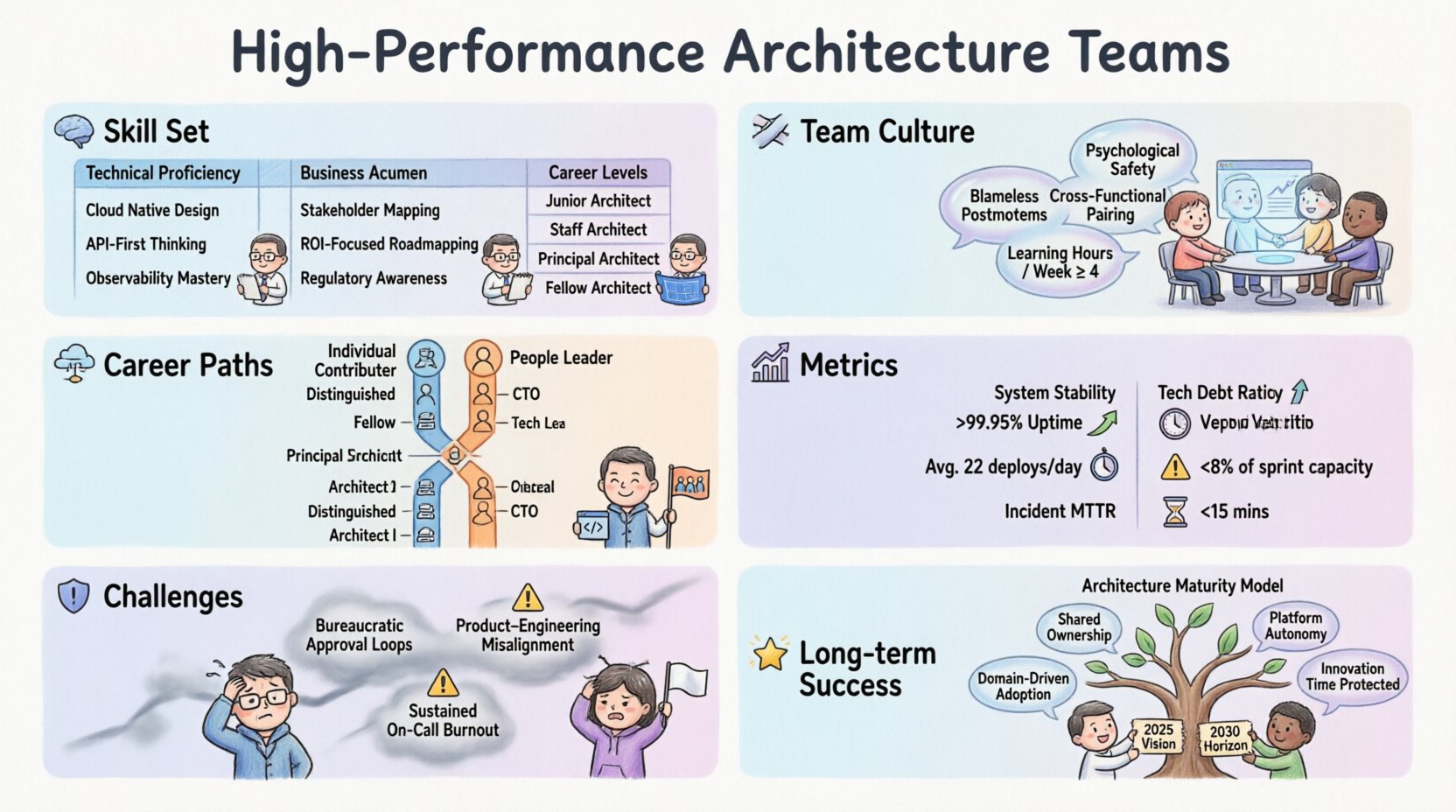
The foundation of any successful architecture team lies in the capabilities of its members. In enterprise environments, the role of an architect extends beyond drawing diagrams. It involves synthesizing business requirements into technical realities while managing trade-offs. A comprehensive skill matrix ensures that the team covers all necessary bases, from deep technical knowledge to strategic foresight.
Technical Proficiency and Breadth
While specialization is valuable, enterprise architects must possess a broad understanding of the entire technology stack. They need to understand how data flows, how services interact, and where security risks might hide. This breadth allows them to make informed decisions that impact the longevity of the system.
- System Design: Ability to create scalable, resilient, and maintainable solutions.
- Data Architecture: Understanding of data modeling, storage strategies, and governance.
- Security Fundamentals: Knowledge of authentication, authorization, and data protection standards.
- Integration Patterns: Familiarity with APIs, event-driven architectures, and legacy system connectivity.
Strategic and Business Acumen
Technical decisions must align with business goals. An architect who cannot articulate the cost of a technical choice in business terms will struggle to gain stakeholder buy-in. This requires a shift in mindset from “how does this work?” to “why are we doing this?”.
- Cost Management: Evaluating the financial implications of infrastructure and tooling.
- Risk Assessment: Identifying potential failure points and regulatory compliance issues.
- Stakeholder Management: Translating technical constraints into business language for leadership.
Comparative Skill Levels
To ensure balanced growth, organizations should define clear expectations for different seniority levels. The table below illustrates the progression of responsibilities.
| Level | Focus Area | Key Responsibility | Decision Scope |
|---|---|---|---|
| Associate Architect | Component Design | Implementing specific modules | Single Service/Team |
| Senior Architect | System Integration | Defining interfaces and standards | Multiple Services/Domain |
| Principal Architect | Enterprise Strategy | Long-term technical vision | Organization-Wide |
🤝 Cultivating the Right Team Environment 🌱
Skills can be taught, but culture is absorbed. The environment in which architects work significantly impacts their output. A toxic culture leads to silos, hidden debt, and turnover. A healthy culture fosters innovation, transparency, and collaboration.
Psychological Safety
Architects must feel safe to propose unconventional ideas or admit when a current path is failing. If the team fears punishment for mistakes, they will hide problems until they become critical. Leadership must model vulnerability and encourage open dialogue about failures and lessons learned.
- Encourage post-mortems without assigning blame.
- Praise constructive criticism of designs.
- Allow time for experimentation and failure.
Collaboration Over Silos
Architecture should not be a gatekeeping function. Instead, it should be an enabling service. The team must work closely with development squads, ensuring that standards are helpful rather than obstructive. This requires a service-oriented mindset where the architecture team supports the builders.
- Embedded Support: Having architects rotate into development teams.
- Shared Ownership: Developers participate in design reviews.
- Documentation as Code: Keeping design artifacts updated and accessible.
Continuous Learning
Technology changes rapidly. A team that stops learning becomes obsolete. Organizations should allocate resources for training, conferences, and research time. This keeps the team engaged and brings fresh perspectives into the organization.
- Dedicate 10-20% of time for research.
- Host internal tech talks and workshops.
- Encourage contribution to open source communities.
🪜 Career Progression and Growth 📈
Retention is a key challenge in technical leadership. Clear career pathways prevent talented individuals from leaving due to a lack of visibility or growth opportunities. There are typically two main tracks: management and individual contribution. Both should be valued equally.
The Individual Contributor Track
Not every architect wants to manage people. The technical track allows individuals to deepen their expertise and influence without administrative burdens. This path rewards technical depth and strategic impact.
- Junior Architect: Learning the business domain and technical standards.
- Senior Architect: Leading complex design initiatives and mentoring juniors.
- Principal/Chief Architect: Setting the technical direction for the enterprise.
The Management Track
For those who wish to lead teams, the management track offers opportunities to build and nurture talent. This path focuses on people development, organizational structure, and resource allocation.
- Team Lead: Managing a small group of architects.
- Engineering Manager: Overseeing multiple teams and hiring processes.
- Director of Architecture: Aligning architecture strategy with business units.
Defining Milestones
Promotions should be based on clear criteria rather than tenure. Define what success looks like at each level. This transparency helps employees understand what they need to achieve to advance.
- Impact: How much value did the work bring to the business?
- Scope: How many people or systems were influenced?
- Autonomy: How independently was the work completed?
📊 Measuring Impact and Performance 📉
How do you know if the architecture team is performing? Traditional metrics like lines of code or number of documents produced are insufficient. The focus must shift to outcomes that reflect system health and business agility.
- System Stability: Measured by uptime, incident frequency, and mean time to recovery.
- Deployment Velocity: How quickly can new features reach production safely?
- Technical Debt Reduction: Tracking the ratio of new features to debt remediation.
- Adoption Rates: Are the standards and patterns being followed by development teams?
It is crucial to avoid vanity metrics. If a team is producing many diagrams but systems are failing, the output is not valuable. Focus on the end result: a stable, scalable, and secure environment that supports business growth.
⚠️ Navigating Common Organizational Challenges ⚡
Even well-designed teams face obstacles. Recognizing these challenges early allows for proactive mitigation. Understanding the friction points helps leaders maintain momentum.
Bureaucracy and Red Tape
Excessive approval processes can slow down innovation. Architects must work to streamline governance without removing necessary controls. The goal is to make compliance easy and intuitive.
- Audit approval workflows annually.
- Automate compliance checks where possible.
- Empower teams to make decisions within defined guardrails.
Misalignment with Business Goals
Architecture can drift into technical perfectionism that ignores business priorities. Regular check-ins with business stakeholders ensure that technical work supports revenue and efficiency goals.
- Schedule quarterly strategy reviews with business leaders.
- Involve business representatives in design reviews.
- Translate technical KPIs into business value propositions.
Burnout and Fatigue
Architects often face high cognitive loads. Constant context switching and decision-making can lead to exhaustion. Organizations must monitor workload and encourage rest.
- Limit meeting loads to allow for deep work.
- Rotate responsibilities to prevent single points of failure.
- Encourage time off and disconnect from work.
🌟 Sustaining Long-Term Success
Building a high-performance architecture team is a continuous journey. It requires patience, investment, and a willingness to adapt. The teams that endure are those that prioritize people as much as technology. By focusing on clear skills, a supportive culture, and transparent growth paths, organizations can create a group capable of driving innovation for years to come.
The ultimate goal is not just to build systems, but to build the capability to build systems. When the team operates with autonomy and shared purpose, the organization gains a significant competitive advantage. The focus remains on sustainable practices that allow the business to scale without compromising integrity or speed.