


Conflict in project management is not a sign of failure; it is an inevitable part of complex collaborative work. When diverse individuals with unique perspectives come together to achieve a common goal, friction is natural. The true measure of a project leader is not the absence of disagreement, but the ability to channel that energy into productive outcomes. Maintaining team momentum while navigating these challenges requires a deliberate approach grounded in communication, empathy, and structured processes.
Ignoring conflict often leads to technical debt, missed deadlines, and a toxic work environment. Conversely, addressing it constructively can strengthen team bonds and improve decision-making. This guide outlines practical strategies to handle friction without derailing project timelines. We will explore the roots of disagreement, methods for de-escalation, and frameworks for rebuilding trust. By implementing these tactics, leaders can ensure that energy remains focused on delivery rather than interpersonal dynamics.
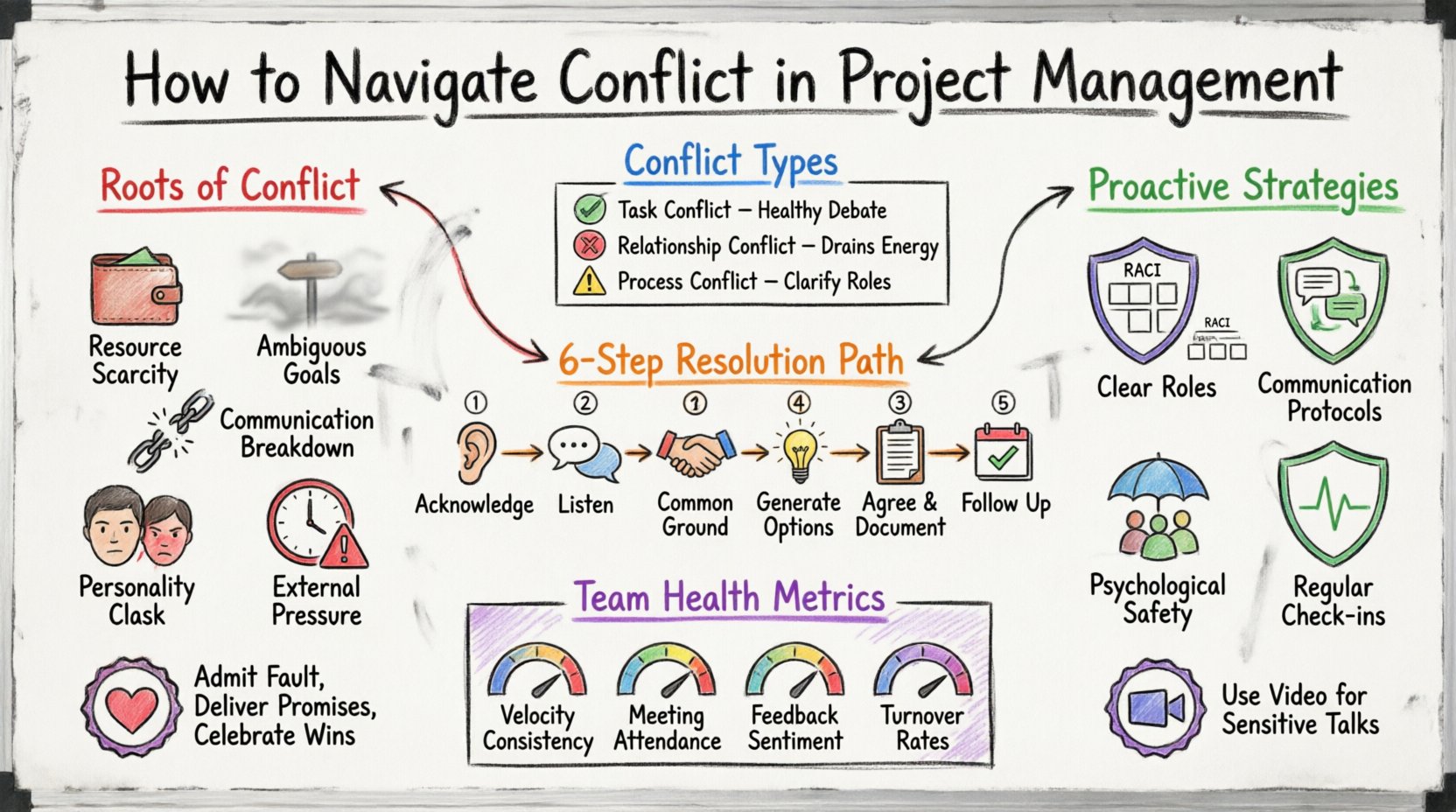
🤔 Understanding the Roots of Project Conflict
To manage conflict effectively, one must first understand its origin. Disagreements rarely happen in a vacuum. They usually stem from structural issues, resource constraints, or misaligned expectations. Recognizing the underlying cause allows for targeted interventions rather than generic solutions.
- Resource Scarcity: When team members compete for limited tools, budget, or personnel, tension rises. This often manifests as competition rather than collaboration.
- Ambiguous Goals: If the project charter lacks clarity, different departments may interpret the objectives differently. This leads to conflicting priorities.
- Communication Breakdowns: Information silos create misunderstandings. When data is not shared transparently, assumptions fill the gaps, often incorrectly.
- Personality Clashes: While less structural, differing work styles and values can cause friction. One person may prioritize speed, while another prioritizes perfection.
- External Pressures: Tight deadlines or shifting stakeholder requirements can force teams into high-stress situations where patience wears thin.
Identifying which of these factors is driving the tension is the first step toward resolution. A leader must act as a diagnostician, looking beyond the surface argument to find the root trigger.
🧩 Identifying Conflict Types in Teams
Not all conflict is created equal. Some types are functional and lead to innovation, while others are dysfunctional and damage morale. Distinguishing between them helps determine the appropriate response strategy.
| Type of Conflict | Description | Impact on Momentum |
|---|---|---|
| Task Conflict | Disagreement about the content of the work, ideas, or solutions. | Positive: Can improve quality and prevent groupthink. |
| Relationship Conflict | Personal incompatibilities, emotional friction, or interpersonal dislike. | Negative: Drains energy and reduces collaboration. |
| Process Conflict | Disagreement on how to organize work, delegate tasks, or manage timelines. | Mixed: Can clarify roles but causes delays if unresolved. |
Task conflict is often healthy. It ensures that multiple angles are considered before a final decision is made. However, relationship conflict must be addressed immediately, as it poisons the well for future cooperation. Process conflict requires clear definition of roles and responsibilities to resolve efficiently.
🛡️ Proactive Strategies to Prevent Escalation
Waiting for conflict to explode is a reactive approach that often costs more than prevention. Building a culture of clarity and openness reduces the likelihood of friction turning into a crisis. These proactive measures create a buffer against unnecessary tension.
1. Establish Clear Roles and Responsibilities
A significant source of process conflict is ambiguity. When two people believe they own the same part of the project, overlap occurs. Use tools like a RACI matrix (Responsible, Accountable, Consulted, Informed) to define ownership. Ensure every team member knows exactly what is expected of them and who they need to consult for decisions.
- Document roles in the project charter.
- Review responsibilities during onboarding.
- Revisit roles if the project scope changes.
2. Define Communication Protocols
Unclear communication channels lead to missed messages and frustration. Agree on how information flows. Which platform is used for urgent updates? When should a status meeting occur? Who is the single point of contact for stakeholders?
- Set expectations for response times.
- Standardize meeting agendas and minutes.
- Establish a hierarchy of information urgency.
3. Create a Psychological Safety Net
Team members must feel safe expressing dissent without fear of retribution. If people hide their concerns to keep the peace, small issues grow into large problems. Encourage open dialogue where disagreement is viewed as a contribution to the project’s success, not a personal attack.
4. Regular Check-ins
Do not wait for the monthly status report to address team dynamics. Hold frequent, short check-ins specifically focused on health and morale. This allows leaders to spot early signs of strain before they impact the schedule.
🔄 Step-by-Step Conflict Resolution Process
When conflict does arise, a structured process helps navigate it without losing focus. Follow these steps to move from disagreement to agreement.
Step 1: Acknowledge and Isolate
Do not ignore the tension. Acknowledge that a disagreement exists. If possible, isolate the issue from the people involved. Focus on the problem, not the personalities. State the issue objectively: “There is a disagreement regarding the timeline for Module A,” rather than “John and Sarah are fighting about the timeline.”
Step 2: Listen to All Sides
Give each party a chance to speak without interruption. Use active listening techniques. Paraphrase what they say to ensure understanding. This validates their feelings and ensures they feel heard, which lowers emotional temperature.
- Ask open-ended questions.
- Take notes to show engagement.
- Look for underlying needs, not just stated positions.
Step 3: Identify Common Ground
Most parties share the same ultimate goal: project success. Remind them of shared objectives. Shift the conversation from “me vs. you” to “us vs. the problem.” This alignment creates a foundation for collaboration.
Step 4: Generate Options
Brainstorm solutions together. Encourage creativity. Do not settle on the first idea that comes up. Evaluate each option against the project constraints, such as budget, time, and quality standards.
Step 5: Agree and Document
Once a solution is selected, document it clearly. Define who does what next. This prevents the conflict from resurfacing later due to memory lapses or shifting interpretations.
Step 6: Follow Up
Check in after a set period to ensure the agreement holds. If the issue persists, revisit the process. Consistency in follow-through builds confidence in the resolution.
💬 Facilitating Difficult Conversations
Some conflicts require a direct conversation between the parties involved, often mediated by the project lead. These conversations can be daunting, but they are necessary for clearing the air.
- Choose the Right Setting: Do not have these discussions in public forums or via instant messaging. A private, neutral space is best. If remote, use a video call to capture non-verbal cues.
- Focus on Behavior, Not Character: Critique the action, not the person. Say, “The report was submitted late,” not “You are irresponsible.”
- Use “I” Statements: Express how the situation affects the work. “I am concerned about the deadline” is more constructive than “You made me miss the deadline.”
- Manage Emotions: If emotions run high, pause the conversation. It is acceptable to say, “We are both getting heated. Let’s take ten minutes and reconvene.”
- Seek Mediation if Needed: If the parties cannot resolve the issue themselves, involve a senior leader or HR to facilitate. This ensures neutrality.
🤝 Rebuilding Trust After Disagreements
Conflict can erode trust. Once damaged, trust takes time and consistent action to repair. Leaders must actively work to restore confidence in the team’s ability to collaborate.
- Admit Fault: If the leader contributed to the tension, acknowledge it. Vulnerability sets a tone of accountability.
- Deliver on Promises: Trust is built through reliability. Ensure all commitments made during the resolution process are met.
- Encourage Small Wins: Create opportunities for the team to succeed together on smaller tasks. Shared success reinforces positive dynamics.
- Publicly Recognize Collaboration: When teamwork improves, highlight it. Positive reinforcement encourages the behavior to continue.
📊 Measuring the Health of Team Dynamics
It is difficult to manage what you do not measure. Regularly assessing the social health of the project helps identify trends before they become crises. Use the following metrics to gauge team sentiment.
| Indicator | Measurement Method | Frequency |
|---|---|---|
| Velocity Consistency | Track output over time. Sudden drops may indicate distraction. | Per Sprint |
| Meeting Attendance | Monitor participation rates and engagement levels. | Weekly |
| Feedback Sentiment | Analyze tone in status updates and chat logs. | Monthly |
| Turnover Rates | Track departures and internal transfers. | Quarterly |
If metrics show a decline, investigate the cause. Is it burnout? Is it a specific person? Is it a process bottleneck? Data provides an objective baseline for discussion.
📣 Creating a Culture of Constructive Feedback
A culture that accepts feedback as a gift rather than an insult reduces conflict. When people know how to give and receive criticism, they are less likely to take it personally. Integrate feedback mechanisms into the project lifecycle.
- Retrospectives: Hold regular sessions to discuss what went well and what did not. Focus on process improvement, not blame.
- 360-Degree Reviews: Allow team members to provide anonymous feedback on collaboration styles.
- Training: Offer workshops on communication skills and emotional intelligence.
- Lead by Example: Leaders must model how to accept feedback gracefully. If a leader reacts defensively, the team will follow suit.
🌱 Long-Term Habits for Sustainable Collaboration
Resolving conflict is a skill that improves with practice. Developing long-term habits ensures that the team remains resilient against future challenges. These habits become part of the organizational DNA.
- Document Decisions: Maintain a decision log. This prevents arguments about “who said what” later on.
- Rotate Leadership: Allow different team members to lead specific meetings or tasks. This builds empathy for the pressures others face.
- Celebrate Milestones: Acknowledge progress together. Shared celebration bonds the team against future stress.
- Encourage Social Interaction: Build personal connections outside of work tasks. Knowing someone as a person reduces the likelihood of viewing them as an obstacle.
- Review Conflict Logs: Keep a record of how conflicts were resolved. Review this periodically to learn patterns and prevent recurrence.
By embedding these practices into daily operations, project management shifts from a reactive fire-fighting exercise to a proactive discipline. The team learns to navigate friction with confidence, knowing that disagreements are opportunities to refine the path forward. This resilience is the foundation of sustained momentum.
🌍 Remote vs. In-Person Conflict Dynamics
The medium of communication significantly impacts how conflict is perceived and resolved. Remote teams face unique challenges compared to co-located groups.
- Lack of Non-Verbal Cues: Text-based communication strips away tone and body language. This increases the risk of misinterpretation. Leaders should default to video calls for sensitive discussions.
- Time Zone Friction: Differences in working hours can lead to feelings of isolation or unfairness. Be mindful of who is available for real-time collaboration.
- Communication Overload: Remote workers may rely heavily on chat, leading to information overload. Establish clear rules for when to use email versus instant messaging.
- Silence on Calls: In virtual meetings, silence can feel awkward. Encourage structured turn-taking to ensure all voices are heard.
Understanding these nuances helps leaders adapt their conflict resolution strategies to the specific environment in which the team operates.
🛠️ Tools for Managing Disagreement Without Software
While technology can assist, the core of conflict management lies in human interaction. However, physical tools can aid the process.
- Whiteboards: Visualizing the problem on a wall helps depersonalize the issue. It becomes something to solve together.
- Decision Matrices: Use a scoring system to evaluate options objectively. This removes bias from the decision-making process.
- Shared Documents: Collaborative editing allows for real-time input and version control. This reduces arguments about document ownership.
- Physical Calendars: Visualizing deadlines helps align expectations on timing and resources.
These tangible aids support the conversation without replacing the need for human judgment and empathy.
🏁 Final Thoughts on Team Resilience
Navigating conflict is a continuous process. There is no final state where a team is conflict-free. The goal is to build a system where disagreement is managed efficiently, allowing the project to continue moving forward. By focusing on clear communication, structured resolution, and psychological safety, leaders can protect team momentum even when challenges arise.
Remember that conflict is a signal. It indicates that people care about the work and have strong opinions. Harnessing that energy requires patience and skill. When handled with care, friction can polish the project to a higher standard. The team that survives conflict together emerges stronger and more capable of handling future complexities.
Implement these strategies consistently. Monitor the team’s health. Adapt as the project evolves. With dedication to these principles, maintaining momentum becomes a natural outcome of effective management.